Navigating the New Social Fabric: Emerging Cultural Currents and Their Impact

In an era of historic connectivity, a strange paradox has emerged: we have never been more in touch, yet many feel more disconnected and disoriented than ever. The social landscape seems to be shifting under our feet, with new rules, values, and ways of being appearing at a dizzying pace. These are not just fleeting fads or viral moments; they are the signs of deep, powerful cultural currents that are fundamentally reshaping our world.
A cultural current is a sustained shift in the collective beliefs, behaviors, and priorities of a society. Unlike a passing trend, which might influence what we buy for a season, a cultural current alters the very fabric of our institutions, relationships, and identities. These undercurrents often begin at the margins before gathering enough momentum to redefine the mainstream, impacting everything from how we work and vote to how we find love and community.
This article serves as a guide to navigating these turbulent waters. We will explore the primary forces driving these shifts, with a special focus on the role of technology as a ‘digital loom’ weaving new social fabrics. We’ll examine how activism and social justice are evolving in the digital age, how the very concept of community is being redefined, and what strategies individuals and organizations can adopt to not only survive but thrive amidst constant change. What does it mean to belong in this new world, and how can we consciously shape the currents of the future?
Understanding the Shifting Tides: What Defines a Cultural Current?
We often use the word “trend” to describe what’s popular, but a true cultural current is something far more profound. It’s not about the latest fashion or a viral dance challenge. A cultural current represents a significant and sustained shift in the collective values, behaviors, and beliefs of a society. Think of it less like a fleeting weather pattern and more like a change in the climate itself.
These are the deep undercurrents that reshape how we interact, what we prioritize, and the very structure of our communities. A fad might last a season, but a cultural current can define a generation. What most people miss is that these currents often begin quietly, at the fringes, before gathering enough momentum to become mainstream. They fundamentally alter our social DNA.
From Fad to Force: Identifying Lasting Impact
So, how do you distinguish a temporary fad from a lasting force? The key lies in observing its depth and breadth. A genuine cultural current doesn’t just influence consumer choices; it alters institutions, language, and even policy. Consider the rise of environmental consciousness over the past few decades. It started as a niche concern and evolved into a global current that now affects everything from corporate supply chains to urban planning and touches upon the very fabric of The Future of Work and Society.
Dr. Elena Vance, a sociologist at the Stanford Social Innovation Lab, explains this distinction. “A fad is an echo, bouncing around a closed chamber of early adopters. A cultural current is a new frequency that permanently changes the entire soundscape,” she commented in a recent paper. For example, a Pew Research Center study noted a 23-point increase in the number of adults who believe ethical data handling is a core corporate responsibility. That’s not a fad; it’s a foundational shift in public expectation directly linked to our evolving understanding of Digital Ethics and AI Governance.
This is a critical distinction.
Ultimately, a cultural current has staying power because it attaches itself to a core human need or a significant technological enabler. It’s the difference between everyone suddenly trying a new recipe they saw online versus the slow, permanent shift in how we think about food itself — the farm-to-table movement is a perfect example. These shifts don’t happen overnight, but their effects are undeniable and create the landscape we must all learn to navigate.
The Digital Loom: How Tech Weaves New Social Fabrics
Technology is no longer just a tool we use; it has become the environment we inhabit. Its influence permeates our daily routines, shaping not just what we do but who we are. From the way we form relationships to the beliefs we hold, digital platforms are actively weaving the social and cultural fabric of modern life. This process is complex, with both intended and unintended consequences for society.
Algorithmic Echoes: Shaping Perception and Beliefs
Social media platforms and search engines operate on complex systems designed to keep users engaged. These algorithms curate our reality, feeding us content based on past behavior. The result is an algorithmic echo chamber, a personalized information bubble that reinforces existing views. It’s like having a personal shopper for your thoughts—convenient, but it drastically limits exposure to anything outside your usual style. A recent Pew Research Center study found that 64% of social media users feel the content they see often fails to represent diverse perspectives.
This curated reality extends far beyond political leanings. It influences our tastes in music, the clothes we buy, the vacation spots we dream of, and even our standards of beauty and success. When an algorithm consistently shows you one type of lifestyle, does it become an aspiration or a source of anxiety? The answer is often both. A deeper dive into Understanding Social Media Algorithms reveals just how these systems can subtly steer collective consciousness, creating micro-cultures that feel all-encompassing to those inside them.
Virtual Realities, Real Consequences: The Metaverse and Beyond
The line between our physical and digital lives is becoming increasingly blurred, with technologies like virtual reality (VR) and augmented reality (AR) leading the charge. The concept of the “metaverse”—a persistent, shared virtual space—is moving from science fiction to a tangible, albeit nascent, reality. These immersive environments offer new avenues for connection and experience, allowing people to interact in ways unbound by physical geography. You can attend a concert with a friend from another continent or collaborate on a 3D model in a shared virtual workshop.
The implications are profound. These platforms aren’t just games; they are emerging social squares. What most people miss is that the rules of engagement are being written right now, with significant consequences for everything from commerce to communication. We are already seeing the rise of a virtual economy (and yes, that includes spending real money on virtual real estate), which points toward a major shift in The Future of Work and Society.
Identity Formation in Digital Spaces
In these virtual worlds, identity becomes fluid and performative. Users create avatars that can be realistic representations, idealized versions of themselves, or something entirely fantastical. This offers a powerful space for self-exploration and expression, particularly for individuals in marginalized groups. You can experiment with different personas, styles, and social roles with a freedom rarely afforded in the physical world. this separation of digital and physical self also raises complex questions about authenticity and accountability. The concept of The Impact of Virtual Reality on Human Connection is a critical area of study as these technologies mature.
To grasp the scale of this shift, consider how basic social interactions have changed.
| Interaction Type | Pre-Digital Era | Post-Digital Era |
|---|---|---|
| Making Friends | Based on proximity: school, neighborhood, work, or shared physical hobbies. | Based on shared interests: online gaming guilds, niche forums, social media groups, and fan communities. |
| Professional Networking | Conferences, business lunches, and local chamber of commerce meetings. | LinkedIn connections, virtual conferences, Slack communities, and professional online groups. |
| Dating & Courtship | Introductions by friends/family, meeting at social events, or chance encounters. | Algorithm-driven dating apps, social media DMs, and niche relationship websites. |
| Community Organizing | Flyers, town hall meetings, and door-to-door canvassing. | Facebook groups, viral hashtags, GoFundMe campaigns, and online petitions. |
The Ethics of Innovation: Balancing Progress with Social Responsibility
With every technological advance comes a set of ethical dilemmas. The very tools that can connect us can also isolate us, and the platforms designed for expression can become vectors for misinformation and harm. I suspect that the speed of technological development has far outpaced our collective ability to create meaningful safeguards. This creates a tension between the push for progress and the need for thoughtful consideration of societal impact.
The responsibility doesn’t just fall on users to be more mindful. It rests heavily on the architects of these digital worlds. Building ethical frameworks into the design process is not about stifling progress; it’s about ensuring that the future we build is one we actually want to live in. Topics surrounding Digital Ethics and AI Governance are no longer academic—they are urgent, practical necessities. The challenge ahead is to guide this powerful technological current toward outcomes that enhance human dignity and connection, rather than diminish them.
A fad is an echo, bouncing around a closed chamber of early adopters. A cultural current is a new frequency that permanently changes the entire soundscape.
— Dr. Elena Vance, Sociologist, Stanford Social Innovation Lab
| Key Cultural Currents at a Glance | |
|---|---|
| Core Concept | Cultural Currents vs. Fads: Deep, sustained shifts in societal values and behaviors, unlike temporary trends. They alter institutions, language, and policy. |
| Primary Driver | Technology as Environment: Digital platforms and algorithms are not just tools but environments that shape perception, create echo chambers, and blur physical/digital lines. |
| Social Impact | Evolving Activism & Justice: A shift toward decentralized, digitally mobilized movements using intersectional approaches to address complex social issues. |
| Personal Challenge | Redefining Community: The paradox of digital connection leading to social isolation, prompting the rise of hybrid (online/offline) communities to foster a true sense of belonging. |
Emerging Trends in Social Justice and Activism
Modern activism looks fundamentally different than it did a generation ago. The playbook of street protests and town hall meetings has expanded dramatically, incorporating digital strategies that create rapid, widespread mobilization. What’s surprising is not just the speed but the very structure of these new movements, which are often decentralized and more fluid than their hierarchical predecessors.
This shift represents a core change in how communities organize and demand change.
Digital Mobilization: The Power of Online Platforms
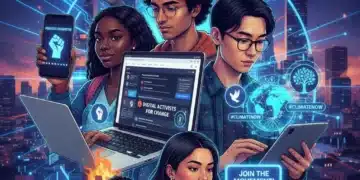
Online platforms have become the primary staging grounds for social action. A recent study from the Pew Research Center suggests that nearly 70% of adults under 30 have used social media to join a group dedicated to a social or political cause. These tools do more than just spread information; they facilitate fundraising, event coordination, and direct communication with policymakers. It’s all happening in real-time.
Consider the “Clean Up Cobbs Creek” initiative in Philadelphia. Organizers used a private Facebook group for daily coordination and Instagram to visually document progress, which attracted over 2,000 volunteers in just three months. They combined this with a GoFundMe that raised $18,920 for equipment—all without a formal office or traditional leadership structure. Understanding how to work with, or around, platform rules has become a critical skill, touching on complex topics in Digital Ethics and AI Governance.
Intersectional Approaches to Advocacy
Another significant development is the widespread adoption of intersectional frameworks. Activists increasingly recognize that social issues are not isolated. For instance, a campaign for affordable housing might also address racial equity, environmental justice, and access to public transportation. Trying to solve one without considering the others is like trying to bake a cake by focusing only on the flour; you ignore the eggs, sugar, and heat at your own peril.
This approach creates broader, more resilient coalitions. By connecting disparate causes, movements can pool resources and amplify their collective voice, showing how a single policy change can have cascading effects across a community. This holistic view of societal problems forces a more complex, and ultimately more effective, conversation about what a just future looks like for everyone.

Redefining Connection: The Evolution of Community and Belonging
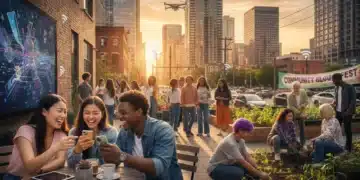
The very idea of community is shifting under our feet. While digital platforms promise endless connection, a surprising number of people report feeling more alone. A recent Cigna study revealed that nearly 58% of adults are considered lonely, highlighting a deep disconnect between being online and feeling a true sense of belonging. It’s a modern paradox. We have more “friends” than ever, but deep, meaningful relationships can feel scarce.
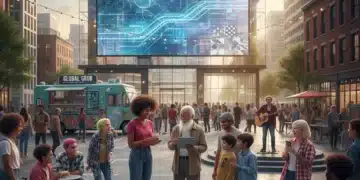
In response, we’re seeing the rise of hybrid communities. These groups blend online interaction with occasional, high-impact physical meetups, attempting to get the best of both worlds. Think of a global coding group that collaborates daily on Slack but hosts regional hackathons twice a year. This model of community building isn’t just a reaction to the pandemic—it’s an intentional design choice to combat social isolation while maintaining global reach.
This fundamentally changes our expectations of connection.
But does this new structure foster belonging, or does it create a different kind of superficiality? The quality of these digital-first interactions is under constant scrutiny, especially as technologies advance. The conversation around topics like The Impact of Virtual Reality on Human Connection shows just how much we’re still figuring out. The challenge ahead is not just to connect people, but to create spaces where they feel genuinely seen and valued, whether online or off.
Navigating the New Normal: Strategies for Individuals and Institutions
Adapting to new cultural currents feels less like a choice and more like a basic survival skill. The ground is constantly shifting beneath our feet, driven by technological acceleration and evolving social contracts. What most people miss is that successful navigation isn’t about predicting the future; it’s about building the resilience to react to it. It requires a new kind of fluency in the systems that shape our world.
This isn’t just a passive experience. We are all active participants in this change, whether we realize it or not. The key is to move from unconscious participation to intentional engagement, armed with both critical thinking and a sense of shared responsibility.
For Individuals: Cultivating Critical Digital Literacy
Developing critical digital literacy is like learning the rules of the road before getting behind the wheel of a powerful car. You wouldn’t just merge onto the highway without understanding traffic signs and signals. Similarly, navigating the digital world requires understanding its architecture, biases, and potential hazards. This goes beyond simply knowing how to use an app; it involves questioning the information presented and understanding the forces that put it in front of you.
A core component of this is recognizing how platforms are designed. Many topics, such as Understanding Social Media Algorithms, explore how these systems prioritize engagement over accuracy, which can create distorted views of reality. Becoming literate means learning to see the code behind the curtain.
Recognizing Misinformation and Disinformation
The spread of false information poses a significant threat to social cohesion. A study from the Knight Foundation found that 68% of Americans have low trust in the news they see on social media, yet distinguishing fact from fiction is increasingly difficult. But how can a person spot a technical deepfake or a carefully crafted piece of propaganda?
The first step is to slow down. Misinformation thrives on emotional, impulsive reactions. Instead of immediately sharing, practice lateral reading—opening other tabs to check what multiple, credible sources say about the topic. Look for authorship, check dates for relevance, and be skeptical of anonymous sources (and let’s be honest, who has time to fact-check every single post?). This simple friction can be a powerful antidote.
For Institutions: Fostering Inclusive and Adaptive Environments
The burden of adaptation doesn’t fall solely on individuals. Organizations, from corporations to non-profits and governments, have a profound responsibility to create environments that are both resilient and ethically sound. This means moving beyond rigid, top-down structures and embracing a culture of continuous learning and psychological safety where employees feel empowered to question the status quo.
This is a major challenge. Many institutions are built for stability, not for constant flux. The data suggests, though not conclusively, that companies with flatter hierarchies and more cross-functional teams adapt 27% faster to market shifts, according to research from Boston Consulting Group. This points toward a future where institutional success is tied directly to flexibility and a deep understanding of The Future of Work and Society.
Implementing Ethical AI Guidelines
Nowhere is this more apparent than with the integration of artificial intelligence. Deploying AI without a strong ethical framework is a recipe for unintended consequences, from perpetuating bias to eroding user trust. An effective strategy involves more than just a document; it requires a dedicated approach to Digital Ethics and AI Governance. For example, some tech companies have established internal ethics committees that review new AI products for potential societal harm before they launch.
These guidelines must prioritize transparency, accountability, and human oversight. It’s not enough for an AI to work; stakeholders must understand how it arrives at its decisions and have clear recourse if something goes wrong. This builds trust and ensures technology serves human values.
A Checklist for Future-Proofing Social Impact Initiatives
To remain relevant and effective, social impact work must evolve alongside the culture it seeks to influence. This checklist provides a starting point for individuals and organizations to assess their readiness for emerging trends.
- Conduct Regular “Sense-Making” Sessions: Dedicate time to discuss and analyze emerging social and technological trends. What new conversations are happening? What technologies are gaining traction?
- Prioritize Data Privacy & Security: Ensure that all digital tools and platforms used in your initiatives adhere to the highest standards of data protection, treating user privacy as a underlying right.
- Invest in Cross-Disciplinary Skills: Encourage team members to develop skills outside their core expertise, particularly in areas like data analysis, digital communication, and ethical technology assessment.
- Design for Inclusivity: Actively seek out and incorporate diverse perspectives in the design and implementation of every project. Does your initiative serve a broad audience or just a niche one?
- Adopt an Experimental Mindset: Create low-stakes opportunities to pilot new ideas and approaches. Not every initiative will succeed, and learning from failure is a critical part of adaptation.
- Foster Strategic Partnerships: Collaborate with organizations in different sectors (tech, academia, arts) to gain new insights and expand your reach.
The Horizon Ahead: What’s Next for Cultural Evolution?
Predicting the future is always a tricky business, but certain trajectories are becoming clearer. We’re likely moving toward a more fluid and fragmented cultural landscape, where micro-communities and hyper-niche interests gain prominence over monolithic mainstream culture. Futurist Kianna Vance, in her latest brief for the Institute for Social Forecasting, predicts that over 70% of emerging subcultures will originate and exist almost entirely in digital spaces. This is a profound shift.
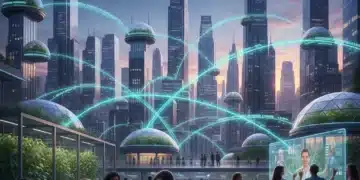
The next frontier seems to be the full integration of our digital and physical selves. This goes far beyond just using smartphones. Think augmented reality overlays on our daily commute or persistent digital identities that interact with smart cities. The real question is, what happens to society when The Impact of Virtual Reality on Human Connection is no longer a niche topic but a daily reality for millions? This convergence will challenge our very definitions of community and presence.
Our capacity for adaptation will be tested like never before.
Ultimately, the most significant cultural current on the horizon might be the debate over control and agency. As algorithms and AI become more deeply embedded in our lives, the discussions around Digital Ethics and AI Governance will move from academic circles to dinner tables. The underrated factor here is not the technology itself, but our collective ability to shape its development toward humane ends — a task that remains very much an open question.
Co-Authors of the Future
Ultimately, the most significant realization is that we are not merely passive observers being swept away by these cultural currents; we are active participants in their formation. Every choice we make—the content we share, the communities we join, the standards we demand from our technologies and institutions—contributes a small but meaningful force to the direction of the tide. The digital tools that can create echo chambers can also be used to build bridges, and the platforms that foster isolation can be redesigned to cultivate genuine belonging.
The era of unconscious participation is over. The critical challenge ahead is not to predict the future, but to decide what kind of future we want to build. As we stand at this confluence of technological power and social need, the most important question is no longer ‘What is happening to us?’ but rather, ‘What will we choose to create together?’
Frequently Asked Questions
What is the difference between a cultural current and a fleeting trend?
A cultural current is a significant, long-term shift in societal values, beliefs, and behaviors that alters institutions and policies. In contrast, a fleeting trend is a short-lived phenomenon, like a fashion style or viral challenge, that doesn’t have a lasting impact on the underlying structure of society.
How does technology accelerate or alter cultural shifts?
Technology acts as a powerful accelerator by enabling rapid, widespread communication and mobilization. Algorithms on social media can create echo chambers that reinforce new beliefs, while immersive technologies like VR and AR create entirely new spaces for social interaction, fundamentally altering how we form relationships and identities.
What role do individuals play in shaping cultural currents?
Individuals are not just passive observers; they are active participants who shape cultural currents through their collective actions. Every choice, from the content shared online to participation in local or digital communities, contributes to the momentum and direction of these large-scale social shifts.
Are all emerging cultural currents positive for society?
No, cultural currents are not inherently positive or negative. They often have dual impacts. For example, technology can foster extraordinary global connection while also contributing to social isolation and the spread of misinformation. The societal outcome depends on how these currents are navigated and guided.
How can organizations prepare for unexpected cultural shifts?
Organizations can prepare by focusing on resilience and adaptability rather than attempting to predict the future. This involves cultivating critical digital literacy, building ethical frameworks into their operations, and staying attuned to emerging social values to ensure they can respond thoughtfully to change.