
Insider’s Guide to Ethical AI Development in the U.S.: Avoiding Bias in 2026 Algorithms
The rapid evolution of Artificial Intelligence (AI) has ushered in an era of unprecedented technological advancement, transforming industries, economies, and daily life. However, with great power comes great responsibility. The ethical implications of AI, particularly the pervasive issue of algorithmic bias, have become a paramount concern. As we look towards 2026, the imperative for Ethical AI Development in the U.S. is not just a moral plea but a strategic necessity for innovation, trust, and sustained growth. This comprehensive guide offers an insider’s perspective on navigating the complex landscape of ethical AI, focusing on practical strategies to avoid bias and foster responsible innovation within the American context.
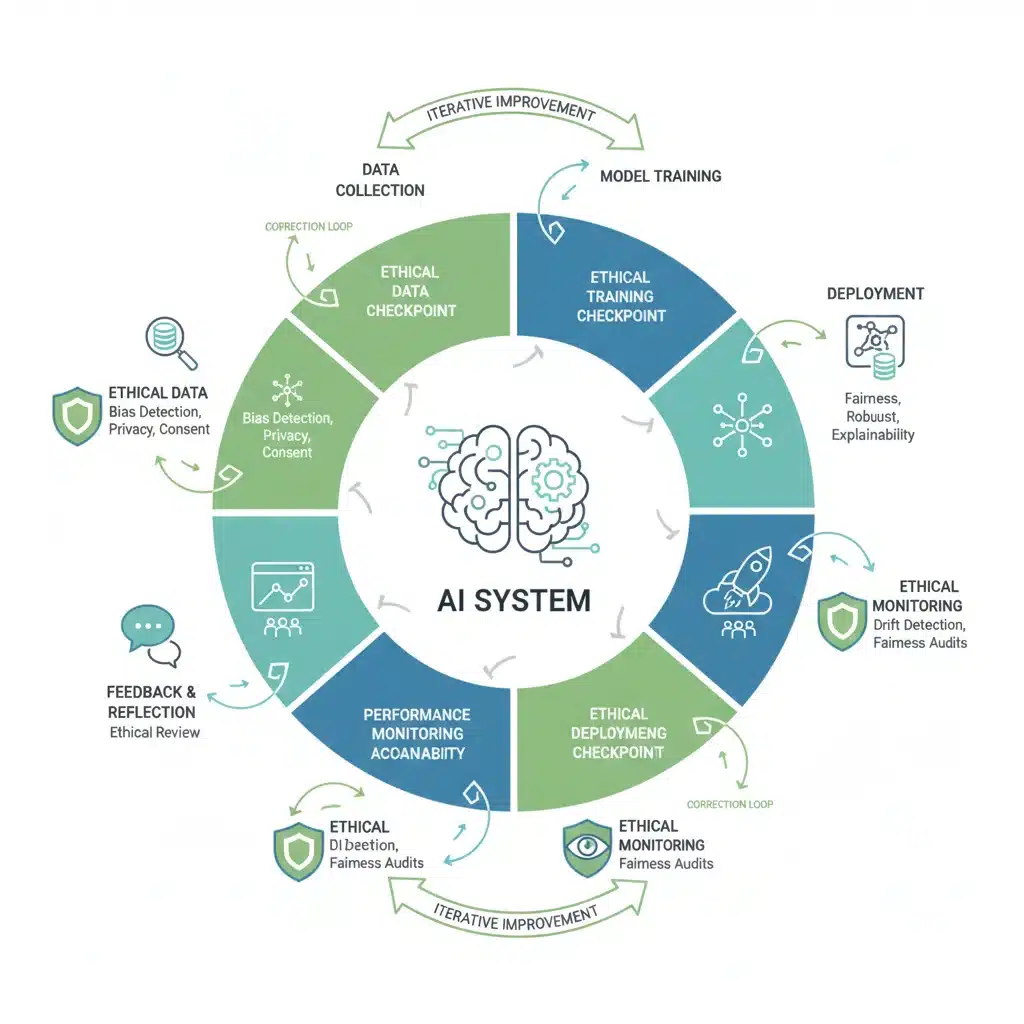
The journey towards truly ethical AI is multifaceted, encompassing technical challenges, regulatory hurdles, and societal expectations. It demands a holistic approach that integrates ethical considerations at every stage of the AI lifecycle, from conception and data collection to deployment and ongoing maintenance. For businesses, researchers, and policymakers in the U.S., understanding and implementing robust ethical frameworks is no longer optional; it is a fundamental requirement for building AI systems that are fair, transparent, and accountable.
This article delves into the core principles of Ethical AI Development, examines the current and projected regulatory environment in the U.S., and provides actionable insights into mitigating algorithmic bias. We will explore the tools, methodologies, and organizational cultures necessary to champion responsible AI, ensuring that the transformative potential of this technology is harnessed for the good of all, without perpetuating or amplifying existing societal inequalities. By 2026, the landscape of AI will be significantly shaped by the ethical choices we make today, making this guide an indispensable resource for anyone committed to shaping a more equitable and just AI-powered future.
Understanding the Core Principles of Ethical AI Development
At the heart of responsible AI lies a set of foundational ethical principles. These principles serve as guiding stars for developers, policymakers, and users, ensuring that AI systems are designed and deployed in a manner that respects human dignity, promotes fairness, and enhances societal well-being. The pursuit of Ethical AI Development is deeply rooted in these tenets.
Fairness and Non-Discrimination
Perhaps the most critical principle in Ethical AI Development is fairness. Algorithmic bias, often an unintended consequence of biased training data or flawed model design, can lead to discriminatory outcomes across various domains, from hiring and lending to criminal justice and healthcare. Ensuring fairness means actively identifying and mitigating biases, striving for equitable treatment and outcomes for all individuals, regardless of their demographic characteristics. This involves rigorous data auditing, bias detection techniques, and the implementation of fairness-aware algorithms.
Transparency and Explainability
Transparency refers to the ability to understand how an AI system works, its decision-making processes, and its limitations. Explainability, a closely related concept, focuses on making these processes comprehensible to humans. As AI models become increasingly complex, often referred to as ‘black boxes,’ achieving transparency and explainability is a significant challenge. However, for Ethical AI Development, it’s crucial. Users, regulators, and affected individuals need to understand why an AI system made a particular decision, especially when those decisions have significant impacts on their lives. This principle is vital for building trust and enabling accountability.
Accountability and Governance
Who is responsible when an AI system makes a mistake or causes harm? The principle of accountability addresses this question, establishing clear lines of responsibility for the design, deployment, and oversight of AI systems. Good governance frameworks are essential for ensuring that ethical principles are embedded throughout the AI lifecycle. This includes establishing ethical review boards, defining roles and responsibilities, and implementing mechanisms for redress and recourse when harm occurs. Effective accountability mechanisms are cornerstones of robust Ethical AI Development.
Privacy and Data Security
AI systems are often data-hungry, relying on vast datasets for training and operation. This reliance raises significant concerns about privacy and data security. Ethical AI Development necessitates robust measures to protect personal data, adhere to privacy regulations (such as GDPR and emerging U.S. state-level privacy laws), and prevent unauthorized access or misuse of information. Techniques like differential privacy and federated learning are gaining traction as ways to develop AI models while preserving individual privacy.
Human Oversight and Control
While AI offers immense capabilities, it should always remain a tool under human control. The principle of human oversight ensures that humans maintain the ultimate authority over AI systems, particularly in critical decision-making contexts. This can involve ‘human-in-the-loop’ systems, where human intervention is required for certain decisions, or ‘human-on-the-loop’ systems, where humans monitor AI performance and can override its decisions. Maintaining human agency is paramount for truly Ethical AI Development.
The U.S. Regulatory Landscape for Ethical AI in 2026
The United States, while not having a single, overarching federal AI law, is rapidly developing a patchwork of regulations, guidance, and executive actions aimed at shaping Ethical AI Development. By 2026, this landscape is expected to be more defined, driven by increasing public concern, technological advancements, and international pressures. Understanding these evolving regulations is critical for any organization operating in the AI space.
Executive Orders and Federal Initiatives
The U.S. government has taken significant steps to address AI ethics. President Biden’s Executive Order on the Safe, Secure, and Trustworthy Development and Use of Artificial Intelligence (October 2023) is a landmark directive, outlining comprehensive standards for AI safety and security, protecting American privacy, advancing equity and civil rights, and promoting innovation and competition. This order mandates federal agencies to develop guidelines and standards for AI, signaling a strong federal commitment to Ethical AI Development. By 2026, many of these mandates will be fully implemented, impacting various sectors.
Furthermore, initiatives by NIST (National Institute of Standards and Technology), such as the AI Risk Management Framework (AI RMF), provide voluntary guidance for managing risks associated with AI. While voluntary, these frameworks are increasingly seen as best practices and may form the basis for future regulatory requirements, particularly in critical applications. The AI RMF emphasizes transparency, accountability, and fairness, aligning directly with the principles of Ethical AI Development.
Sector-Specific Regulations and Agency Guidance
Beyond broad federal directives, several sector-specific regulations and agency guidances are influencing Ethical AI Development. For instance:
- Healthcare: The FDA is actively developing frameworks for AI in medical devices, focusing on safety, effectiveness, and bias mitigation in diagnostic and treatment tools.
- Finance: Regulatory bodies like the CFPB (Consumer Financial Protection Bureau) and the Federal Reserve are scrutinizing AI’s use in lending, credit scoring, and fraud detection to prevent discriminatory practices and ensure compliance with fair lending laws.
- Employment: The EEOC (Equal Employment Opportunity Commission) has issued guidance on preventing AI-driven discrimination in hiring and employment decisions, emphasizing fairness and transparency.
- Privacy: State-level privacy laws, such as the California Consumer Privacy Act (CCPA) and its successor CPRA, along with similar laws in Virginia, Colorado, Utah, and Connecticut, are setting precedents for how AI systems handle personal data, impacting data collection, usage, and individual rights.
By 2026, it is anticipated that more states will enact comprehensive privacy laws, and federal privacy legislation, though challenging, could also emerge, significantly shaping data practices for Ethical AI Development.
The Role of International Collaboration and Standards
The U.S. regulatory approach is also influenced by international developments. The European Union’s AI Act, poised to be one of the world’s first comprehensive AI laws, sets a high bar for risk-based regulation. While not directly binding in the U.S., its impact on global companies means that many U.S. entities engaging in Ethical AI Development will need to align with similar standards to remain competitive and compliant in international markets. Collaboration with international bodies on AI standards is also a growing area, with the U.S. participating in initiatives like the Global Partnership on AI (GPAI).
Strategies for Avoiding Algorithmic Bias in 2026
Algorithmic bias is a pervasive challenge in Ethical AI Development. It arises when AI systems produce unfair or discriminatory outcomes, often due to biased training data, flawed model design, or inappropriate deployment contexts. Addressing bias requires a proactive and multi-pronged strategy. By 2026, organizations must have sophisticated mechanisms in place to detect, mitigate, and prevent bias.
Data-Centric Approaches to Bias Mitigation
The adage ‘garbage in, garbage out’ holds true for AI. Biased data is a primary culprit behind algorithmic bias. Effective bias mitigation starts with meticulous data management:
- Data Auditing and Curation: Regularly audit datasets for representational biases, historical prejudices, and systemic inequalities. This involves demographic analysis of data, identifying underrepresented groups, and ensuring data quality and diversity. Curating data to be more inclusive and representative is a foundational step in Ethical AI Development.
- Data Augmentation and Synthetic Data: Where real-world data is inherently biased or scarce for certain groups, techniques like data augmentation (generating variations of existing data) and synthetic data generation (creating artificial data that mimics real-world properties without revealing sensitive information) can help balance datasets and reduce bias.
- Fairness Metrics in Data Preprocessing: Implement fairness metrics during data preprocessing to identify and correct biases before model training. This can involve re-weighting samples or re-sampling to achieve more equitable representation.

Model-Centric Approaches to Bias Mitigation
Even with unbiased data, the choice of model architecture and training methodology can introduce or amplify bias. Model-centric strategies are crucial for Ethical AI Development:
- Bias-Aware Algorithm Design: Develop or select algorithms specifically designed to promote fairness. This includes adversarial debiasing, where a discriminator tries to predict protected attributes from the model’s output, and the generator tries to fool it, thus reducing bias. Other methods include regularizing for fairness during training.
- Interpretable AI (XAI) Techniques: Employ Explainable AI (XAI) tools to understand how models make decisions. Techniques like LIME (Local Interpretable Model-agnostic Explanations) and SHAP (SHapley Additive exPlanations) can highlight features that disproportionately influence predictions for different groups, helping to uncover and address hidden biases. Explainability is key for fostering trust in Ethical AI Development.
- Robustness and Generalization Testing: Rigorously test models across diverse subgroups to ensure they perform consistently and accurately for everyone, not just the majority. This involves stress-testing the model with various demographic slices of data to identify performance disparities.
Post-Deployment Monitoring and Human Oversight
Bias is not a static problem; it can emerge or evolve after an AI system is deployed due to shifts in data distributions or real-world interactions. Continuous monitoring and human oversight are therefore essential components of Ethical AI Development:
- Continuous Fairness Monitoring: Implement automated systems to continuously monitor AI outputs for signs of bias in real-world scenarios. This involves tracking fairness metrics over time and setting up alerts for significant deviations.
- Feedback Loops and Human-in-the-Loop: Establish clear feedback mechanisms that allow users and affected individuals to report biased outcomes. Incorporate human review and intervention points, especially for high-stakes decisions, to override or adjust AI outputs when necessary. This ‘human-in-the-loop’ approach is vital for maintaining control and ensuring ethical outcomes.
- Regular Audits and Retraining: Conduct periodic external and internal audits of AI systems to assess their fairness, transparency, and accountability. Based on these audits and ongoing monitoring, regularly retrain models with updated, debiased data to adapt to changing conditions and address newly identified biases.
Building an Ethical AI Culture and Governance Framework
Beyond technical solutions, fostering Ethical AI Development requires a robust organizational culture and a comprehensive governance framework. By 2026, leading organizations will have embedded ethical AI considerations into their DNA, making it a core part of their operational strategy.
Establishing Cross-Functional Ethical AI Teams
Ethical AI is not solely the responsibility of data scientists or engineers. It requires a multidisciplinary approach. Organizations should establish cross-functional teams comprising ethicists, legal experts, social scientists, product managers, and engineers. These teams can provide diverse perspectives, identify potential ethical pitfalls, and ensure that ethical considerations are integrated throughout the AI development lifecycle. This collaborative approach is fundamental to successful Ethical AI Development.
Developing Internal Ethical AI Guidelines and Policies
Clear, actionable internal guidelines and policies are essential. These should translate abstract ethical principles into concrete practices for data collection, model development, testing, and deployment. Policies should address:
- Data privacy and security protocols.
- Bias detection and mitigation procedures.
- Transparency and explainability requirements.
- Human oversight and intervention protocols.
- Mechanisms for reporting and addressing ethical concerns.
These guidelines serve as a blueprint for responsible Ethical AI Development within the organization.
Training and Education
A well-informed workforce is crucial. Comprehensive training programs should be implemented for all employees involved in AI development and deployment. This training should cover ethical AI principles, regulatory requirements, bias awareness, and the use of ethical AI tools and methodologies. Educating employees about the societal impact of AI and their role in ensuring ethical outcomes is a continuous process that underpins effective Ethical AI Development.
Independent Ethical Review Boards
For high-stakes AI applications, establishing an independent ethical review board (EIRB) can provide an additional layer of scrutiny. Similar to Institutional Review Boards (IRBs) in medical research, EIRBs can assess AI projects for potential ethical risks, review mitigation strategies, and provide recommendations. This independent oversight enhances accountability and reinforces the organization’s commitment to Ethical AI Development.
Stakeholder Engagement and Transparency
Engaging with external stakeholders, including users, advocacy groups, and the broader public, is vital. Transparently communicating about the purpose, capabilities, and limitations of AI systems, as well as the ethical safeguards in place, builds trust and allows for valuable feedback. Public dialogue and engagement can help identify unforeseen ethical issues and foster a shared understanding of responsible AI. This open approach is a hallmark of progressive Ethical AI Development.
The Future of Ethical AI Development in the U.S. by 2026 and Beyond
As we approach 2026, the landscape for Ethical AI Development in the U.S. is poised for significant transformation. The trends suggest a future where ethical considerations are not just an afterthought but an integral component of AI innovation, driven by both regulatory pressures and market demands for trustworthy AI.
Emergence of AI Ethics as a Competitive Differentiator
Companies that prioritize ethical AI will increasingly gain a competitive edge. Consumers, employees, and investors are becoming more aware of the societal impact of AI. Organizations demonstrating a strong commitment to fairness, transparency, and accountability will attract top talent, build stronger brand loyalty, and mitigate reputational risks. By 2026, ethical AI will be a key differentiator in the market, moving beyond compliance to become a strategic advantage for those engaged in serious Ethical AI Development.
Standardization and Certification
The lack of universal standards for AI ethics currently presents challenges. However, by 2026, we can expect to see greater efforts towards standardization, possibly through industry consortia, international bodies, or even federal initiatives. The development of AI ethics certifications, similar to ISO standards, could emerge, providing a verifiable benchmark for organizations committed to responsible Ethical AI Development. These certifications would help consumers and businesses identify AI products and services that meet high ethical benchmarks.
Advanced Tools for Bias Detection and Mitigation
Research and development in AI ethics tools will accelerate. We will likely see more sophisticated and automated tools for detecting various forms of bias, assessing fairness across different protected attributes, and providing actionable recommendations for mitigation. These tools will become more integrated into standard AI development pipelines, making it easier for developers to build ethical AI systems from the ground up, thereby strengthening Ethical AI Development practices.
Focus on Societal Impact Assessments
Beyond individual algorithmic bias, there will be a greater emphasis on conducting comprehensive societal impact assessments (SIAs) for AI systems. These assessments will evaluate the broader social, economic, and political implications of AI deployment, considering potential long-term effects on employment, social equity, democratic processes, and human rights. SIAs will become a mandatory part of the development process for high-risk AI applications, guiding responsible innovation and serving as a critical component of Ethical AI Development.
The Evolving Role of AI Ethicists and Regulators
The demand for AI ethicists, legal experts specializing in AI law, and regulators with deep technical understanding will grow exponentially. These professionals will play crucial roles in shaping policies, guiding organizational practices, and ensuring compliance. The dialogue between technical experts, policymakers, and ethicists will intensify, leading to more nuanced and effective approaches to governing AI. This interdisciplinary collaboration is essential for the ongoing advancement of Ethical AI Development.
Conclusion
The journey towards robust Ethical AI Development in the U.S. is a continuous one, marked by innovation, introspection, and adaptation. As we move towards 2026, the stakes are higher than ever. The decisions made today regarding AI’s ethical foundations will determine its impact on future generations. By embracing core ethical principles, navigating the evolving regulatory landscape, implementing sophisticated bias mitigation strategies, and fostering a culture of responsible AI, organizations can not only avoid pitfalls but also unlock the true, benevolent potential of artificial intelligence.
The call for ethical AI is not merely about preventing harm; it is about building a future where AI serves humanity in a way that is fair, transparent, accountable, and respectful of individual rights and societal values. This insider’s guide underscores that proactive engagement with AI ethics is not a burden but an opportunity – an opportunity to innovate responsibly, build trust, and ensure that AI remains a force for good in the United States and across the globe. The future of AI is not just intelligent; it must also be profoundly ethical.