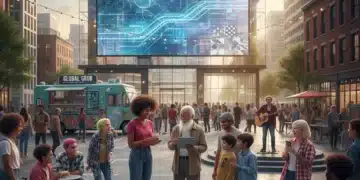
Metaverse Social Interactions: US Trends 2026

How the Metaverse is Reshaping U.S. Social Interactions: Trends to Watch in 2026
The metaverse, once a concept confined to science fiction, is rapidly evolving into a tangible reality, profoundly impacting how individuals interact, socialize, and form communities. As we approach 2026, the United States stands at the forefront of this digital revolution, witnessing a significant reshaping of its social fabric. This comprehensive analysis delves into the emerging trends, challenges, and opportunities presented by the metaverse in the realm of U.S. social interactions. Understanding these shifts is crucial for individuals, businesses, and policymakers alike to navigate the complexities and harness the potential of this immersive digital frontier.
The term metaverse social trends encompasses a broad spectrum of changes, from the way friends gather to the formation of entirely new digital subcultures. It’s not merely about playing games in virtual reality; it’s about building persistent, interconnected digital worlds where identities, relationships, and economies flourish. By 2026, we anticipate these trends will be more deeply integrated into daily life, moving beyond novelty to become an essential component of many Americans’ social experiences.
The Rise of Persistent Virtual Communities
One of the most significant metaverse social trends is the proliferation of persistent virtual communities. Unlike fleeting interactions on social media platforms, metaverse communities offer a sense of permanence and shared space. Users can own virtual land, build digital homes, and establish long-term relationships within these environments. By 2026, we expect a substantial increase in the number of Americans actively participating in these spaces, driven by factors such as improved VR/AR hardware accessibility, more intuitive user interfaces, and the development of compelling virtual experiences.
These communities are not monolithic; they cater to diverse interests, from gaming guilds and artistic collectives to professional networking groups and support forums. The U.S., with its diverse population and strong online culture, is particularly fertile ground for such communities to thrive. The ability to transcend geographical barriers allows individuals to connect with like-minded people they might never encounter in the physical world, fostering a sense of belonging and shared purpose that can be incredibly powerful.
Furthermore, the economic implications of these virtual communities are becoming increasingly apparent. Digital assets, including NFTs for avatars, virtual real estate, and in-game items, are creating new forms of wealth and social status within these worlds. This economic layer adds another dimension to social interactions, as individuals engage in commerce, trade, and even employment within the metaverse, further solidifying their commitment to these digital spaces. The blending of social and economic activity is a hallmark of the evolving metaverse social trends.
Evolving Digital Identities and Avatars
In the metaverse, one’s identity is often fluid and customizable, represented by avatars that can be highly personalized. This trend is profoundly influencing how Americans present themselves and interact socially. By 2026, we anticipate a greater emphasis on sophisticated avatar creation tools, allowing for unprecedented levels of self-expression. Users will invest more time and resources into crafting digital representations that reflect their ideal selves, their aspirations, or even entirely new personas.
This evolution of digital identity has both liberating and complex implications. On one hand, it offers individuals the freedom to experiment with different facets of their personality, challenge societal norms, and find acceptance in communities where their physical appearance or background might be less relevant. For many, especially those who feel marginalized in the physical world, the metaverse can provide a sanctuary for authentic self-expression. This focus on individual representation is a key aspect of understanding metaverse social trends.
On the other hand, the complete separation of digital and physical identity raises questions about authenticity, accountability, and the potential for misrepresentation. Issues like avatar theft, identity spoofing, and the psychological impact of living a dual digital life are areas that will require careful consideration and ethical frameworks as the metaverse matures. The U.S. will likely see debates emerge around digital rights, ownership of virtual assets, and the legal implications of actions taken by avatars in virtual spaces.
Immersive Experiences and Shared Realities
The core appeal of the metaverse lies in its ability to offer immersive, shared experiences that go beyond traditional 2D screens. By 2026, advancements in virtual reality (VR) and augmented reality (AR) technologies will make these experiences more accessible and realistic, driving deeper social engagement. Imagine attending a live concert with friends from across the globe, collaborating on a design project in a shared 3D environment, or even going on a virtual vacation to a fantastical world – all with a sense of presence that mimics physical interaction.
These immersive experiences are fundamentally changing the nature of social gatherings. Instead of just talking on a video call, friends can meet in a virtual cafe, play games together in a digital arcade, or explore virtual art galleries. This shift from passive consumption to active participation is a critical driver of engagement and a defining characteristic of current metaverse social trends. The U.S. entertainment and events industries are already experimenting with metaverse platforms, offering virtual concerts, movie premieres, and interactive storytelling experiences that draw large audiences.
The impact extends beyond entertainment. Education, training, and even healthcare are beginning to leverage immersive metaverse environments for social learning, collaborative problem-solving, and support groups. The ability to simulate real-world scenarios and interact with others in a safe, controlled digital space offers unprecedented opportunities for social development and skill-building. This integration of immersive technology into daily social routines is a significant trend to watch.

Interoperability and the Seamless Digital Lifestyle
A key factor in the long-term success and widespread adoption of the metaverse, and thus its impact on metaverse social trends, is interoperability. Currently, many virtual worlds operate as isolated silos, meaning assets and identities cannot easily transfer between platforms. By 2026, we anticipate significant strides towards greater interoperability, allowing users to seamlessly move their avatars, digital possessions, and social connections across different metaverse environments.
This seamless digital lifestyle will unlock new levels of social fluidity. Imagine buying a digital outfit in one metaverse and wearing it to a party in another, or building a reputation in a professional metaverse that carries weight in a gaming metaverse. This interconnectedness will foster a more unified and expansive social landscape, where individuals are not confined to a single digital space but can navigate a multitude of experiences with their persistent digital identity.
The U.S. technology sector, with its strong emphasis on open standards and collaborative development, is poised to lead the charge in establishing these interoperability protocols. Companies are already investing heavily in blockchain technologies and decentralized platforms that could serve as the backbone for a truly interconnected metaverse. This technical evolution is crucial for the continued growth and mainstream acceptance of metaverse social trends, making digital interactions as flexible and dynamic as physical ones.
Challenges and Considerations for U.S. Social Interactions
While the metaverse offers immense potential for enriching social interactions, it also presents a unique set of challenges that the U.S. must address. These challenges span technological, ethical, and societal domains, requiring careful consideration as the metaverse evolves. Ignoring these issues could hinder the positive development of metaverse social trends and lead to unintended negative consequences.
Digital Divide and Accessibility
One primary concern is the digital divide. Access to high-speed internet, powerful computing devices, and advanced VR/AR hardware is not universal across the U.S. If the metaverse becomes a primary venue for social interaction, those without access risk being left behind, exacerbating existing social and economic inequalities. Efforts to ensure equitable access and affordability of metaverse technologies will be crucial to prevent a two-tiered social system from emerging.
Privacy and Data Security
The metaverse, by its very nature, generates vast amounts of personal data, from biometric information gathered by VR headsets to behavioral data collected from interactions within virtual worlds. Protecting user privacy and ensuring robust data security will be paramount. The U.S. will need to develop and implement comprehensive regulations that safeguard user data, provide transparency about data collection practices, and empower individuals with greater control over their digital footprint. This is a critical aspect of responsible growth in metaverse social trends.
Mental Health and Well-being
The increasing immersion in virtual worlds raises concerns about mental health and well-being. Excessive metaverse use could lead to social isolation in the physical world, addiction, and issues related to body image or self-esteem stemming from idealized avatars. Understanding the psychological impacts of prolonged metaverse engagement and developing strategies for promoting healthy digital habits will be essential. This includes fostering a balance between virtual and physical social interactions.
Online Harassment and Safety
Just as in existing online spaces, the metaverse is susceptible to issues of harassment, bullying, and hate speech. The immersive nature of the metaverse could make these experiences even more impactful and distressing. Developing robust moderation tools, clear codes of conduct, and effective reporting mechanisms will be vital for creating safe and inclusive virtual environments. Ensuring user safety is a foundational requirement for positive metaverse social trends to flourish.
Opportunities for Enhanced Social Connection
Despite the challenges, the metaverse also offers unprecedented opportunities to enhance social connection and bridge gaps that exist in the physical world. For many, it represents a chance to forge deeper, more meaningful relationships and to experience social interactions in novel and exciting ways. These opportunities are driving the adoption and evolution of metaverse social trends.
Global Connection and Cultural Exchange
The metaverse inherently breaks down geographical barriers, enabling individuals from different countries and cultures to interact directly and authentically. This fosters greater understanding, empathy, and cultural exchange. By 2026, we could see a significant increase in cross-cultural metaverse collaborations, educational programs, and social events that promote global citizenship and a broader worldview.
Support for Isolated and Marginalized Groups
For individuals who face physical limitations, social anxieties, or live in geographically isolated areas, the metaverse can be a lifeline. It provides accessible platforms for social engagement, community building, and even therapy. People with disabilities can experience greater freedom and agency in virtual environments, participating in activities that might be challenging in the physical world. This inclusivity is a powerful benefit of evolving metaverse social trends.
New Forms of Creative Expression and Collaboration
The metaverse is a fertile ground for creativity. Artists, musicians, designers, and storytellers are finding new mediums and audiences within virtual worlds. Collaborative creation in the metaverse allows individuals to co-create art, music, games, and narratives in real-time, fostering a sense of shared accomplishment and strengthening social bonds through creative endeavor. This artistic flourishing is a vibrant aspect of the current metaverse social trends.

The Role of Brands and Businesses in Metaverse Socialization
As metaverse social trends solidify, brands and businesses are increasingly recognizing the importance of establishing a presence within these virtual worlds. Their involvement goes beyond mere marketing; it’s about creating spaces and experiences that facilitate social interaction and community building, thereby influencing consumer behavior and brand loyalty.
Creating Branded Social Hubs
By 2026, many companies will have established their own branded social hubs in the metaverse, offering unique experiences that draw users in. These could be virtual stores where users can browse and interact with products in 3D, exclusive event spaces for product launches or celebrity appearances, or even just casual hangouts designed to foster a sense of community around a brand. The goal is to move beyond transactional interactions to create meaningful social connections.
Facilitating User-Generated Content and Experiences
Successful brands in the metaverse will empower users to create and share their own content within branded spaces. This could involve providing tools for users to design their own virtual merchandise, host their own events, or contribute to collaborative projects. By fostering user-generated content, brands can tap into the creativity of their community, making social interactions more dynamic and personalized. This approach aligns perfectly with the evolving nature of metaverse social trends.
New Avenues for Customer Service and Support
The metaverse also offers novel ways for businesses to interact with customers. Imagine receiving personalized customer support from an AI-powered avatar in a virtual environment, or attending a workshop to learn how to use a new product alongside other users. These immersive customer service experiences can build stronger relationships and enhance brand perception by making interactions more engaging and human-like, even in a digital setting.
Regulatory Landscape and Ethical Frameworks
The rapid evolution of metaverse social trends necessitates the development of robust regulatory landscapes and ethical frameworks. The U.S. government, alongside international bodies, will need to address a myriad of issues to ensure the metaverse develops in a way that benefits society and protects its citizens.
Digital Rights and Governance
Establishing clear digital rights for metaverse users, including ownership of digital assets, freedom of expression, and protection from discrimination, will be critical. Governance models for decentralized metaverse platforms will also need to be explored, balancing user autonomy with the need for moderation and safety. This is a complex area, requiring collaboration between technologists, legal experts, and policymakers.
Taxation and Digital Economies
The emergent digital economies within the metaverse, driven by NFTs and cryptocurrencies, present new challenges for taxation and financial regulation. The U.S. will need to adapt its existing frameworks to account for virtual transactions, digital labor, and the creation of wealth within these new spaces. This will impact not only individuals but also businesses operating within the metaverse.
Standardization and Interoperability
While industry is driving interoperability, governmental and international bodies may also play a role in promoting open standards and protocols. This would ensure that the metaverse develops as an open, accessible, and interconnected ecosystem, rather than a collection of walled gardens controlled by a few dominant players. Such standardization is crucial for the long-term health of metaverse social trends.
Conclusion: The Future of U.S. Social Interactions in the Metaverse
By 2026, the metaverse is poised to be an integral part of U.S. social interactions, moving beyond a niche technology to a mainstream platform for connection, entertainment, and commerce. The metaverse social trends we are witnessing today – the rise of persistent virtual communities, evolving digital identities, immersive experiences, and the push for interoperability – are laying the groundwork for a future where digital and physical social lives are increasingly intertwined.
While challenges related to accessibility, privacy, mental health, and safety remain, the opportunities for enhanced global connection, support for marginalized groups, and new forms of creative expression are immense. Navigating this evolving landscape will require ongoing innovation, thoughtful policy-making, and a collective commitment to building a metaverse that is inclusive, safe, and enriching for all.
The journey into the metaverse is just beginning, and its full impact on U.S. social interactions is yet to be fully realized. However, by understanding and actively shaping these trends, we can ensure that this digital frontier contributes positively to the human experience, fostering new forms of community and connection in the years to come. The future of socialization is undeniably digital, and the metaverse is leading the charge.