U.S. Tech Work: Adapting to AI & Automation by 2030

The Future of U.S. Tech Work: Adapting to AI and Automation by 2030
The technological landscape is an ever-shifting terrain, and nowhere is this more evident than in the U.S. tech sector. As we hurtle towards 2030, two monumental forces—Artificial Intelligence (AI) and automation—are not merely influencing but actively redefining the very fabric of US Tech Work 2030. This transformation is not just about new tools; it’s about a fundamental reimagining of job roles, skill requirements, and the operational paradigms of businesses nationwide. The impending changes present both unprecedented opportunities and significant challenges, necessitating a proactive and adaptive approach from individuals, educational institutions, and enterprises alike.
For decades, the U.S. has stood at the vanguard of technological innovation, attracting global talent and fostering an environment of relentless progress. However, the current wave of AI and automation is distinct in its pervasive nature and its capacity to impact a broad spectrum of industries, with the tech sector itself being at the epicenter. This article delves deep into the anticipated shifts, offering a comprehensive analysis of how these technologies will sculpt the future of work in the U.S. tech arena by the end of this decade. We will explore the jobs that will emerge, those that will transform, and the essential competencies required to thrive in this new era.
The Unstoppable March of AI and Automation in Tech
The integration of AI and automation into the U.S. tech sector is not a distant dream but a present reality, accelerating at an astonishing pace. From sophisticated machine learning algorithms powering data analytics to robotic process automation (RPA) streamlining back-office functions, these technologies are already reshaping how businesses operate and how work gets done. By 2030, their influence will be even more profound, touching every corner of the industry.
AI, with its ability to process vast amounts of data, identify patterns, and make predictions, is revolutionizing fields such as software development, cybersecurity, and customer service. Automated systems, on the other hand, are taking over repetitive and rule-based tasks, freeing up human workers to focus on more complex, creative, and strategic endeavors. This synergy between human intelligence and machine efficiency is poised to unlock new levels of productivity and innovation.
However, this rapid advancement also fuels anxieties about job displacement. While some roles may indeed become obsolete, the historical pattern of technological progress suggests that new, often higher-value, jobs will emerge. The key lies in understanding this dynamic and preparing the workforce to embrace these new opportunities rather than resist the inevitable tide of change. The evolution of US Tech Work 2030 will be defined by this delicate balance of displacement and creation.
Redefining Job Roles: What Will US Tech Work Look Like in 2030?
The most tangible impact of AI and automation will be on the nature of job roles within the U.S. tech sector. We can anticipate a significant evolution, with some roles diminishing, others transforming, and entirely new categories emerging. Understanding these shifts is crucial for career planning and organizational strategy.
Emerging Roles and High-Demand Specializations
By 2030, the demand for professionals skilled in AI development, machine learning engineering, data science, and robotics will skyrocket. These roles will be at the forefront of creating and maintaining the very systems driving this transformation. Furthermore, ethical AI specialists, AI trainers, and AI auditors will become essential as society grapples with the societal implications of advanced AI. The need for individuals who can ensure AI systems are fair, transparent, and accountable will be paramount.
Beyond core AI development, roles focused on human-AI collaboration will gain prominence. Think of ‘AI whisperers’ or ‘prompt engineers’ who specialize in communicating effectively with AI models, or ‘AI integration specialists’ who bridge the gap between AI capabilities and business needs. Cybersecurity will also see a surge in demand, particularly in areas related to AI security and automated threat detection, as the increasing complexity of systems creates new vulnerabilities.
Transforming Existing Roles
Many traditional tech roles will not disappear but will instead be augmented and transformed by AI and automation. Software developers, for instance, will increasingly leverage AI-powered coding assistants, allowing them to focus on architectural design, complex problem-solving, and innovative features rather than mundane debugging or boilerplate code. IT support specialists might find routine inquiries handled by chatbots, enabling them to tackle more intricate technical issues requiring human judgment and empathy.
Project managers will utilize AI for predictive analytics in project scheduling and resource allocation, allowing them to make more informed decisions and mitigate risks proactively. Quality assurance (QA) engineers will shift from manual testing to designing automated testing frameworks and interpreting AI-driven performance metrics. The essence of these roles will remain, but the tools and methodologies employed will evolve dramatically, demanding continuous learning and adaptation from professionals.
Roles at Risk of Automation
While the focus is often on new opportunities, it’s equally important to acknowledge roles that are highly susceptible to automation. Repetitive data entry, routine IT maintenance tasks, basic customer support functions, and certain aspects of quality assurance that involve highly predictable operations are prime candidates for automation. This doesn’t necessarily mean job loss, but rather a reallocation of human effort to more complex and value-added activities. Companies will need to proactively reskill and upskill their workforces to transition these employees into new roles or augmented versions of their current positions, ensuring a smooth and equitable transition in the landscape of US Tech Work 2030.
The Evolving Skillset for US Tech Work in 2030
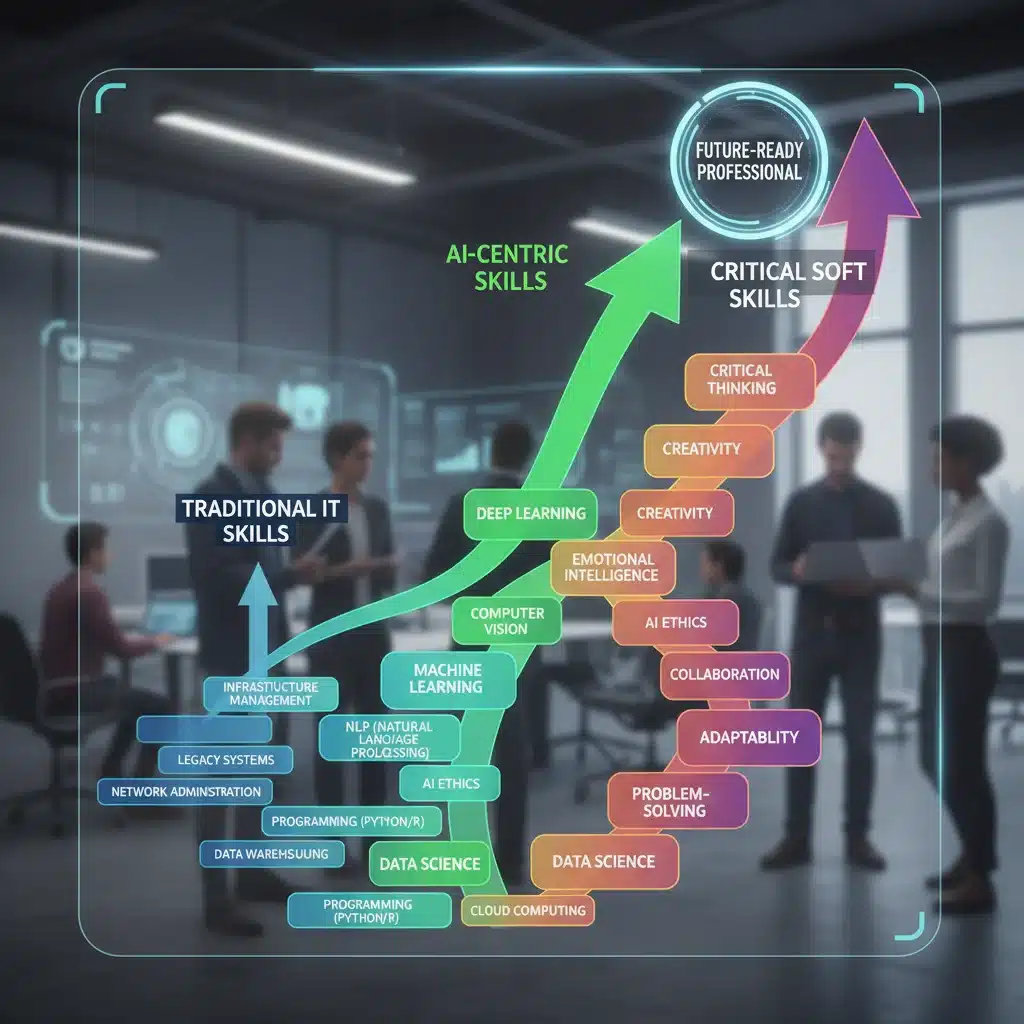
The transformation of job roles directly correlates with a fundamental shift in the skills required to succeed in the U.S. tech sector. Technical prowess will remain essential, but it will be complemented, and in some cases overshadowed, by a new emphasis on uniquely human capabilities and adaptability.
Technical Skills: The New Imperatives
Proficiency in AI and Machine Learning (ML) frameworks (e.g., TensorFlow, PyTorch), cloud computing platforms (AWS, Azure, GCP), big data technologies, and advanced programming languages will be non-negotiable. Expertise in data ethics, privacy regulations, and responsible AI development will also become critical. Furthermore, understanding how to integrate and manage automated systems, from RPA to intelligent process automation (IPA), will be a highly sought-after technical skill. Cybersecurity skills, particularly in defending against AI-powered threats and securing complex cloud infrastructures, will continue to be in high demand.
Soft Skills: The Human Advantage
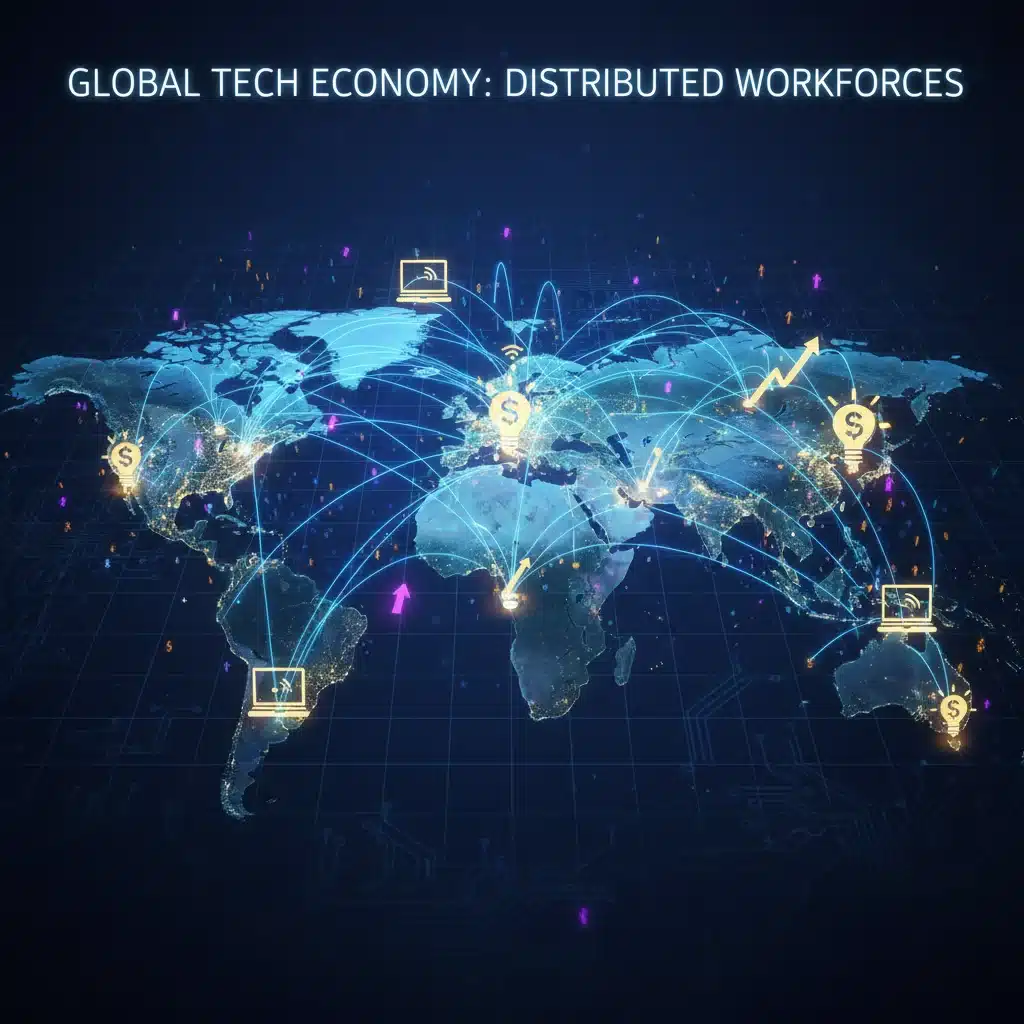
As machines take over routine tasks, human workers will differentiate themselves through skills that AI struggles to replicate. Critical thinking, complex problem-solving, and creativity will be paramount for innovating and navigating ambiguous situations. Emotional intelligence, empathy, and collaboration will be essential for effective teamwork, client interaction, and managing diverse, often globally distributed, teams. Adaptability, resilience, and a growth mindset will be crucial for continuous learning and navigating constant technological change. The ability to communicate complex technical concepts to non-technical stakeholders will also be a highly valued skill, bridging the gap between innovation and practical application.
The Importance of Continuous Learning and Reskilling
The days of acquiring a degree and being set for a career are long gone. In the era of AI and automation, continuous learning (upskilling) and acquiring entirely new competencies (reskilling) will be a lifelong endeavor for tech professionals. Companies will need to invest heavily in training programs, micro-credentials, and educational partnerships to keep their workforces relevant. Individuals, in turn, must cultivate a proactive approach to learning, embracing online courses, certifications, and hands-on projects to stay competitive in the evolving US Tech Work 2030 landscape.
Impact on Industries and Business Models
The ripple effects of AI and automation will extend beyond individual job roles to fundamentally alter entire industries and business models within the U.S. tech sector.
Software Development and IT Services
Software development will become more efficient and innovative, with AI assisting in code generation, testing, and deployment. IT services will shift from reactive maintenance to proactive, AI-driven predictive analytics and automated incident response. Managed services providers will offer more sophisticated AI-as-a-service solutions, focusing on strategic implementation and optimization rather than just infrastructure management. This will lead to faster development cycles, higher quality software, and more resilient IT systems.
Data Centers and Cloud Computing
Automation will play a crucial role in managing the ever-growing complexity of data centers and cloud infrastructure. AI will optimize resource allocation, predict outages, and enhance security protocols. The demand for cloud architects and engineers will remain high, but their focus will shift towards designing highly automated, self-healing, and AI-optimized cloud environments. Edge computing will also gain prominence, driven by the need for faster processing closer to data sources, further complicating and enriching the infrastructure landscape.
Cybersecurity
AI will be both a weapon and a shield in cybersecurity. Automated threat detection, predictive security analytics, and AI-powered defense systems will become standard. However, malicious actors will also leverage AI for more sophisticated attacks, creating an ongoing arms race. This will elevate the importance of human cybersecurity experts who can understand complex attack vectors, design resilient systems, and respond to novel threats that AI alone cannot fully address. Ethical hacking and red teaming will become even more critical.
Emergence of New Business Models
AI and automation will enable entirely new business models, such as highly personalized services, subscription-based AI solutions, and hyper-efficient on-demand platforms. Companies that can effectively integrate these technologies into their core offerings will gain a significant competitive advantage. The focus will shift from selling products to delivering outcomes, often powered by intelligent, automated systems. This will foster a new wave of innovation and entrepreneurship, particularly in niche areas where AI can solve previously intractable problems.
Challenges and Ethical Considerations for US Tech Work 2030
While the opportunities are immense, the road to US Tech Work 2030 is not without its challenges and ethical dilemmas. Addressing these proactively will be vital for a successful and equitable transition.
Job Displacement and Workforce Transition
The most significant challenge is managing potential job displacement. While new jobs will emerge, the transition may not be seamless for everyone. Governments, educational institutions, and businesses must collaborate on robust reskilling and upskilling initiatives, social safety nets, and career transition programs to support workers whose roles are impacted. Investing in lifelong learning infrastructure will be key to mitigating social disruption and ensuring that the benefits of technological progress are broadly shared.
The Skills Gap
A growing skills gap poses another substantial hurdle. The pace of technological change often outstrips the ability of educational systems to adapt. Bridging this gap requires closer collaboration between academia and industry to develop relevant curricula, internships, and apprenticeship programs. Short-term bootcamps and micro-credentials will also play a crucial role in rapidly equipping individuals with in-demand skills.
Ethical AI and Bias
As AI becomes more ubiquitous, ethical considerations come to the forefront. Biases embedded in training data can lead to discriminatory outcomes, raising concerns about fairness, accountability, and transparency. Developing ethical AI frameworks, robust regulatory policies, and fostering a culture of responsible AI development will be critical. Tech companies must prioritize auditing their AI systems for bias and ensuring their deployment aligns with societal values. The role of human oversight in AI decision-making will be increasingly important.
Data Privacy and Security
The increased reliance on AI means greater collection and processing of data, intensifying concerns about privacy and security. Robust data governance, stringent privacy regulations (like GDPR and CCPA), and advanced cybersecurity measures will be essential to protect sensitive information from misuse and breaches. Building public trust in AI systems will depend heavily on how effectively these challenges are addressed.
Strategies for Navigating the Future of US Tech Work
To thrive in the evolving landscape of US Tech Work 2030, a multi-faceted approach is required from all stakeholders.
For Individuals: Embrace Lifelong Learning
Professionals must adopt a mindset of continuous learning. Identify emerging skills in demand, pursue certifications, online courses, and advanced degrees. Develop strong soft skills—critical thinking, creativity, emotional intelligence, and adaptability—as these will be your most valuable assets. Network with peers, attend industry conferences, and stay informed about technological advancements. Proactively seek opportunities to work with AI and automation tools in your current role to gain hands-on experience.
For Businesses: Invest in Your Workforce
Companies must invest significantly in reskilling and upskilling their existing employees. Develop internal training programs, offer tuition reimbursement, and create pathways for employees to transition into new roles. Foster a culture of innovation and experimentation, encouraging employees to explore new technologies. Implement AI and automation strategically, focusing on augmenting human capabilities rather than simply replacing them. Prioritize ethical AI development and ensure transparency in AI deployment. Create diverse and inclusive teams to bring varied perspectives to AI development and deployment.
For Educators and Policymakers: Adapt and Innovate
Educational institutions need to rapidly update curricula to reflect the demands of the future workforce, emphasizing STEM, data literacy, and AI fundamentals from an early age. Promote interdisciplinary studies that combine technical skills with humanities and social sciences. Policymakers should focus on creating supportive regulatory frameworks for AI, investing in digital infrastructure, and developing robust social safety nets to aid workers in transition. Foster public-private partnerships to drive innovation and workforce development initiatives. Consider establishing national AI ethics boards and funding research into responsible AI.
The Human Element: The Enduring Value of Human-Centric Skills
Despite the rise of AI and automation, the human element will remain indispensable in the U.S. tech sector. While machines excel at processing data and executing tasks, humans possess unique qualities that are difficult, if not impossible, for AI to replicate. These include:
- Creativity and Innovation: The ability to conceive entirely new ideas, products, and solutions that go beyond existing data patterns.
- Critical Thinking and Judgment: The capacity to analyze complex, ambiguous situations, make nuanced decisions, and understand context that AI often misses.
- Emotional Intelligence and Empathy: Essential for leadership, teamwork, customer relations, and understanding human needs and desires.
- Ethical Reasoning: The ability to grapple with moral dilemmas, define values, and ensure technology serves humanity responsibly.
- Strategic Planning and Vision: Setting long-term goals, understanding market dynamics, and envisioning future possibilities.
The future of US Tech Work 2030 will not be about humans versus machines, but rather about humans and machines working in synergy. The most successful professionals will be those who can effectively leverage AI as a tool, augmenting their own human capabilities and focusing on tasks that require uniquely human attributes. This symbiotic relationship will define the next era of technological progress.
Conclusion: A Future of Dynamic Growth and Adaptation
The U.S. tech sector in 2030 will be characterized by unprecedented levels of AI and automation integration, leading to a dynamic and constantly evolving work environment. While this transformation presents challenges, particularly concerning job displacement and the skills gap, it also unlocks immense opportunities for innovation, efficiency, and the creation of entirely new forms of value.
Success in this future will hinge on adaptability, continuous learning, and a strategic focus on developing both advanced technical skills and uniquely human competencies. Individuals, businesses, educators, and policymakers must collaborate to build a resilient, skilled, and ethically conscious workforce capable of harnessing the full potential of AI and automation. The future of US Tech Work 2030 is not predetermined; it is being shaped by the choices we make today, demanding foresight, investment, and a shared commitment to progress.