DeFi 2026 Outlook: Navigating New Regulations and Unlocking Opportunities
The world of finance is in a constant state of flux, and few sectors exemplify this dynamism more than Decentralized Finance (DeFi). What began as a niche application of blockchain technology has rapidly evolved into a formidable force, challenging traditional financial paradigms and promising a more inclusive, transparent, and efficient global financial system. As we cast our gaze towards 2026, the DeFi 2026 Outlook presents a landscape brimming with both immense potential and significant hurdles, particularly regarding regulation and technological maturation.
This article aims to provide a comprehensive exploration of the projected state of DeFi in 2026. We will delve into the critical regulatory frameworks that are likely to shape its trajectory, examine the technological advancements poised to redefine its capabilities, and identify the burgeoning opportunities that astute investors and innovators can capitalize on. Understanding the nuances of this evolving ecosystem is not merely an academic exercise; it is essential for anyone looking to participate in, or even just comprehend, the future of global finance.
The journey of DeFi has been nothing short of spectacular, marked by exponential growth, groundbreaking innovations, and intermittent periods of volatility. From the nascent stages of simple lending protocols to the sophisticated ecosystems of decentralized exchanges, stablecoins, and complex derivatives, DeFi has demonstrated an astonishing capacity for innovation. However, this rapid expansion has also attracted the attention of policymakers and regulators worldwide, who are now grappling with how to integrate this novel financial system into existing legal and economic frameworks without stifling its inherent advantages.
Our focus on the DeFi 2026 Outlook is particularly pertinent because this timeframe is expected to be a pivotal period. Many regulatory bodies are anticipated to have established clearer guidelines, technological solutions to current scalability and security issues will likely be more mature, and mainstream adoption could see a significant surge. Therefore, preparing for this future requires a deep dive into the forces at play.
The Evolving Regulatory Landscape: A Cornerstone of DeFi 2026 Outlook
Perhaps the most significant factor influencing the DeFi 2026 Outlook is the ongoing development of regulatory frameworks. Governments and international bodies are increasingly recognizing DeFi’s potential impact, leading to a concerted effort to establish rules that address concerns around consumer protection, financial stability, anti-money laundering (AML), and know-your-customer (KYC) compliance, while ideally fostering innovation.
Global Approaches to DeFi Regulation
Different jurisdictions are adopting varied approaches. Some, like the European Union with its Markets in Crypto-Assets (MiCA) regulation, are pushing for comprehensive frameworks that aim to classify and regulate various crypto-assets and services, including aspects of DeFi. Others, such as the United States, are taking a more fragmented approach, with different agencies asserting jurisdiction over various facets of the crypto market, leading to a patchwork of rules and interpretations. By 2026, we anticipate a clearer picture of these global approaches, potentially leading to a degree of harmonization or, conversely, increased regulatory arbitrage.
- European Union (MiCA): MiCA is set to be a game-changer, providing legal certainty for stablecoins and other crypto-assets. Its implementation will significantly impact how DeFi protocols operating within or serving EU citizens function, potentially requiring greater transparency and compliance with traditional financial regulations.
- United States: The U.S. regulatory environment is complex, involving the SEC, CFTC, Treasury, and other state-level regulators. The classification of DeFi tokens as securities or commodities, and the oversight of DeFi lending and trading platforms, will be critical. Clarity on these fronts is paramount for the growth of DeFi in the U.S. and will heavily influence the DeFi 2026 Outlook.
- Asia-Pacific: Countries like Singapore, Japan, and Hong Kong are often seen as leaders in crypto innovation and regulation. Their approaches, balancing innovation with risk management, could serve as models for other nations. China, while having a restrictive stance on cryptocurrencies, might see its digital yuan initiatives indirectly influence the broader DeFi landscape.
The Challenge of Decentralization and Compliance
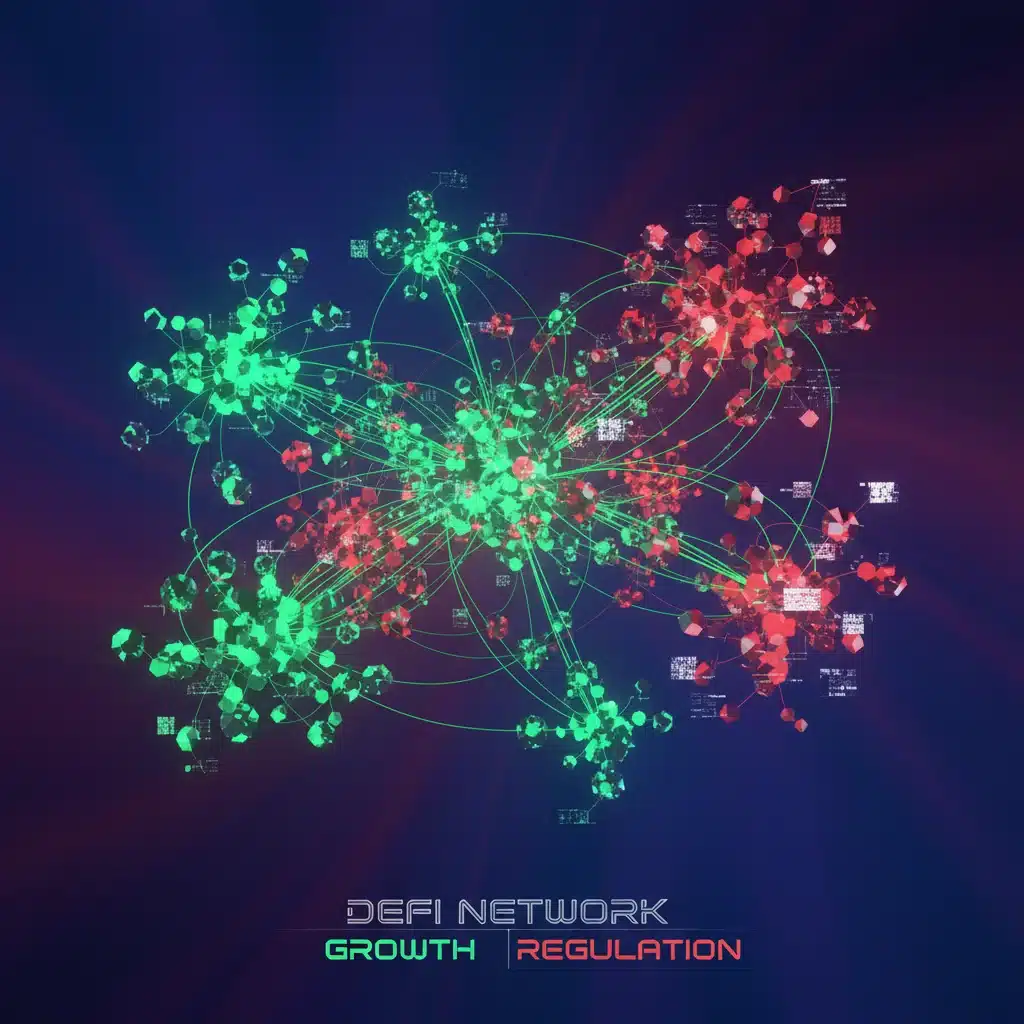
One of the core paradoxes in regulating DeFi lies in its decentralized nature. How do you regulate an autonomous protocol run by code and governed by a global community? Regulators are increasingly focusing on the ‘human element’ within DeFi – the developers, front-end providers, and governance token holders – to establish points of accountability. By 2026, we expect to see more sophisticated attempts to bridge the gap between regulatory requirements and the inherent decentralization of DeFi.
Solutions could include the integration of ‘permissioned DeFi’ elements, where certain protocols or liquidity pools require KYC/AML checks, or the development of on-chain identity solutions that preserve privacy while enabling compliance. The tension between regulatory demands for accountability and DeFi’s ethos of censorship resistance and pseudonymity will continue to be a defining characteristic of the DeFi 2026 Outlook.
Technological Advancements Shaping the DeFi 2026 Outlook
Beyond regulation, technological innovation remains the lifeblood of DeFi. The DeFi 2026 Outlook is inextricably linked to advancements in blockchain scalability, security, interoperability, and user experience.
Scalability Solutions: Beyond Ethereum 2.0
While Ethereum remains the dominant platform for DeFi, its scalability limitations have been a persistent challenge. Ethereum’s transition to Proof-of-Stake (Ethereum 2.0 or Serenity) and the implementation of sharding are crucial. However, by 2026, we anticipate a more mature ecosystem of Layer 2 solutions (e.g., optimistic rollups, ZK-rollups) and alternative Layer 1 blockchains (e.g., Solana, Avalanche, Polygon, Cosmos) that offer high throughput and lower transaction costs. These advancements will be vital for supporting the mass adoption envisioned in the DeFi 2026 Outlook.
Enhanced Security and Audit Standards
Security breaches and hacks have plagued the DeFi space, leading to significant financial losses and eroding trust. In the coming years, we expect a dramatic improvement in security practices, including more rigorous smart contract auditing, formal verification methods, and robust bug bounty programs. Decentralized insurance protocols will also mature, offering better coverage against smart contract risks and protocol failures, thereby instilling greater confidence in the DeFi ecosystem. These security enhancements are critical for a positive DeFi 2026 Outlook.
Interoperability and Cross-Chain Functionality
The current DeFi landscape is somewhat fragmented, with liquidity and assets often siloed within specific blockchains. The DeFi 2026 Outlook foresees a significant leap in interoperability, with cross-chain bridges and communication protocols becoming more robust and secure. This will enable seamless asset transfer and communication between different blockchains, unlocking new possibilities for capital efficiency and complex multi-chain strategies. The dream of a truly interconnected ‘internet of blockchains’ will move closer to reality.
Improved User Experience (UX) and Accessibility
DeFi’s steep learning curve and complex interfaces have been a barrier to mainstream adoption. By 2026, we expect a drastic improvement in user experience. Wallets will become more intuitive, dApps will feature cleaner interfaces, and abstracting away blockchain complexities will be a priority. This will involve simpler onboarding processes, fiat on-ramps, and user-friendly tools that make DeFi accessible to a broader demographic, moving beyond early adopters and crypto-native users. A simplified UX is key to realizing the full potential of the DeFi 2026 Outlook.
Key Opportunities in the DeFi 2026 Outlook
Despite the challenges, the DeFi 2026 Outlook is overwhelmingly positive when it comes to opportunities. The sector is poised for continued growth, attracting institutional capital, and integrating with traditional finance in novel ways.
Institutional Adoption and DeFi-TradFi Convergence
As regulatory clarity emerges and technological maturity improves, institutional investors are expected to increasingly enter the DeFi space. This will manifest in various forms:
- Tokenized Real-World Assets (RWAs): The tokenization of real-world assets like real estate, commodities, and even intellectual property will gain significant traction. This allows for fractional ownership, increased liquidity, and new investment opportunities, bridging the gap between traditional finance and DeFi.
- Institutional DeFi Protocols: Specialized DeFi protocols designed to meet the compliance needs of institutions will emerge, offering permissioned access and tailored services.
- CeFi-DeFi Hybrids: Centralized finance (CeFi) entities will continue to integrate DeFi functionalities, offering users a blend of traditional security and decentralized innovation.
This convergence will be a major theme in the DeFi 2026 Outlook, bringing substantial capital and legitimacy to the ecosystem.
Emergence of Next-Generation DeFi Protocols
Innovation in DeFi is relentless. By 2026, we anticipate the rise of several new categories of protocols and significant advancements in existing ones:
- Decentralized Identity (DeID): Solutions for self-sovereign identity will become more prevalent, enabling verifiable credentials and privacy-preserving KYC/AML, which can be integrated across various DeFi applications.
- Decentralized Social (DeSoc) and Metaverse Integration: DeFi principles will increasingly extend into decentralized social networks and metaverse economies, facilitating ownership, commerce, and value exchange within these virtual worlds.
- Advanced Derivatives and Structured Products: The DeFi derivatives market, already robust, will become more sophisticated, offering a wider range of options, futures, and structured products, catering to both retail and institutional investors.
- Sustainable and Regenerative Finance (ReFi): Protocols focused on positive environmental and social impact will gain prominence, leveraging blockchain for transparent carbon markets, impact investing, and sustainable development goals.
These innovations will expand the utility and reach of DeFi, solidifying its place in the broader digital economy, a key aspect of the DeFi 2026 Outlook.
The Rise of Decentralized Autonomous Organizations (DAOs) 2.0
DAOs are the governance backbone of many DeFi protocols. By 2026, DAOs are expected to evolve significantly, addressing current challenges related to efficiency, voter apathy, and legal recognition. We will see more sophisticated governance models, better tooling for participation, and clearer legal frameworks for DAOs in various jurisdictions. This maturation will empower decentralized communities to govern complex financial systems more effectively and transparently.

Challenges and Risks in the DeFi 2026 Outlook
While opportunities abound, it’s crucial to acknowledge the persistent challenges and risks that could impact the DeFi 2026 Outlook.
Regulatory Overreach and Unintended Consequences
There’s a risk that overly restrictive or poorly designed regulations could stifle innovation, push DeFi activities offshore, or create insurmountable barriers for smaller projects. A balance is needed, and the ongoing dialogue between regulators and the DeFi community will be critical to achieving this equilibrium. The potential for a ‘regulatory chill’ remains a significant concern.
Systemic Risk and Interconnectedness
As DeFi grows and integrates further with traditional finance, the potential for systemic risk increases. The interconnectedness of various protocols, often built on a stack of other DeFi primitives, means that a failure in one major component could have cascading effects throughout the ecosystem. Robust risk management frameworks and stress testing will be essential to mitigate these risks.
Technological Vulnerabilities and Exploits
Despite advancements in security, the underlying technology of blockchain and smart contracts will always present potential vulnerabilities. New attack vectors may emerge, and the constant cat-and-mouse game between developers and malicious actors will continue. Continuous vigilance, robust auditing, and rapid response mechanisms will be vital for maintaining trust and stability in the DeFi 2026 Outlook.
Scalability vs. Decentralization Trade-offs
Achieving true scalability without sacrificing decentralization remains a fundamental challenge. While Layer 2 solutions and alternative Layer 1s offer promising avenues, ensuring that these solutions do not inadvertently centralize power or introduce new points of failure is crucial. The philosophical debate between these core tenets of blockchain will continue to shape technological development.
Investment Strategies for the DeFi 2026 Outlook
For investors looking to navigate the DeFi 2026 Outlook, a nuanced and well-informed strategy is paramount. The sector, while high-growth, is also high-risk.
Diversification Across Protocols and Chains
Instead of concentrating investments in a single protocol or blockchain, diversification across various promising projects and ecosystems can mitigate risk. This includes exposure to different DeFi primitives like lending, DEXs, stablecoins, and derivatives, as well as across leading Layer 1s and Layer 2s.
Focus on Fundamental Value and Sustainable Tokenomics
Beyond hype, investors should prioritize projects with strong fundamentals, clear use cases, active development teams, and sustainable tokenomics that align incentives for long-term growth rather than short-term speculation. Protocols with a proven track record of security and community governance will likely fare better.
Understanding Regulatory Exposure
Given the increasing regulatory focus, understanding a project’s potential regulatory exposure and its strategy for compliance is crucial. Projects that proactively engage with regulators or develop compliant solutions may be better positioned for long-term success.
Risk Management and Due Diligence
Thorough due diligence, including smart contract audits, team background checks, and community sentiment analysis, cannot be overstated. Implementing robust risk management strategies, such as setting stop-losses and only investing what one can afford to lose, is essential in this volatile market.
The Human Element: Talent and Education in DeFi 2026
The success of the DeFi 2026 Outlook also hinges on the availability of skilled talent and widespread education. The demand for blockchain developers, smart contract auditors, crypto economists, legal experts specializing in digital assets, and community managers will continue to surge.
Furthermore, educating the broader public about the benefits and risks of DeFi is vital for responsible adoption. Initiatives aimed at improving financial literacy in the context of decentralized systems will play a crucial role in shaping a positive future for DeFi.
Conclusion: A Transformative DeFi 2026 Outlook
The DeFi 2026 Outlook paints a picture of a sector poised for significant transformation. While regulatory scrutiny will intensify and technological challenges will persist, the underlying innovative spirit and potential for disruption remain stronger than ever. We anticipate a more mature, secure, and interoperable DeFi ecosystem, increasingly integrated with traditional finance, and accessible to a wider global audience.
The journey to 2026 will be characterized by a delicate dance between innovation and regulation. Success will depend on the ability of developers to build robust and secure protocols, for regulators to craft intelligent and balanced frameworks, and for users to engage responsibly with these powerful new financial tools. Those who understand and adapt to this evolving landscape will be best positioned to capitalize on the unparalleled opportunities that Decentralized Finance promises in the coming years.
The future of finance is decentralized, and the next few years will be instrumental in defining its shape and scope. The DeFi 2026 Outlook is not just a prediction; it’s a call to action for everyone involved to contribute to a more open, efficient, and equitable financial world.