5G and Beyond: Bridging Rural America’s Digital Divide by 2026
The United States, a nation synonymous with technological advancement, still grapples with a significant disparity in internet access. While urban centers boast lightning-fast fiber optic connections and widespread 5G coverage, many rural communities remain on the wrong side of the rural digital divide. This isn’t merely an inconvenience; it’s a fundamental barrier to education, economic opportunity, healthcare, and social inclusion. However, the landscape is rapidly changing, with concerted efforts and groundbreaking technologies like 5G poised to bridge this gap by 2026. This comprehensive article delves into the practical solutions, financial implications, and transformative potential of closing the rural digital divide.
The term ‘digital divide’ refers to the gap between those who have ready access to computers and the internet, and those who do not. In the U.S., this divide is overwhelmingly geographical, with rural areas disproportionately affected. According to various reports, millions of Americans, predominantly in rural regions, lack access to reliable, affordable high-speed internet. This deficiency has profound consequences, hindering everything from remote learning and telehealth to agricultural innovation and small business growth. The urgency to address this issue has never been greater, and the target of 2026 represents an ambitious yet achievable goal for significant progress.
Understanding the Scope of the Rural Digital Divide
Before exploring solutions, it’s crucial to grasp the multifaceted nature of the rural digital divide. It’s not just about a lack of infrastructure; it encompasses issues of affordability, digital literacy, and the perceived relevance of internet access. Many rural residents, even where some form of broadband exists, may find the costs prohibitive or lack the digital skills to fully utilize the internet’s potential. Furthermore, the sheer vastness and low population density of rural areas make traditional infrastructure deployment economically challenging for internet service providers (ISPs).
The Economic and Social Impact
The economic impact of the rural digital divide is staggering. Rural businesses, often small and locally owned, struggle to compete in a globalized, digitally-driven marketplace. Farmers, who increasingly rely on precision agriculture and smart farming technologies, are left behind without adequate connectivity. The lack of remote work opportunities forces many young people to leave their hometowns in search of better prospects, contributing to rural depopulation and economic decline. Socially, the divide isolates communities, limits access to online government services, and creates educational disadvantages for rural students.
Defining ‘High-Speed’ and ‘Reliable’
The definition of ‘high-speed internet’ is a moving target. Historically, the FCC defined broadband as 25 Mbps download and 3 Mbps upload. However, with the increasing demands of modern digital life – video conferencing, cloud computing, streaming, and multiple connected devices per household – these speeds are often insufficient. Many advocates argue for significantly higher benchmarks, perhaps 100 Mbps symmetrical, to truly meet the needs of today and tomorrow. ‘Reliable’ connectivity means consistent service without frequent outages or significant latency, which is often a challenge in areas with aging infrastructure or reliance on satellite internet.
5G and Beyond: A Game Changer for Rural Connectivity
The advent of 5G technology represents a significant leap forward in addressing the rural digital divide. While initial 5G deployments focused on urban areas, its unique characteristics make it particularly well-suited for expanding connectivity in less dense regions. 5G offers not just faster speeds but also lower latency and the capacity to connect a massive number of devices, opening doors for innovative applications in agriculture, healthcare, and smart communities.
Mid-Band and Low-Band 5G for Rural Areas
Unlike millimeter-wave (mmWave) 5G, which offers ultra-fast speeds but has limited range and struggles with obstacles, mid-band and low-band 5G are crucial for rural deployment. Low-band 5G uses frequencies similar to 4G LTE, providing wide coverage but with more modest speed improvements. Mid-band 5G strikes an excellent balance, offering significantly faster speeds than 4G and respectable coverage, making it ideal for connecting larger rural areas with fewer towers than mmWave would require. This adaptability is key to overcoming the geographical challenges of rural deployment.
Fixed Wireless Access (FWA) with 5G
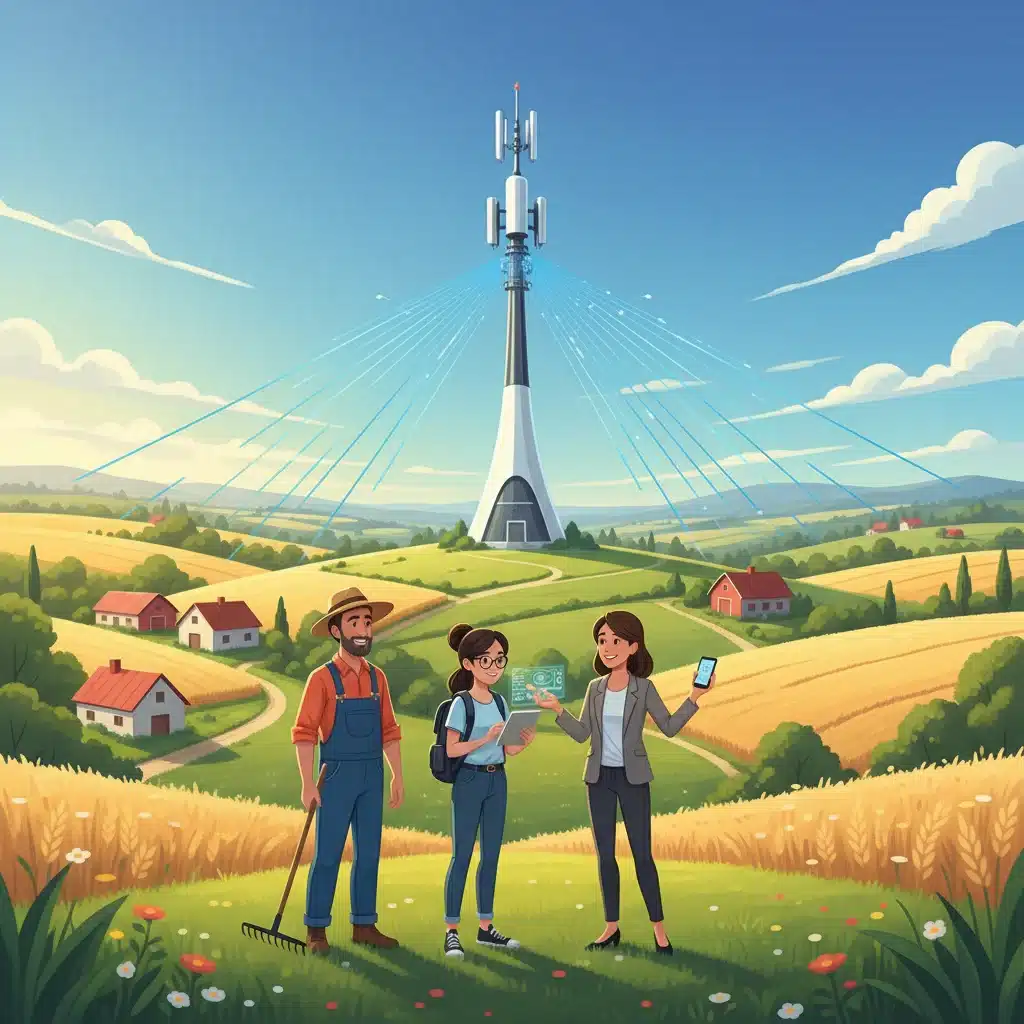
One of the most promising applications of 5G for rural communities is Fixed Wireless Access (FWA). FWA uses cellular networks to deliver broadband internet to homes and businesses without the need for physical fiber optic cables directly to every premise. Instead, a 5G signal is broadcast from a cell tower to a receiver on a customer’s home or office. This significantly reduces the cost and time required for deployment compared to laying fiber, making it an attractive and often more immediate solution for bridging the rural digital divide. With 5G FWA, rural residents can experience speeds comparable to traditional wired broadband.
Practical Solutions and Technologies Beyond 5G
While 5G is a powerful tool, a multi-pronged approach is essential to fully address the rural digital divide. Several other technologies and strategies are being deployed or explored to ensure comprehensive coverage.
Fiber Optic Expansion
Ultimately, fiber optic cables offer the most robust, future-proof solution for internet connectivity. While expensive to deploy in sparsely populated areas, government subsidies and innovative deployment methods are making fiber more feasible. ‘Middle-mile’ fiber projects, which connect larger towns and regional hubs, can then serve as backbones for last-mile solutions like FWA or even provide direct fiber-to-the-home (FTTH) connections in denser rural clusters.
Satellite Internet Advancements (LEO Satellites)
Traditional geostationary satellite internet has historically suffered from high latency due to the vast distance signals must travel. However, the emergence of Low Earth Orbit (LEO) satellite constellations, such as Starlink, is revolutionizing satellite internet. LEO satellites orbit much closer to Earth, drastically reducing latency and offering significantly higher speeds. While still a premium service, LEO satellite internet provides a viable option for the most remote areas where other technologies are impractical or cost-prohibitive, serving as a critical component in closing the rural digital divide.
Public-Private Partnerships and Community Networks
Collaboration is key. Public-private partnerships (PPPs) bring together government funding and regulatory support with the technical expertise and investment of private ISPs. Additionally, community-owned networks, often cooperatives or municipal broadband initiatives, are gaining traction. These models prioritize local needs and can be more agile in deploying infrastructure where large commercial providers see insufficient return on investment. These community-led efforts are vital for ensuring solutions are tailored to local contexts and sustainable in the long term.
Financial Impact and Funding Mechanisms by 2026
Bridging the rural digital divide requires substantial financial investment. The good news is that the U.S. government has recognized this necessity and allocated unprecedented funding towards broadband expansion. The goal of significant progress by 2026 is heavily reliant on the effective deployment of these funds.
The Bipartisan Infrastructure Law (BIL) and BEAD Program
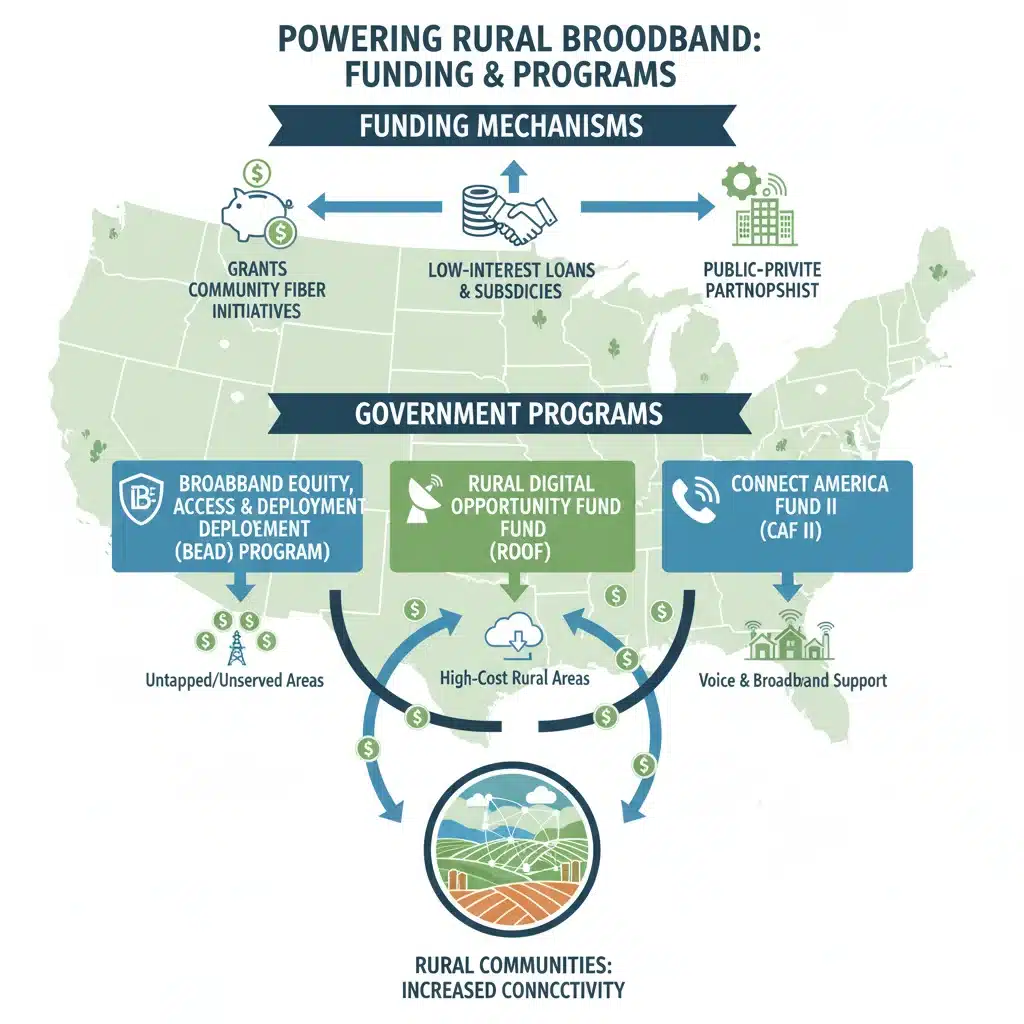
The Infrastructure Investment and Jobs Act (also known as the Bipartisan Infrastructure Law, BIL), passed in 2021, represents the largest single investment in broadband infrastructure in U.S. history. A cornerstone of this law is the Broadband Equity, Access, and Deployment (BEAD) program, which allocates $42.45 billion to states and territories to expand high-speed internet access. BEAD funds prioritize unserved and underserved areas, with a strong emphasis on fiber deployment where feasible. This massive injection of capital is the primary driver behind the ambitious 2026 target for closing the rural digital divide.
Other Key Funding Initiatives
- Rural Digital Opportunity Fund (RDOF): An FCC program that awarded billions to deploy broadband to unserved rural areas through a reverse auction mechanism. While facing some challenges, RDOF has been instrumental in extending coverage.
- Connect America Fund (CAF II): Another FCC program providing universal service support to carriers to deploy and maintain broadband in rural areas.
- USDA ReConnect Program: The U.S. Department of Agriculture (USDA) offers grants, loans, and loan/grant combinations to facilitate broadband deployment in rural areas that lack sufficient access to broadband.
- State-Level Programs: Many states have also established their own broadband offices and funding programs, often leveraging federal funds but tailoring them to specific state needs and priorities.
Ensuring Affordability and Digital Inclusion
Beyond infrastructure, financial support is also directed towards ensuring affordability. The Affordable Connectivity Program (ACP), established by the FCC, provides eligible low-income households with a discount on internet service and a one-time discount on a connected device. While the ACP’s future funding is uncertain, similar initiatives are critical to ensure that even with infrastructure in place, rural residents can afford to get online. Digital literacy programs, often funded at the state or local level, are equally important to equip residents with the skills needed to navigate the digital world.
Challenges and Overcoming Obstacles
Despite the significant progress and investment, closing the rural digital divide by 2026 is not without its challenges. These include geographical complexities, workforce shortages, supply chain issues, and regulatory hurdles.
Geography and Terrain
The vast and varied topography of rural America presents unique deployment challenges. Mountains, dense forests, and expansive plains all complicate the laying of fiber or the placement of cell towers. Innovative solutions like micro-trenching for fiber, drone-assisted infrastructure inspection, and even balloon or blimp-based wireless nodes are being explored to overcome these physical barriers.

Workforce Development and Supply Chain
A major bottleneck is the shortage of skilled labor to design, build, and maintain broadband networks. Training programs and apprenticeships are crucial to develop a robust workforce capable of meeting the demands of accelerated deployment. Additionally, global supply chain disruptions have impacted the availability and cost of necessary equipment, from fiber optic cables to networking hardware. Strategic planning and domestic manufacturing initiatives are vital to mitigate these issues.
Permitting and Regulatory Hurdles
Navigating the complex web of local, state, and federal permitting processes can significantly delay broadband projects. Streamlining these processes, while ensuring environmental and safety standards are met, is essential. Furthermore, ensuring fair competition and preventing digital redlining by incumbent providers are ongoing regulatory challenges that require vigilant oversight.
The Transformative Impact on Rural Communities by 2026
The successful bridging of the rural digital divide by 2026 will usher in a new era of opportunity and prosperity for countless communities. The ripple effects will be felt across every sector of rural life.
Education and Workforce Development
High-speed internet enables equitable access to online learning resources, virtual classrooms, and educational tools, leveling the playing field for rural students. It also facilitates access to online vocational training and higher education, empowering adults to reskill or upskill, leading to a more competitive and adaptable rural workforce. This is particularly critical in attracting and retaining young talent in rural areas.
Telehealth and Healthcare Access
For rural areas often characterized by a lack of healthcare providers and long travel distances to medical facilities, telehealth is a lifeline. Reliable broadband allows for remote consultations, monitoring of chronic conditions, and access to specialists who might otherwise be unavailable. This improves health outcomes, reduces healthcare costs, and enhances the overall well-being of rural populations.
Economic Development and Innovation
With robust internet, rural communities can attract remote workers, fostering economic diversification beyond traditional industries. Small businesses can expand their reach through e-commerce, access cloud-based tools, and participate in global supply chains. Agricultural technology (AgriTech) will flourish, with farmers leveraging IoT sensors, drones, and data analytics to optimize operations, increase yields, and promote sustainable practices. This digital transformation can revitalize rural economies and create new job opportunities.
Enhanced Public Safety and Smart Communities
Connectivity supports advanced public safety systems, including enhanced 911 services, intelligent traffic management, and real-time data sharing for emergency responders. The concept of ‘smart rural communities‘ can also take hold, with connected infrastructure improving energy efficiency, waste management, and public services, making rural areas more attractive and sustainable places to live.
Conclusion: A Connected Future for Rural America
The journey to bridge the rural digital divide is complex, but the commitment and resources now being deployed offer a genuine path forward. The synergy of 5G technology, expanded fiber networks, advanced satellite solutions, and significant government funding through programs like BEAD, coupled with innovative local partnerships, is creating a powerful momentum. While challenges remain, the ambitious target of 2026 for substantial progress is within reach. Achieving this goal will not only connect millions of currently unserved Americans but will also unlock the full potential of rural communities, fostering economic growth, improving quality of life, and ensuring that no American is left behind in the digital age. The future of rural America is, indeed, a connected future, and the groundwork for this transformative change is being laid right now.