Future of Work: 4 Hybrid Models Transforming U.S. Companies by 2026
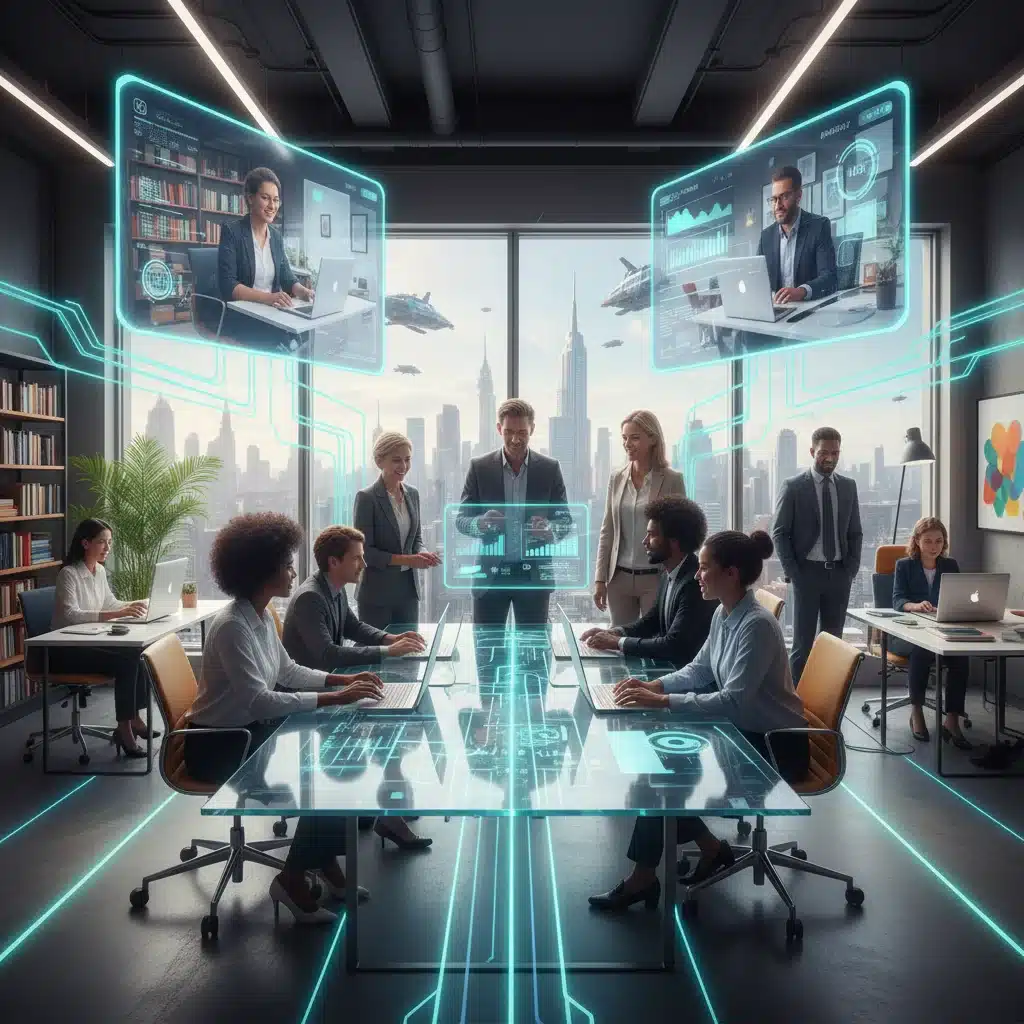
The landscape of work has undergone a seismic shift, fundamentally altering how and where we conduct business. The initial forced pivot to remote work during the pandemic has evolved into a strategic embrace of hybrid models, which promise a blend of flexibility, productivity, and employee well-being. As we approach early 2026, U.S. companies are increasingly refining and adopting specific hybrid work models to navigate this new era. This comprehensive article delves into four prominent hybrid models gaining significant traction, offering recent updates, a thorough comparison, and an in-depth analysis of their implications for businesses and employees alike.
The concept of hybrid work is no longer a temporary solution but a foundational element of modern corporate strategy. It’s about creating a flexible ecosystem that supports diverse work styles and preferences, while maintaining organizational cohesion and effectiveness. Understanding these evolving models is crucial for leaders looking to optimize their workforce, attract top talent, and foster a resilient company culture.
The Evolution of Hybrid Work: A Brief Retrospective
Before diving into the specifics of the models, it’s important to acknowledge the journey that has led us here. Pre-2020, remote work was largely a niche benefit. The pandemic accelerated its adoption out of necessity, proving that many roles could be performed effectively outside traditional office settings. This period of forced experimentation revealed both the immense benefits – increased flexibility, reduced commutes, broader talent pools – and the challenges – potential for isolation, communication breakdowns, and maintaining company culture.
The “return to office” movement, post-pandemic, was not a full reversal. Instead, it sparked a dialogue about finding a “best of both worlds” approach. This is where hybrid work models truly began to crystallize, moving from ad-hoc arrangements to structured strategies designed to harness the advantages of both in-person and remote work. Companies are now past the experimental phase; they are strategically implementing and refining these models based on performance data, employee feedback, and market trends. The goal is no longer just “getting by” but “thriving” in a distributed work environment.
Model 1: The “Fixed Schedule” Hybrid – Structure with Flexibility
The “Fixed Schedule” hybrid model, sometimes referred to as the “structured hybrid,” is one of the most common and easiest to implement for organizations transitioning from traditional office setups. In this model, employees are required to be in the office on specific, predetermined days of the week, with the remaining days spent working remotely. For example, a company might mandate all employees to be in the office every Tuesday and Thursday, allowing remote work on Monday, Wednesday, and Friday.
Recent Updates and Trends by Early 2026:
- Increased Predictability: Many companies are standardizing “anchor days” where all teams are expected to be present, facilitating planned team meetings, collaborative sessions, and social events. This predictability helps in office space planning and ensures regular face-to-face interaction.
- Departmental Customization: While a company-wide policy might exist, there’s a growing trend towards allowing individual departments or teams to slightly adjust their fixed schedules based on their specific needs and workflows, as long as core “in-office” days are maintained.
- Focus on “Why” for Office Days: Organizations are becoming more intentional about the purpose of in-office days. Instead of just showing up, the emphasis is on collaborative work, brainstorming, training, and relationship building that benefits most from in-person interaction.
Advantages:
- Enhanced Collaboration: Predetermined office days ensure that teams can easily collaborate in person, fostering stronger relationships and facilitating spontaneous discussions.
- Clear Expectations: Employees know exactly when and where they are expected to work, reducing ambiguity and aiding personal planning.
- Easier Management: For managers, this model offers a clearer structure for team oversight and resource allocation compared to more fluid models.
- Culture Building: Regular in-office presence helps maintain a sense of company culture and belonging.
Challenges:
- Reduced Flexibility: While offering some flexibility, it doesn’t cater to individual preferences as much as other models, which can be a drawback for some employees.
- Commute Burden: Employees still face a regular commute, albeit fewer days a week, which can be a deterrent for those who prefer full remote work.
- Office Utilization Peaks: Office spaces might be overcrowded on mandated days and underutilized on remote days, leading to inefficiencies in real estate.
Model 2: The “Employee-Choice” Hybrid – Autonomy and Trust
The “Employee-Choice” hybrid model, also known as the “flexible hybrid” or “remote-first with office access,” places significant autonomy in the hands of the employee. In this setup, employees largely decide when and if they come into the office, often with minimal or no mandated in-office days. The office typically serves as a hub for voluntary collaboration, social events, or for those who prefer an office environment for productivity.
Recent Updates and Trends by Early 2026:
- “Office as a Perk” Mentality: Companies are increasingly designing their offices as attractive destinations – offering amenities, collaborative zones, and social spaces – rather than mandatory workplaces.
- Advanced Booking Systems: Hot-desking and meeting room booking systems are becoming more sophisticated, allowing employees to reserve space precisely when they need it, optimizing office utilization.
- Emphasis on Asynchronous Communication: To ensure effective collaboration regardless of physical presence, there’s a strong push towards robust asynchronous communication tools and practices.
- Performance-Based Trust: This model thrives on a culture of trust and results-oriented management, where output is prioritized over presenteeism.
Advantages:
- Maximum Employee Flexibility: Offers the highest degree of personal choice, allowing employees to tailor their work environment to their needs, leading to higher satisfaction and retention.
- Broader Talent Pool: Companies can hire talent from anywhere, unconstrained by geographical location, significantly expanding recruitment opportunities.
- Reduced Commute Stress: Eliminates the daily commute for most, saving time and money for employees.
- Potential for Cost Savings: Companies can potentially downsize office space, leading to significant real estate cost reductions.
Challenges:
- Maintaining Culture: Building and maintaining a strong company culture can be more challenging without regular in-person interactions.
- Risk of Isolation: Some employees may feel isolated or disconnected from colleagues if they rarely come into the office.
- Communication & Collaboration Challenges: Ensuring effective communication and spontaneous collaboration can be harder when team members are rarely co-located.
- Equity Concerns: Potential for a “two-tier” system where in-office employees have more visibility or opportunities than fully remote ones.
Model 3: The “Hub-and-Spoke” Hybrid – Decentralized Presence
The “Hub-and-Spoke” model is a variation that suits larger organizations or those with a distributed employee base. Instead of one central headquarters, companies establish multiple smaller “spoke” offices or co-working spaces in various geographical locations, alongside a main “hub” office (or even without a dominant hub). Employees work remotely most of the time but have access to a local “spoke” office for occasional in-person collaboration, meetings, or simply a change of scenery closer to home.
Recent Updates and Trends by Early 2026:
- Expansion of Satellite Offices: Companies are actively opening smaller offices in suburban areas or secondary cities to be closer to where their employees live, reducing commute times.
- Partnerships with Co-working Spaces: Instead of building their own “spokes,” many organizations are partnering with established co-working providers (e.g., WeWork, Regus) to offer employees flexible access to professional workspaces.
- Regional Team Building: Emphasis on fostering local team cultures within each “spoke” or region, with dedicated local leadership and social events.
- Technology for Seamless Connectivity: Heavy investment in technology that ensures consistent and high-quality connectivity, communication, and collaboration across all hubs and spokes.
Advantages:
- Reduced Commute for Many: By offering local office options, employees in various regions can access an office without a long daily commute to a central HQ.
- Localized Talent Acquisition: Easier to attract talent from a wider geographical area without requiring relocation.
- Business Continuity: Distributing operations across multiple locations can enhance resilience against localized disruptions.
- Community Building: Fosters a sense of community among employees in specific geographic regions.
Challenges:
- Logistical Complexity: Managing multiple office locations, leases, and IT infrastructure can be complex and costly.
- Maintaining Cohesion: Ensuring a unified company culture and consistent communication across geographically dispersed teams can be challenging.
- Equity in Resources: Ensuring all spokes have equitable access to resources, technology, and leadership attention.
- Coordination Overhead: Requires strong coordination mechanisms to prevent silos between different locations.
Model 4: The “Week-by-Week Rotation” Hybrid – Alternating Presence
The “Week-by-Week Rotation” model involves teams or individuals alternating between working entirely from the office and entirely remotely on a rotational basis, often weekly or bi-weekly. For instance, one week a team might be mandated to be in the office, and the next week, they work fully remotely. This ensures full team presence during office weeks for intensive collaboration, while allowing for focused remote work during off-weeks.
Recent Updates and Trends by Early 2026:
- Project-Based Rotations: Some companies are adapting this model to project cycles, where teams come in for the intense kick-off or critical phases of a project and then work remotely for execution.
- “Neighborhood” or “Zone” Planning: Office spaces are being designed with “neighborhoods” or zones that can be easily reconfigured or assigned to specific teams during their in-office weeks, optimizing space utilization.
- Enhanced Onboarding Experience: This model is proving effective for onboarding new employees, allowing them dedicated in-person time with their teams during their initial weeks.
- Clear “Work-from-Office” Guidelines: Companies are providing very clear guidelines on what activities are best suited for in-office weeks (e.g., brainstorming, large meetings, social events) versus remote weeks (e.g., deep work, individual tasks).
Advantages:
- Dedicated Collaboration Time: Ensures that when teams are in the office, they are all present, maximizing the effectiveness of in-person collaboration.
- Dedicated Focus Time: Remote weeks allow for uninterrupted deep work without office distractions.
- Predictable Schedule: Offers a clear, predictable rhythm for employees and managers, aiding in planning.
- Fair Office Access: Ensures all employees get dedicated time in the office, fostering a sense of equity.
Challenges:
- Disruption of Routine: The constant switching between environments can be disruptive for some employees.
- Logistical Coordination: Requires careful planning and coordination to manage who is in the office when, especially for cross-functional teams.
- Office Space Management: Requires flexible office layouts that can accommodate fluctuating team sizes week-to-week.
- Potential for “Lost” Days: Transition days between remote and in-office work might lead to some loss of productivity as employees adjust.
Comparative Analysis of Hybrid Work Models
To provide a clearer picture, let’s compare these hybrid work models across several key dimensions:
Flexibility vs. Structure:
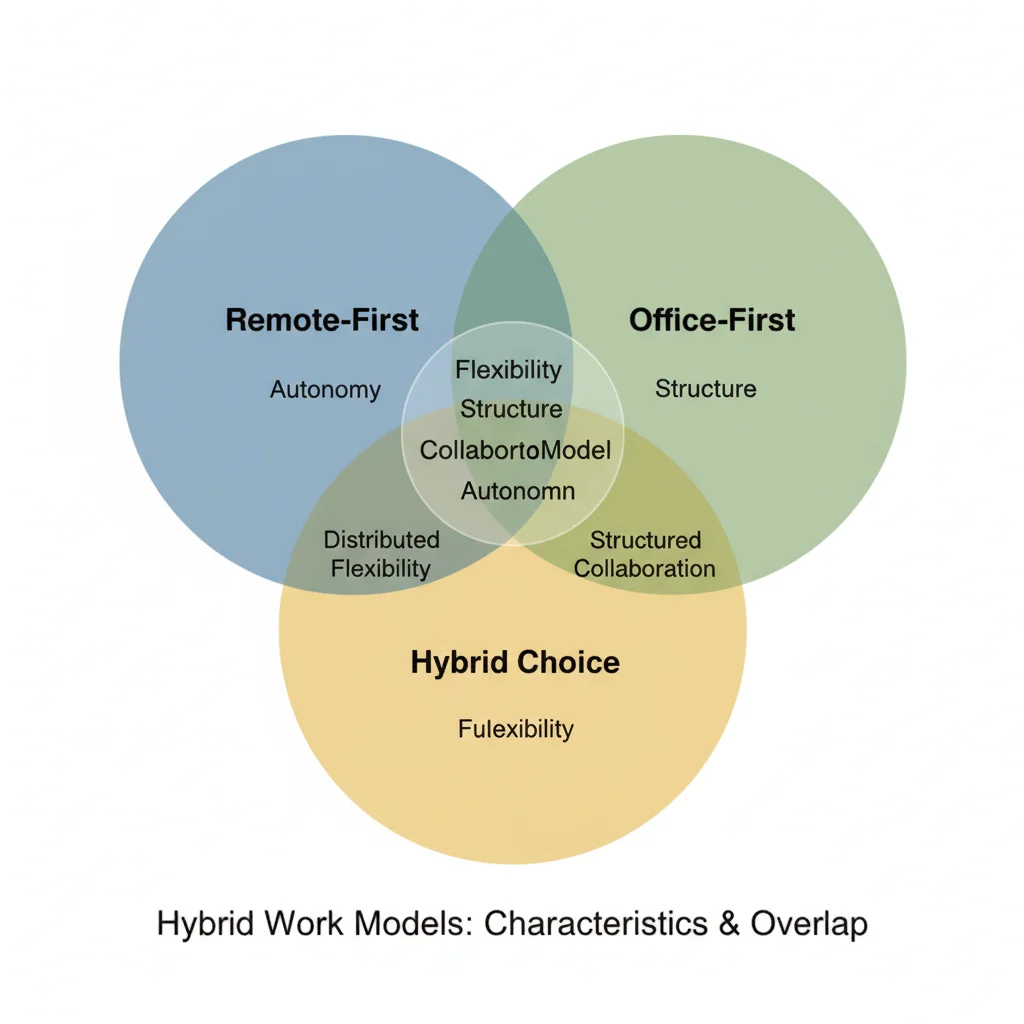
- Employee-Choice Hybrid: Offers the highest flexibility and least structure, empowering individual autonomy.
- Fixed Schedule Hybrid: Provides a balanced approach, offering flexibility within a defined, predictable structure.
- Week-by-Week Rotation Hybrid: Offers periodic structure, with full flexibility during remote weeks and full structure during office weeks.
- Hub-and-Spoke Hybrid: Offers geographical flexibility with localized structural elements.
Collaboration & Culture:
- Fixed Schedule & Week-by-Week: Generally stronger for fostering in-person collaboration and maintaining culture due to mandated co-location periods.
- Employee-Choice & Hub-and-Spoke: Require more intentional effort and technological investment to maintain strong culture and effective collaboration across distributed teams.
Talent Acquisition & Retention:
- Employee-Choice & Hub-and-Spoke: Best for attracting a diverse, geographically dispersed talent pool due to maximum flexibility.
- Fixed Schedule & Week-by-Week: Still broadens the talent pool compared to full in-office, but might exclude those seeking full remote options.
Real Estate & Operational Costs:
- Employee-Choice & Hub-and-Spoke (with co-working): Potential for significant real estate cost savings through downsizing or flexible lease agreements.
- Fixed Schedule & Week-by-Week: May require reconfiguring existing office space rather than significant reduction, depending on peak occupancy needs.
Key Considerations for Implementing Hybrid Work Models
Regardless of the chosen model, successful implementation of hybrid work models hinges on several critical factors:
Technology Infrastructure:
Robust and reliable technology is the backbone of any successful hybrid model. This includes:
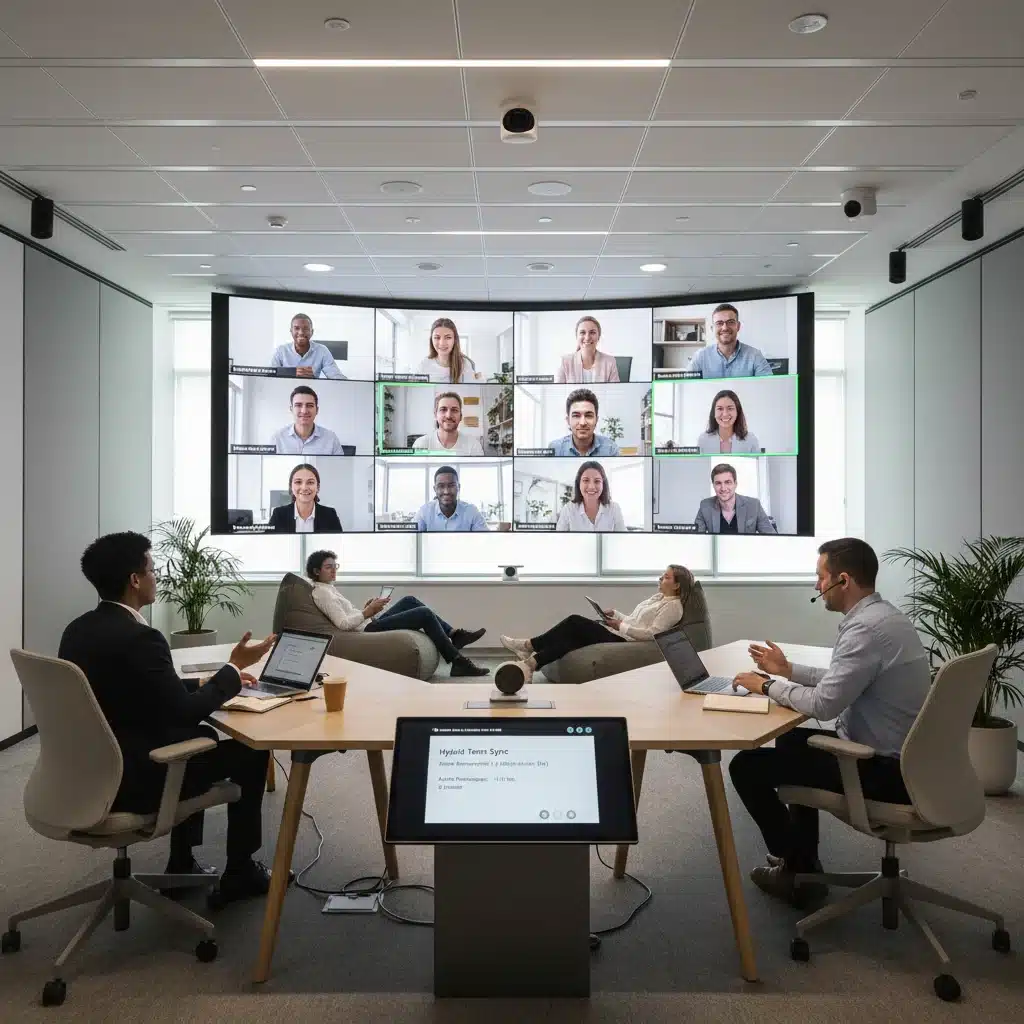
- High-Quality Video Conferencing: Essential for seamless virtual meetings that include both in-office and remote participants.
- Collaboration Platforms: Tools like Slack, Microsoft Teams, or Asana are crucial for communication, project management, and knowledge sharing.
- Cloud-Based Systems: Ensuring all critical applications and data are accessible from anywhere.
- Cybersecurity: Enhanced security measures to protect data and networks across distributed access points.
- Office Booking Systems: For models involving flexible office attendance, efficient desk and room booking systems are vital.
Leadership & Management Training:
Managers need to be equipped with new skills to lead hybrid teams effectively. This includes:
- Managing by Outcomes: Shifting focus from “presenteeism” to results and performance.
- Fostering Inclusion: Ensuring remote employees feel equally valued and have access to opportunities.
- Effective Communication: Mastering both synchronous and asynchronous communication strategies.
- Empathy and Flexibility: Understanding and accommodating the diverse needs of a hybrid workforce.
Culture & Communication:
Maintaining a strong company culture and clear communication channels is paramount:
- Intentional Culture Building: Proactively designing initiatives that reinforce company values across physical and virtual spaces.
- Regular Check-ins: Managers should schedule regular one-on-one and team check-ins to monitor well-being and progress.
- Transparency: Open and honest communication from leadership about company direction and challenges.
- Social Connections: Creating opportunities for informal social interactions, both virtually and in-person.
Equity & Inclusion:
A significant challenge in hybrid environments is ensuring an equitable experience for all employees, regardless of their location:
- Meeting Parity: Designing meetings to be equally effective for both in-person and remote participants (e.g., hybrid meeting etiquette, proper tech setup).
- Career Development: Ensuring remote employees have equal access to mentorship, training, and promotion opportunities.
- Access to Information: All employees should have access to the same information, tools, and resources.
- Avoiding Proximity Bias: Leaders must consciously guard against favoring those they see in person more frequently.
Office Space Redesign:
The role of the physical office is changing from a place of mandatory presence to a hub for collaboration and connection:
- Activity-Based Working: Designing spaces for specific activities – focus zones, collaborative areas, quiet rooms, social hubs.
- Flexible Layouts: Movable furniture and reconfigurable spaces to adapt to different team needs.
- Advanced AV Technology: Equipping meeting rooms with state-of-the-art audio-visual equipment to support hybrid meetings.
- Wellness Amenities: Incorporating elements that support employee well-being, such as natural light, green spaces, and relaxation zones.
The Future Outlook for Hybrid Work in U.S. Companies by 2026
By early 2026, the adoption of sophisticated hybrid work models will be widespread, moving beyond mere adaptation to strategic optimization. Companies that excel in this new paradigm will be those that view hybrid work not just as a logistical challenge but as a competitive advantage. The ability to offer flexibility will be a key differentiator in the war for talent, particularly for skilled professionals who now expect greater autonomy over their work-life integration.
We will likely see further evolution and blending of these models. For instance, a company might adopt a “Fixed Schedule” for core team days but allow “Employee Choice” for individual deep work. The emphasis will shift from rigid policies to adaptable frameworks that can respond to changing business needs and employee preferences. Data analytics will play an increasingly important role, helping organizations understand how their hybrid models impact productivity, engagement, and well-being, allowing for continuous refinement.
Furthermore, the focus will intensify on creating an “equitable hybrid experience.” This means investing in technologies and practices that bridge the gap between in-office and remote employees, ensuring everyone has an equal voice, equal access to opportunities, and feels equally connected to the company’s mission and culture. The “future of work” is not a single destination but an ongoing journey of innovation, empathy, and strategic adaptation, with hybrid work models at its very core.
Conclusion
The journey towards fully optimized hybrid work models is ongoing, but by early 2026, U.S. companies will have largely settled into sophisticated, well-defined approaches. The Fixed Schedule, Employee-Choice, Hub-and-Spoke, and Week-by-Week Rotation models represent the leading strategies for balancing flexibility with structure, collaboration with autonomy. Each model presents unique advantages and challenges, and the “best” choice will always depend on an organization’s specific industry, culture, and workforce needs.
What is clear is that the future of work is undeniably hybrid. Success in this new era will be defined by a company’s ability to strategically implement these models, supported by robust technology, empathetic leadership, and a culture that prioritizes both flexibility and connection. As organizations continue to learn and adapt, the workplace of 2026 will be a testament to human ingenuity in creating environments that empower employees and drive business success in an ever-evolving world.