Quantum Computing’s 2026 Impact on U.S. Cybersecurity Infrastructure

Decoding Quantum Computing’s 2026 Impact on Cybersecurity in U.S. Infrastructure (INSIDER KNOWLEDGE, FINANCIAL IMPACT)
The year 2026 looms large on the horizon for cybersecurity professionals and national security strategists across the United States. It’s not just another date on the calendar; it represents a critical inflection point in the ongoing battle for digital supremacy. The accelerating progress in quantum computing, once a theoretical marvel, is rapidly shifting into an imminent threat, particularly for the foundational pillars of U.S. infrastructure. This article delves deep into the anticipated challenges and strategic imperatives surrounding Quantum Cybersecurity 2026, offering an insider’s perspective on the financial ramifications, the vulnerabilities exposed, and the urgent need for a coordinated, proactive defense strategy.
For too long, the discussions around quantum computing and its implications for cybersecurity have been relegated to academic circles and highly specialized defense contractors. However, the clock is ticking, and the window of opportunity to prepare is rapidly closing. The potential for a quantum computer to break current cryptographic standards, which underpin virtually all secure communications and data storage, is no longer a distant fantasy but a tangible reality that could materialize within the next few years. Our focus here is not on the ‘if’ but the ‘when’ and, more critically, the ‘what next’ for U.S. critical infrastructure.
The Imminent Quantum Threat: Why 2026 is a Critical Deadline
The term “quantum supremacy” has often been associated with a quantum computer performing a task that a classical computer cannot. While impressive, the real concern for cybersecurity lies in “cryptographically relevant quantum computers” (CRQC). These are quantum machines capable of executing Shor’s algorithm, which can efficiently factor large numbers, or Grover’s algorithm, which can speed up database searches. The former poses an existential threat to public-key cryptography (PKC), including RSA and ECC, which secure everything from online banking and government communications to critical infrastructure control systems.
Intelligence agencies and leading quantum research institutions globally are projecting that a CRQC capable of breaking widely used cryptographic algorithms could emerge as early as 2026. This projection is not without caveats, as the exact timeline depends on breakthroughs in quantum error correction and hardware scalability. However, the prudent approach mandates preparing for the worst-case scenario. The “harvest now, decrypt later” attack vector is already a significant concern: adversaries are actively collecting encrypted data today, intending to decrypt it once quantum capabilities become available. This makes the threat immediate, even if the CRQC itself is still a few years away.
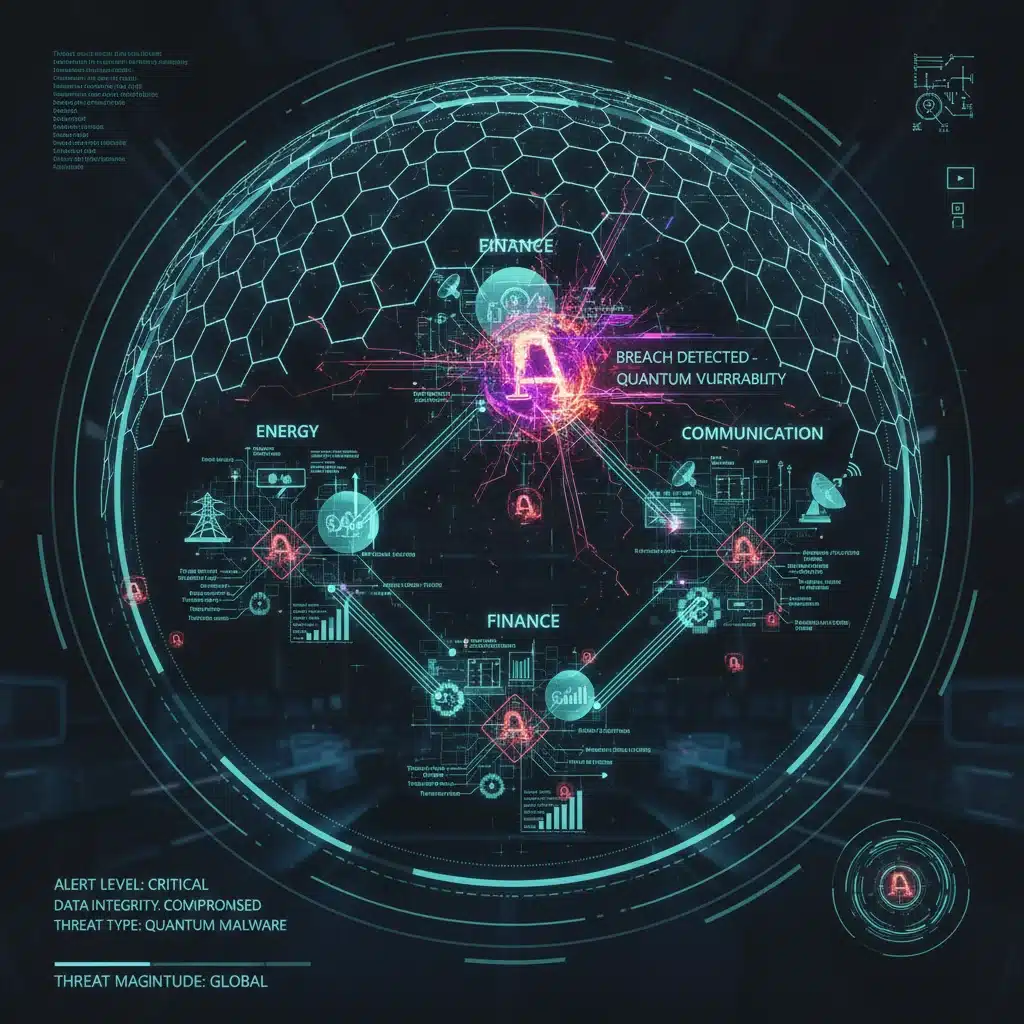
The U.S. critical infrastructure, encompassing sectors like energy, water, telecommunications, finance, and transportation, is particularly vulnerable. These systems rely heavily on robust encryption for secure data exchange, remote operations, and protecting sensitive information. A breach of these systems due to quantum attacks could lead to catastrophic consequences, ranging from widespread power outages and financial system collapse to compromised national defense capabilities. The urgency of addressing Quantum Cybersecurity 2026 cannot be overstated.
Financial Implications: The Bill for Inaction
The financial impact of a successful quantum attack on U.S. infrastructure would be staggering. Estimating the exact cost is complex, but various analyses point to figures in the trillions of dollars. This includes not only the direct costs of system repair, data recovery, and incident response but also the indirect costs of economic disruption, loss of intellectual property, erosion of public trust, and potential geopolitical instability.
- Direct Costs of Cyberattacks: Even without quantum, cyberattacks cost the U.S. economy billions annually. Quantum attacks, with their potential for widespread and deep system compromise, would dwarf these figures. Imagine the cost of rebuilding entire financial networks or energy grids from scratch.
- Loss of Intellectual Property (IP): Sensitive research, trade secrets, and national defense technologies currently protected by strong encryption could be rendered vulnerable. The economic competitive advantage of the U.S. relies heavily on its IP, and its compromise would be a monumental setback.
- Economic Disruption: A successful attack on financial systems could lead to market crashes, bank runs, and a crisis of confidence. Attacks on energy grids or transportation networks could halt commerce and daily life, leading to massive economic losses.
- Regulatory Fines and Legal Liabilities: Organizations that fail to adequately protect their data and systems against known threats, including the impending quantum threat, could face severe regulatory fines and legal challenges from affected parties.
- Reputational Damage: For both government agencies and private corporations, a major quantum-induced breach would severely damage reputation and public trust, leading to long-term negative consequences.
Furthermore, the cost of proactive migration to post-quantum cryptography (PQC) is significant but pales in comparison to the potential cost of inaction. The National Institute of Standards and Technology (NIST) has been leading efforts to standardize PQC algorithms, a critical step. However, the implementation across vast, complex, and often legacy systems within U.S. infrastructure requires substantial investment in research, development, talent acquisition, and hardware/software upgrades. This is not merely an IT budget line item; it is a national security investment.
Vulnerabilities in U.S. Infrastructure Exposed by Quantum Computing
U.S. critical infrastructure is a sprawling, interconnected web of systems, many of which were designed and deployed long before the quantum threat was even on the horizon. This creates a complex tapestry of vulnerabilities that quantum computing could exploit.
Legacy Systems and Technical Debt
Many critical infrastructure components, especially in industrial control systems (ICS) and supervisory control and data acquisition (SCADA) systems, rely on decades-old technology. These legacy systems often use outdated cryptographic protocols or, in some cases, no encryption at all. Upgrading these systems is a monumental challenge due to their continuous operational requirements, specialized hardware, and the sheer complexity of their integration. The technical debt accumulated over years makes them prime targets for quantum-enabled attacks.
Supply Chain Weaknesses
The global supply chain for hardware and software components used in U.S. infrastructure is another significant vulnerability. Integrating PQC solutions requires collaboration and standardization across numerous vendors and suppliers. A single weak link in the supply chain could compromise the entire system. Ensuring that all components, from chips to software libraries, are quantum-resistant will be an enormous undertaking with significant financial and logistical challenges.
Data at Rest and in Transit
All data encrypted with current public-key algorithms is vulnerable. This includes sensitive government communications, financial transactions, personal health information, and proprietary industrial data. The “harvest now, decrypt later” strategy means that even data encrypted today, if intercepted and stored, could be compromised by a CRQC in 2026 or beyond. This necessitates a proactive approach to re-encrypting or migrating sensitive data to PQC-protected environments.
Authentication and Digital Signatures
Digital signatures and authentication mechanisms, critical for verifying identities and ensuring data integrity, also rely on public-key cryptography. Quantum attacks could allow adversaries to forge digital signatures, impersonate legitimate entities, and inject malicious commands into critical systems. This could lead to unauthorized access, data manipulation, and widespread system compromise across infrastructure sectors.
Strategic Imperatives for U.S. Infrastructure: Preparing for Quantum Cybersecurity 2026
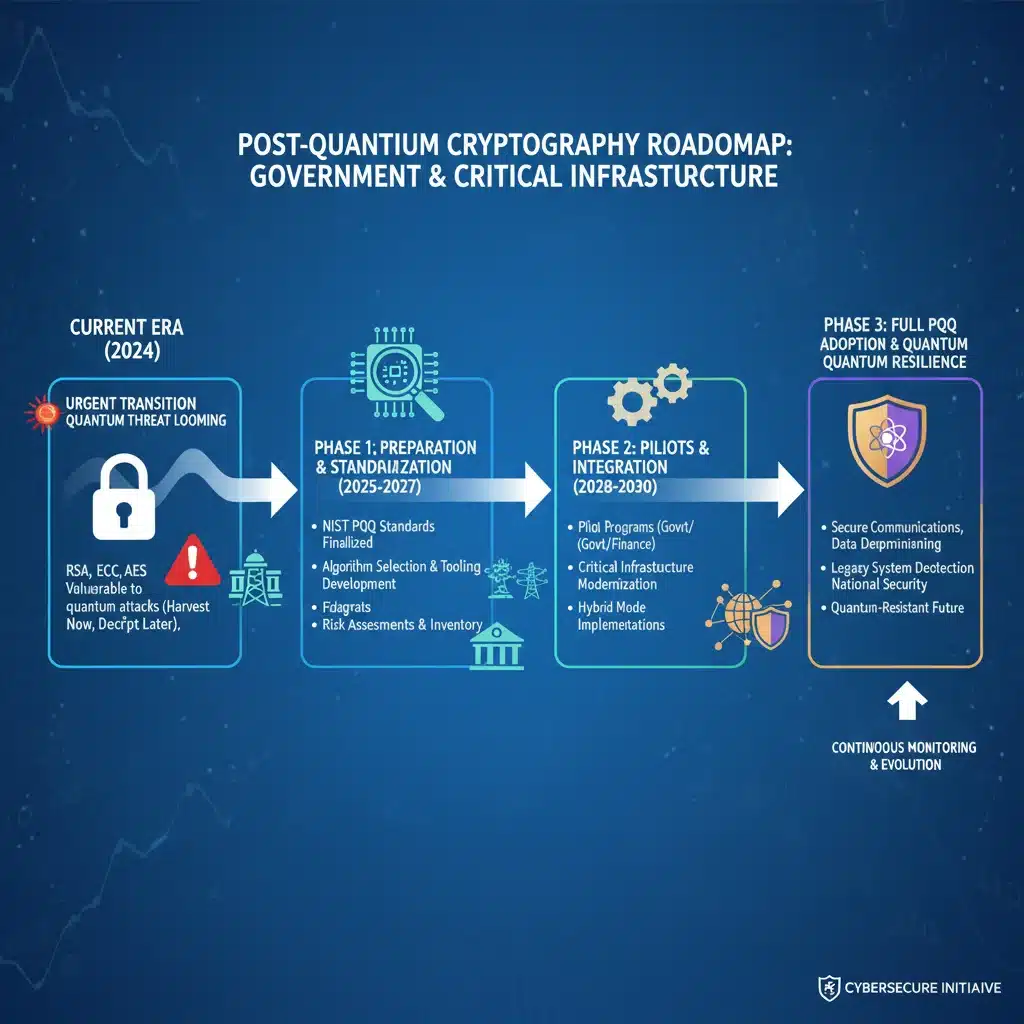
Addressing the quantum threat requires a multi-faceted, coordinated national strategy involving government, industry, and academia. The window for preparation is narrowing, making immediate action paramount.
1. National PQC Migration Strategy and Funding
The U.S. government, through agencies like NIST, CISA, and NSA, has initiated efforts to standardize PQC algorithms and provide guidance. However, a comprehensive national strategy for PQC migration across all critical infrastructure sectors is essential. This strategy must include:
- Mandatory Implementation Deadlines: Clear, enforceable deadlines for federal agencies and critical infrastructure operators to transition to PQC.
- Significant Funding Allocation: Substantial government funding and incentives to support research, development, testing, and deployment of PQC solutions, particularly for sectors with limited resources.
- Interagency Coordination: Enhanced collaboration between government agencies, intelligence communities, and the private sector to share threat intelligence, best practices, and resources.
2. Inventory and Risk Assessment
Organizations must undertake a thorough inventory of all cryptographic assets, protocols, and dependencies within their systems. This includes identifying where current vulnerable algorithms are used, the sensitivity of the data they protect, and the potential impact of their compromise. A comprehensive risk assessment will help prioritize migration efforts and allocate resources effectively. This is a foundational step in any effective Quantum Cybersecurity 2026 strategy.
3. “Crypto-Agility” and Hybrid Approaches
Given the uncertainty surrounding the exact timeline of CRQC development and the long-term security of PQC algorithms, organizations should strive for “crypto-agility.” This means designing systems that can easily swap out cryptographic algorithms as new, stronger ones emerge or as existing ones are broken. A hybrid approach, where both classical and PQC algorithms are used concurrently, can provide an added layer of security during the transition phase, mitigating risks even if a CRQC emerges sooner than expected.
4. Workforce Development and Training
There is a significant shortage of cybersecurity professionals with expertise in quantum technologies and PQC. Investing in workforce development, including scholarships, training programs, and partnerships with universities, is crucial. This will ensure that the U.S. has the skilled personnel required to research, develop, implement, and maintain quantum-resistant systems.
5. International Collaboration and Standardization
The quantum threat is global. International collaboration with allies and partners on PQC research, standardization, and threat intelligence sharing is vital. A fragmented approach could create new vulnerabilities and hinder global cybersecurity efforts. The U.S. must continue to lead and participate in international forums to ensure a harmonized approach to quantum-resistant security.
Insider Knowledge: Practical Steps and Overcoming Inertia
From an insider’s perspective, the biggest hurdle to effective quantum readiness is often organizational inertia and a lack of understanding of the immediate threat. Many decision-makers view quantum computing as a distant, theoretical problem, failing to grasp the “harvest now, decrypt later” scenario and the lengthy migration timelines.
Educating Leadership and Stakeholders
A critical first step for any organization within U.S. infrastructure is to educate its leadership and key stakeholders about the urgency and financial implications of Quantum Cybersecurity 2026. This involves clear, concise briefings that translate complex technical concepts into tangible business and national security risks. Highlighting the financial cost of inaction versus the investment in proactive measures can be a powerful motivator.
Pilot Programs and Early Adoption
Encouraging pilot programs and early adoption of PQC in non-critical or isolated systems can provide valuable lessons learned without risking core operations. This allows organizations to experiment with different PQC algorithms, identify integration challenges, and develop best practices before a full-scale migration. Early adopters can also contribute to the broader PQC ecosystem by providing feedback to standards bodies and vendors.
Vendor Engagement and Due Diligence
Critical infrastructure operators must engage proactively with their technology vendors. They need to demand clear roadmaps for PQC compatibility and ensure that future procurements include quantum-resistant capabilities. Performing due diligence on vendor claims regarding PQC readiness is essential, as some may overstate their capabilities. Organizations should also consider incorporating PQC requirements into their contracts.
Developing a Quantum-Resistant Architecture
Moving beyond simply swapping algorithms, organizations should begin to think about developing a truly “quantum-resistant architecture.” This involves rethinking how data is stored, transmitted, and processed, with quantum security principles embedded from the design phase. This holistic approach will ensure long-term resilience against not only current quantum threats but also future advancements in quantum computing.
The Bottom Line: A Call to Action for Quantum Cybersecurity 2026
The year 2026 is rapidly approaching, and with it, the potential for a seismic shift in the cybersecurity landscape. The U.S. critical infrastructure stands at a crossroads: either embrace the challenge of Quantum Cybersecurity 2026 with urgency and strategic investment or face potentially catastrophic financial and national security consequences. The insider knowledge suggests that while the technical challenges are immense, the greatest obstacles are often human – a lack of awareness, inertia, and insufficient funding.
The time for theoretical discussions is over. The time for decisive, coordinated action is now. Protecting the nation’s digital backbone against the quantum threat requires an unprecedented level of collaboration, investment, and foresight. By prioritizing PQC migration, fostering crypto-agility, developing a skilled workforce, and educating stakeholders, the U.S. can transition its infrastructure into a quantum-resistant future, safeguarding its economic prosperity and national security for generations to come. The financial impact of ignoring this looming threat is simply too high to contemplate.
Further Reading and Resources:
- NIST Post-Quantum Cryptography Standardization Process: csrc.nist.gov/projects/post-quantum-cryptography
- CISA’s Quantum Readiness Resources: cisa.gov/topics/cyber-threats-and-advisories/emerging-technologies/quantum-computing
- Reports from the National Academies of Sciences, Engineering, and Medicine on Quantum Computing and Security.