Future of Work: Remote vs. Hybrid Tech Models 2026
The global pandemic irrevocably altered the landscape of work, pushing businesses worldwide to adapt to new operational paradigms. Nowhere has this transformation been more pronounced than in the U.S. tech industry, a sector historically at the forefront of innovation and adaptability. As we fast-forward to 2026, the dust has largely settled, but the debate between fully remote and hybrid work models continues to evolve, shaped by economic pressures, technological advancements, and shifting employee expectations. This comprehensive analysis delves into the Future Work Models for U.S. tech, offering insider projections and a deep dive into the nuances that will define success in the coming years.
The transition from traditional office-centric models to distributed workforces was initially a necessity. However, what began as a temporary measure has blossomed into a fundamental re-evaluation of how, when, and where work gets done. The tech industry, with its inherent reliance on digital tools and a workforce often accustomed to flexible arrangements, was uniquely positioned to embrace this shift. Now, as companies strategize for 2026, the question is not if flexibility will remain, but rather what form it will take and what implications it holds for productivity, culture, and talent acquisition.
The Evolution of Remote Work in Tech: A Look Back and Forward
Before 2020, remote work in the tech sector was often seen as a perk, offered by progressive companies or reserved for specific roles. The pandemic, however, forced an immediate and widespread adoption. Many tech giants, from Google to Meta, initially announced long-term or even permanent remote work options. This period served as a massive, unplanned experiment, yielding invaluable data and insights into the efficacy, challenges, and benefits of a fully distributed workforce.
By 2026, the initial euphoria and the subsequent fatigue associated with fully remote work will have matured into a more nuanced understanding. Companies will have refined their remote-first strategies, investing heavily in collaboration tools, digital infrastructure, and leadership training tailored for distributed teams. The early challenges of isolation, communication breakdowns, and maintaining company culture will have been largely addressed through dedicated initiatives and technological solutions.
However, the fully remote model, while offering unparalleled flexibility and access to a global talent pool, has also presented persistent challenges. Concerns about serendipitous innovation, the organic development of company culture, and the onboarding of new employees without in-person interaction remain. These factors are precisely why many tech companies are now gravitating towards or refining hybrid models, seeking a balance between the benefits of remote work and the perceived advantages of co-location.
The Future Work Models in tech are not a one-size-fits-all solution. Different companies, depending on their size, culture, product, and specific needs, will adopt varying degrees of remote and in-office presence. The key will be agility and the ability to adapt as market conditions and employee preferences continue to shift.
Hybrid Work: The Dominant Contender for 2026?
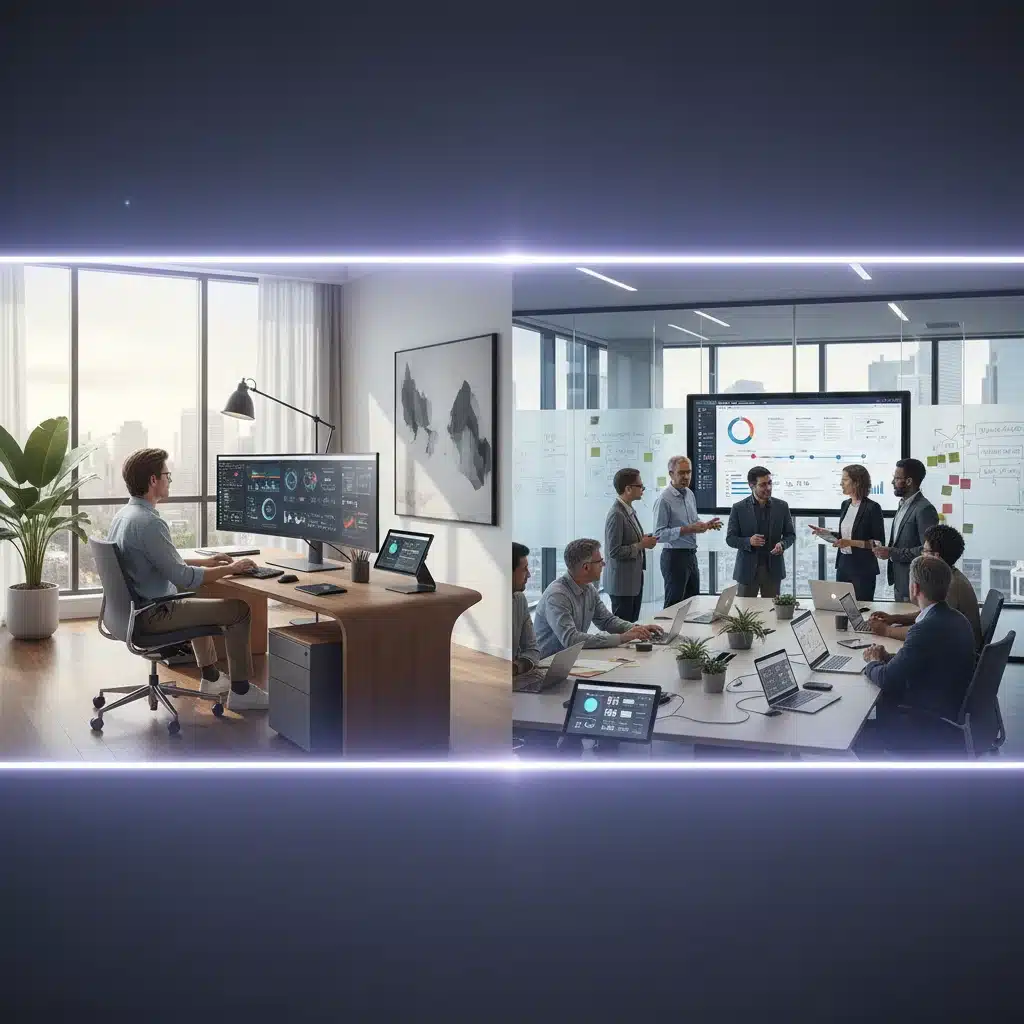
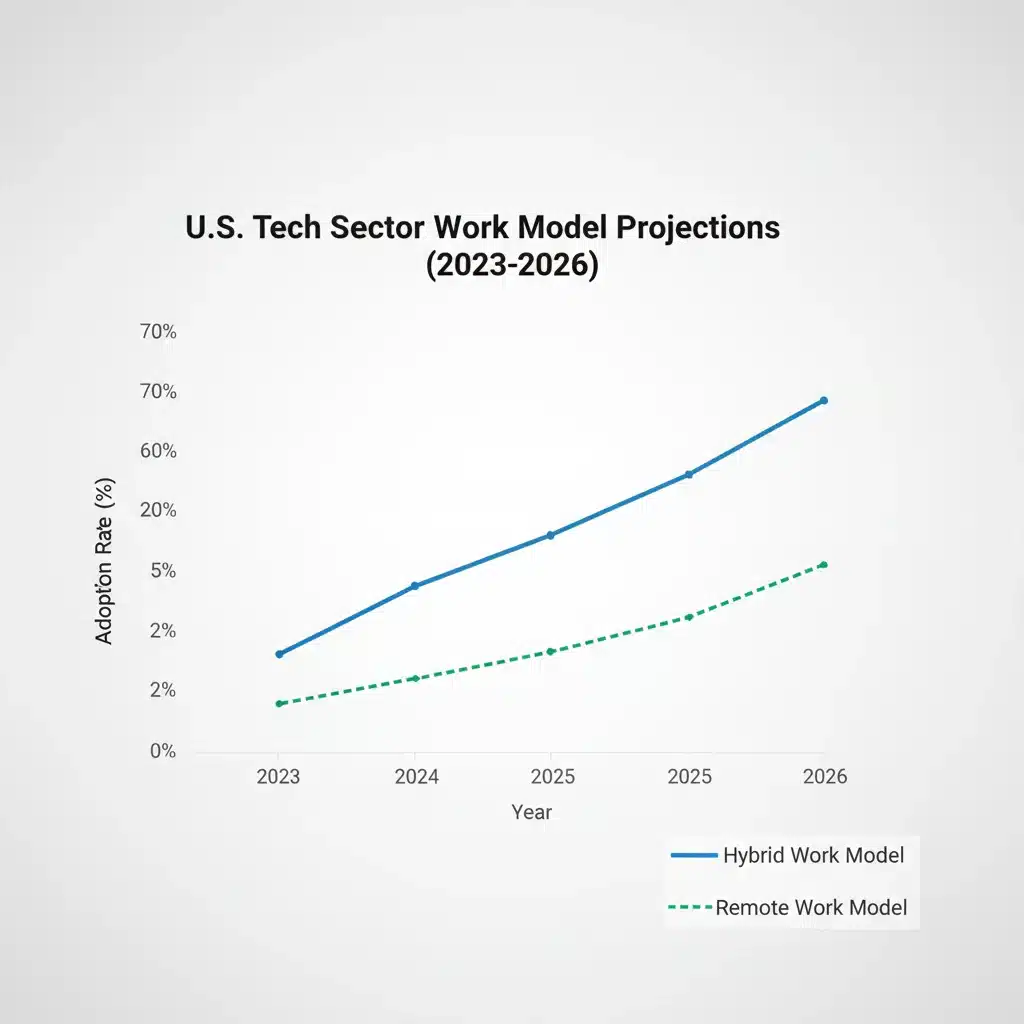
The hybrid model, broadly defined as a blend of in-office and remote work, appears to be the pragmatic middle ground many U.S. tech companies are converging upon for 2026. This approach aims to capture the best of both worlds: the flexibility and expanded talent pool of remote work, combined with the benefits of in-person collaboration, mentorship, and culture building that a physical office provides. But what does ‘hybrid’ truly mean in practice, and how will it manifest in the tech industry?
Defining Hybrid: More Than Just a Schedule
By 2026, the concept of hybrid work will have evolved beyond a simple ‘two days in the office, three days at home’ schedule. It will encompass a spectrum of arrangements, each tailored to specific team needs, project requirements, and individual roles. We can expect to see:
- Structured Hybrid: Companies mandate specific in-office days for all employees or certain teams to ensure regular face-to-face interaction and coordination.
- Flexible Hybrid: Employees have more autonomy to choose their in-office days, often based on team needs or personal preference, with a minimum number of office days per month or quarter.
- Hybrid-by-Design: Offices are redesigned to be collaboration hubs rather than traditional workspaces. Desks might be unassigned (‘hot-desking’), and the focus shifts to meeting rooms, brainstorming areas, and social spaces.
The tech industry’s emphasis on project-based work, rapid iteration, and cross-functional collaboration makes it particularly suited for a well-implemented hybrid model. The ability to bring teams together for intensive sprints, brainstorming sessions, or critical presentations, while allowing for focused individual work remotely, offers a compelling value proposition.
Key Drivers for Hybrid Adoption
Several factors are pushing tech companies towards hybrid models:
- Employee Preference: Surveys consistently show a strong desire among tech workers for continued flexibility. A fully remote mandate can lead to feelings of isolation for some, while a full return to office can be a deal-breaker for others. Hybrid offers a compromise.
- Culture and Innovation: Many leaders believe that in-person interaction is crucial for fostering company culture, spontaneous innovation, and effective mentorship, especially for junior employees. Hybrid models aim to retain these benefits.
- Real Estate Optimization: Companies are re-evaluating their vast office footprints. Hybrid models allow for smaller, more efficiently utilized office spaces, transforming them into dynamic hubs rather than static workstations.
- Leadership Comfort and Control: Some leaders find it easier to manage and motivate teams when there’s at least some physical presence, allowing for informal check-ins and direct observation.
The Future Work Models in tech will largely depend on how effectively companies can navigate these drivers and create a truly integrated experience that doesn’t create a ‘two-tier’ system of in-office vs. remote employees.
The Enduring Appeal of Fully Remote for Specific Niches
While hybrid is gaining traction, fully remote work is far from obsolete. By 2026, it will continue to thrive in specific segments of the U.S. tech industry, particularly for companies that are either ‘remote-first’ by design or those that have successfully navigated its challenges.
Who Will Remain Fully Remote?
- Startups and Distributed Teams: Many new tech ventures are founded with a remote-first ethos, leveraging a global talent pool from day one. This allows them to scale rapidly without geographical constraints.
- Specialized Roles: Certain highly specialized tech roles, such as particular types of software development, data science, or cybersecurity, can be performed effectively from anywhere, often requiring deep focus with minimal spontaneous interaction.
- Companies Prioritizing Talent Reach: For organizations struggling to attract talent in competitive local markets, a fully remote model opens up access to a much wider pool of skilled professionals, potentially reducing salary pressures in high-cost areas.
- Mature Remote Organizations: Companies that have invested heavily in remote infrastructure, culture-building programs, and asynchronous communication strategies will likely continue with their fully remote setup, having ironed out many of the initial kinks.
The success of fully remote models by 2026 will hinge on robust asynchronous communication strategies, advanced collaboration tools, and a strong emphasis on outcomes rather than presence. Companies committed to this model will also need to actively combat potential issues of employee isolation and ensure equitable career progression opportunities for all team members, regardless of location.
Insider Projections for 2026: Key Trends and Strategic Shifts
Based on current trajectories and expert insights, here are the key projections for Future Work Models in U.S. tech by 2026:
1. "Intentional Presence" will Replace "Mandated Presence"
Instead of rigid rules about office days, companies will focus on creating compelling reasons for employees to come into the office. This means offices will be redesigned as destinations for specific activities: team building, strategic planning, intensive collaboration, or client meetings. The office will become a tool for connection and specific work types, not just a place to sit and code.
2. Asynchronous Communication Becomes Paramount
Regardless of the model, the ability to communicate effectively across time zones and without immediate responses will be critical. Tech stacks will heavily favor tools that support detailed documentation, clear project management, and accessible knowledge bases. This reduces meeting fatigue and allows for deeper, uninterrupted work.
3. "Work From Anywhere" vs. "Work From Home"
The distinction will become clearer. While many companies support working from home, true "work from anywhere" policies (allowing employees to work from different states or even countries for extended periods) will remain a competitive differentiator, primarily adopted by fully remote organizations or those with highly flexible hybrid setups. Tax and legal implications will continue to be a significant barrier for widespread "work from anywhere" adoption.
4. The Rise of the "Chief Remote/Hybrid Officer" or "Head of Future of Work"
Managing distributed teams is complex. By 2026, more companies will have dedicated roles responsible for strategy, tools, culture, and policies related to remote and hybrid work. This signifies the permanent structural shift in how organizations view their operating models.
5. Focus on "Digital Inclusion" and "Proximity Bias" Mitigation
One of the biggest challenges in hybrid models is ensuring that remote employees are not disadvantaged in terms of career growth, access to information, or influence. Companies will invest heavily in training managers to lead equitably, implementing technologies that level the playing field for all participants in meetings and discussions, and creating clear pathways for advancement for remote staff.
6. Performance Metrics Shift to Outcomes
The focus will move away from hours spent or visible presence towards measurable outcomes and impact. This requires clearer goal setting, regular feedback, and robust performance management systems tailored for distributed environments. This shift is beneficial for both remote and hybrid models, promoting efficiency and accountability.
7. Mental Health and Well-being Support Will Be Integrated
The strains of remote and hybrid work (e.g., blurred boundaries, digital fatigue, isolation) have highlighted the importance of employee well-being. By 2026, comprehensive mental health support, flexible working hours, and initiatives to promote work-life balance will be integral components of tech companies’ talent strategies, regardless of their work model.
Challenges and Considerations for Tech Companies
Navigating the Future Work Models comes with its own set of challenges that tech companies must proactively address:
- Maintaining Company Culture: This remains a top concern. Hybrid models risk creating a ‘us vs. them’ dynamic between in-office and remote workers. Deliberate efforts in virtual team building, inclusive communication, and shared experiences are crucial.
- Cybersecurity and Data Privacy: With distributed workforces, the attack surface expands. Companies must continually invest in robust cybersecurity measures, employee training, and secure cloud infrastructure to protect sensitive data.
- Compliance and Legal Complexities: Working across different states or countries introduces complex legal, tax, and HR compliance issues. Companies offering extensive remote options must navigate these carefully.
- Infrastructure and Technology Investment: Ensuring all employees have access to reliable internet, ergonomic home office setups, and the latest collaboration tools is an ongoing investment.
- Leadership and Management Training: Managing a distributed or hybrid team requires a different skill set than managing an in-person one. Leaders need training in asynchronous communication, empathy, trust-building, and performance management in a flexible environment.
Addressing these challenges effectively will be key to the long-term success of any chosen work model in the tech industry.
The Impact on Talent Acquisition and Retention
The choice of work model is a powerful lever in the war for talent, particularly in the highly competitive U.S. tech sector. By 2026, companies offering greater flexibility will likely have a significant advantage in attracting and retaining top talent.
Attracting Top Talent
Job seekers, especially in tech, now prioritize flexibility as much as, if not more than, salary in some cases. Companies with clear, well-articulated remote or hybrid policies are more attractive. This also allows access to a broader talent pool, extending beyond expensive tech hubs to regions with lower costs of living, potentially leading to more diverse teams and innovative perspectives.
Retention Strategies
For existing employees, the ability to maintain a work-life balance through flexible arrangements is a major factor in job satisfaction and loyalty. Companies that attempt to revert to a full-time office mandate without compelling reasons risk significant attrition, as employees seek opportunities that align with their preferred working styles. Retention strategies will increasingly incorporate flexible work as a core component of employee value propositions.
Moreover, the Future Work Models will necessitate a re-evaluation of compensation strategies. Companies that hire talent in lower-cost regions may adjust salaries to local market rates, a practice that can be contentious but is increasingly common. Transparency and clear communication around these policies will be vital to maintain trust and fairness.
Redefining the Physical Office Space
As work models evolve, so too must the physical office. By 2026, the traditional office as a place for individual heads-down work will be largely obsolete in many tech companies. Instead, offices will transform into:
- Collaboration Hubs: Spaces designed for team meetings, brainstorming, workshops, and cross-functional project work.
- Social & Community Centers: Areas focused on fostering connection, informal interactions, and company culture through events, lounges, and dining facilities.
- Innovation Labs: Dedicated spaces for specific projects requiring specialized equipment or intensive, in-person development.
- Onboarding & Training Zones: Physical spaces for new hires to connect with their teams and immerse themselves in company culture, often structured around specific in-person programs.
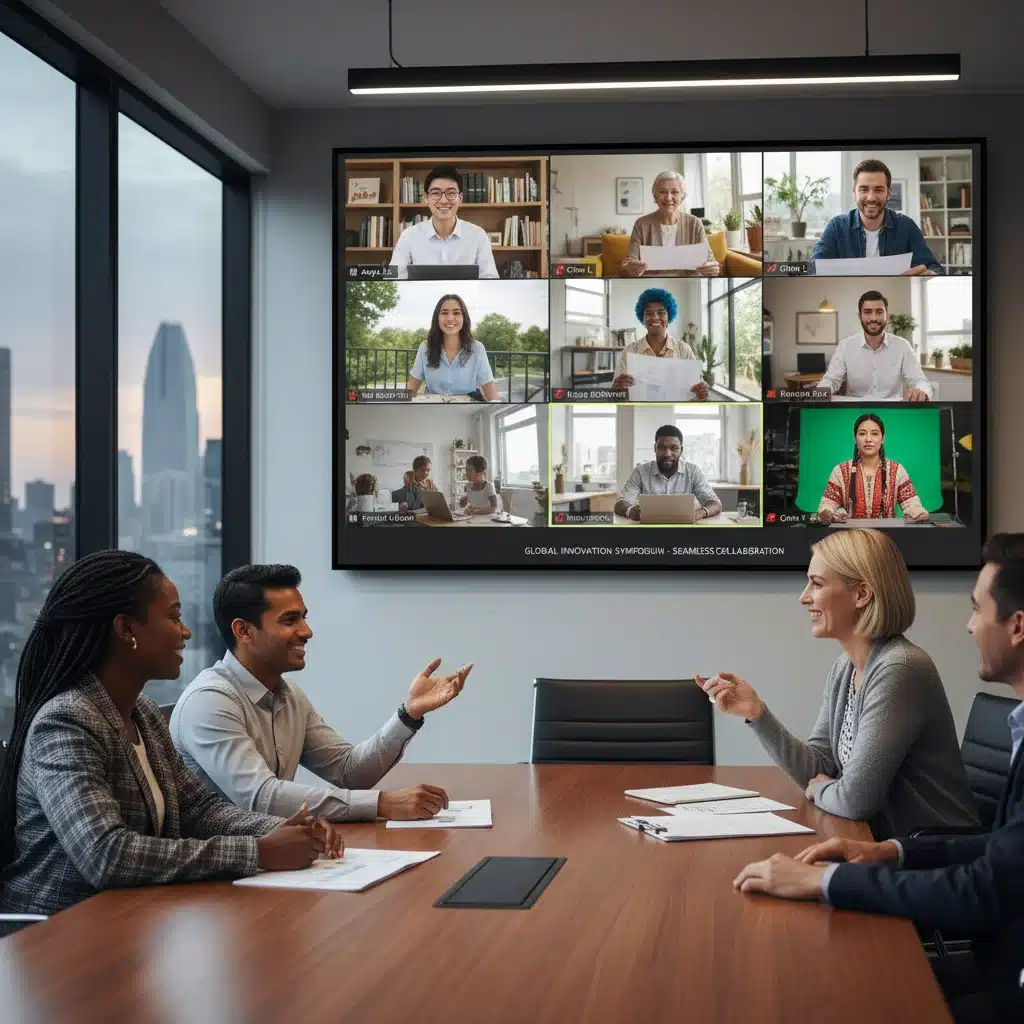
Investment will shift from maximizing desk count to optimizing for flexible use, advanced AV technology for seamless hybrid meetings, and creating an inviting atmosphere that encourages voluntary attendance. The office will become a destination, not a default.
The Role of Technology in Shaping Future Work Models
Technology is not merely an enabler of remote and hybrid work; it is a fundamental driver of its evolution. By 2026, advancements in several key areas will further refine and optimize these models:
- Advanced Collaboration Platforms: Beyond basic video conferencing, platforms will offer more immersive virtual meeting experiences, AI-powered transcription and summarization, and integrated project management features.
- "Digital Twin" Workspaces: Virtual representations of physical offices or team spaces, allowing remote workers to feel more connected and aware of ongoing activities.
- Augmented and Virtual Reality (AR/VR): While still nascent, AR/VR could play a role in creating truly immersive virtual meeting environments, reducing the feeling of distance and enhancing collaboration for specific tasks like design reviews or complex data visualization.
- AI-Powered Productivity Tools: AI will assist with task management, scheduling, communication optimization, and even identifying potential burnout, helping employees manage their flexible schedules more effectively.
- Enhanced Cybersecurity Solutions: As distributed work becomes the norm, sophisticated endpoint protection, zero-trust architectures, and continuous monitoring will be standard to secure remote access and data.
The tech industry itself will be at the forefront of developing these tools, creating a self-reinforcing cycle where new technologies enable more effective remote and hybrid models, which in turn drive demand for further technological innovation.
Conclusion: A Dynamic and Evolving Landscape
The Future Work Models for U.S. tech in 2026 will be characterized by a dynamic interplay between fully remote and increasingly sophisticated hybrid approaches. While hybrid appears to be the predominant choice for many, fully remote models will continue to thrive in specific niches, driven by their ability to tap into global talent pools and offer ultimate flexibility.
Success in this evolving landscape will not come from rigid adherence to one model but from strategic adaptability. Tech companies that listen to their employees, invest in appropriate technology and infrastructure, cultivate inclusive cultures, and empower leaders to manage distributed teams effectively will be the ones that attract and retain the best talent, foster innovation, and ultimately thrive. The future of work is not a fixed destination but a continuous journey of experimentation, learning, and refinement, with flexibility and employee empowerment at its core.