Metaverse Economy: 5 Lucrative Revenue Streams for U.S. Entrepreneurs in 2026

The metaverse, once a concept confined to science fiction, is rapidly evolving into a tangible digital frontier, brimming with unprecedented economic opportunities. For U.S. entrepreneurs, understanding and strategically positioning themselves within this nascent “Metaverse Economy” is not just an option, but a critical imperative for future growth. As we approach 2026, the foundational layers of this virtual world are solidifying, paving the way for innovative business models and substantial financial returns. This comprehensive guide delves into five of the most promising Metaverse Revenue Streams for U.S. entrepreneurs, offering a detailed analysis of their potential, financial impact, and strategic considerations for success.
The global metaverse market size was valued at USD 61.8 billion in 2022 and is projected to grow at a compound annual growth rate (CAGR) of 41.6% from 2023 to 2030, according to Grand View Research. This explosive growth underscores the immense potential of the Metaverse Economy. For U.S. entrepreneurs, this isn’t just about adopting new technology; it’s about pioneering new forms of commerce, entertainment, and social interaction. The metaverse offers a persistent, interconnected set of virtual spaces where users can interact with each other, digital objects, and AI-driven entities. This interaction creates a fertile ground for value creation, from virtual real estate to digital fashion, and from immersive experiences to decentralized finance. The key to unlocking these Metaverse Revenue Streams lies in identifying areas where real-world demand can be met or enhanced by virtual solutions, and where new, entirely digital needs can be satisfied.
As we explore these five key revenue streams, it’s essential to consider the underlying technologies driving the metaverse: blockchain for digital ownership and secure transactions, artificial intelligence for dynamic content and intelligent NPCs, virtual and augmented reality for immersive experiences, and high-speed internet for seamless connectivity. These technological pillars support a complex ecosystem where innovation is rewarded and early movers can establish significant market share. U.S. entrepreneurs, with their history of technological adoption and market disruption, are uniquely positioned to capitalize on this digital gold rush. This article aims to provide a roadmap for navigating the Metaverse Economy, highlighting actionable strategies and potential pitfalls to consider.
1. Virtual Real Estate and Digital Land Development
One of the most talked-about and rapidly expanding Metaverse Revenue Streams is virtual real estate. Just as in the physical world, digital land within prominent metaverse platforms like Decentraland, The Sandbox, and Somnium Space holds significant value. This value is driven by scarcity, location (proximity to popular hubs or celebrity-owned parcels), and potential for development. U.S. entrepreneurs can generate substantial income by buying, selling, renting, and developing virtual land.
Financial Impact and Growth Potential
The financial impact of virtual real estate has been staggering. In 2021, virtual land sales surpassed $500 million, and forecasts suggest this market could reach $1 billion by 2027. Individual land parcels have sold for millions of dollars, attracting both institutional investors and individual speculators. For U.S. entrepreneurs, this translates into opportunities for significant capital gains through strategic acquisitions and sales. Beyond mere speculation, the true long-term value lies in development.
Developing virtual land involves creating structures, experiences, and applications on owned parcels. This can range from virtual storefronts and art galleries to entertainment venues, interactive games, and educational hubs. Entrepreneurs can charge for access to these experiences, sell digital goods within them, or lease space to other businesses. The U.S. market, with its strong entrepreneurial spirit and robust tech infrastructure, is particularly well-suited for this type of digital development. Companies specializing in metaverse architecture, design, and experience creation are already emerging, providing services to landowners who lack the technical expertise.
Strategic Considerations for Entrepreneurs
- Platform Selection: Research different metaverse platforms to understand their user base, economic models, and development tools. Each platform has its unique ecosystem and community.
- Location, Location, Location: Just like physical real estate, virtual land value is heavily influenced by its digital “location.” Proximity to popular areas or future development zones can drive up prices.
- Development and Utility: Simply owning land isn’t enough. Creating compelling experiences or valuable utilities on your digital property is crucial for attracting users and generating revenue. This could involve hosting events, building games, or offering unique digital services.
- Partnerships: Collaborate with digital artists, game developers, or brands to enhance your virtual properties and expand their reach.
The barriers to entry for virtual real estate can be high, given the appreciating value of prime parcels. However, opportunities exist in secondary markets, less-known platforms, or by focusing on development services rather than direct land ownership. U.S. entrepreneurs with expertise in architecture, urban planning, game design, or digital marketing can offer their skills to landowners, creating a lucrative service-based Metaverse Revenue Stream.
2. NFT Creation and Digital Collectibles
Non-Fungible Tokens (NFTs) are the backbone of digital ownership in the metaverse, representing unique digital assets that can be bought, sold, and traded. The market for NFTs exploded in recent years, and while the initial hype may have cooled, the underlying utility and potential for this Metaverse Revenue Stream remain incredibly strong, especially as the metaverse expands. For U.S. entrepreneurs, NFT creation and the broader digital collectibles market offer diverse avenues for income.
Financial Impact and Growth Potential
The NFT market recorded over $25 billion in trading volume in 2021 and continued to see significant activity in 2022 and 2023, despite market corrections. Analysts predict the global NFT market size to reach $211.72 billion by 2030. This growth is fueled by the increasing adoption of blockchain technology and the demand for unique digital assets within virtual worlds. Entrepreneurs can create and sell a vast array of NFTs, including:
- Digital Art: Unique pieces of digital art, ranging from static images to animated GIFs and generative art.
- In-Game Assets: Skins, weapons, tools, and other items that provide utility or aesthetic value within metaverse games and experiences.
- Virtual Fashion: Wearable digital clothing and accessories for avatars, allowing users to express their identity in the metaverse.
- Music and Media: Unique tracks, albums, or video clips as NFTs, offering artists new ways to monetize their work and connect with fans.
- Collectibles: Digital trading cards, historical moments, or limited-edition items that hold value due to scarcity and provenance.
U.S. entrepreneurs with creative skills – artists, designers, musicians, and developers – can mint their own NFTs and sell them on various marketplaces like OpenSea, Rarible, and SuperRare. Beyond direct sales, royalties on secondary market transactions provide a continuous income stream, a revolutionary concept for creators. Moreover, businesses can leverage NFTs for loyalty programs, exclusive access, or as tickets to virtual events, intertwining them with other Metaverse Revenue Streams.
Strategic Considerations for Entrepreneurs
- Utility and Community: NFTs with practical utility within the metaverse (e.g., access to exclusive content, in-game advantages) or those that foster a strong community tend to perform better.
- Authenticity and Scarcity: Ensure your NFTs are truly unique and limited. Provenance on the blockchain is key to establishing trust and value.
- Marketing and Storytelling: A compelling narrative and effective marketing are crucial for generating interest in your NFT collections. Build a community around your creations.
- Intellectual Property: Understand the legal aspects of NFT creation, including copyright and intellectual property rights, especially when using existing brands or characters.
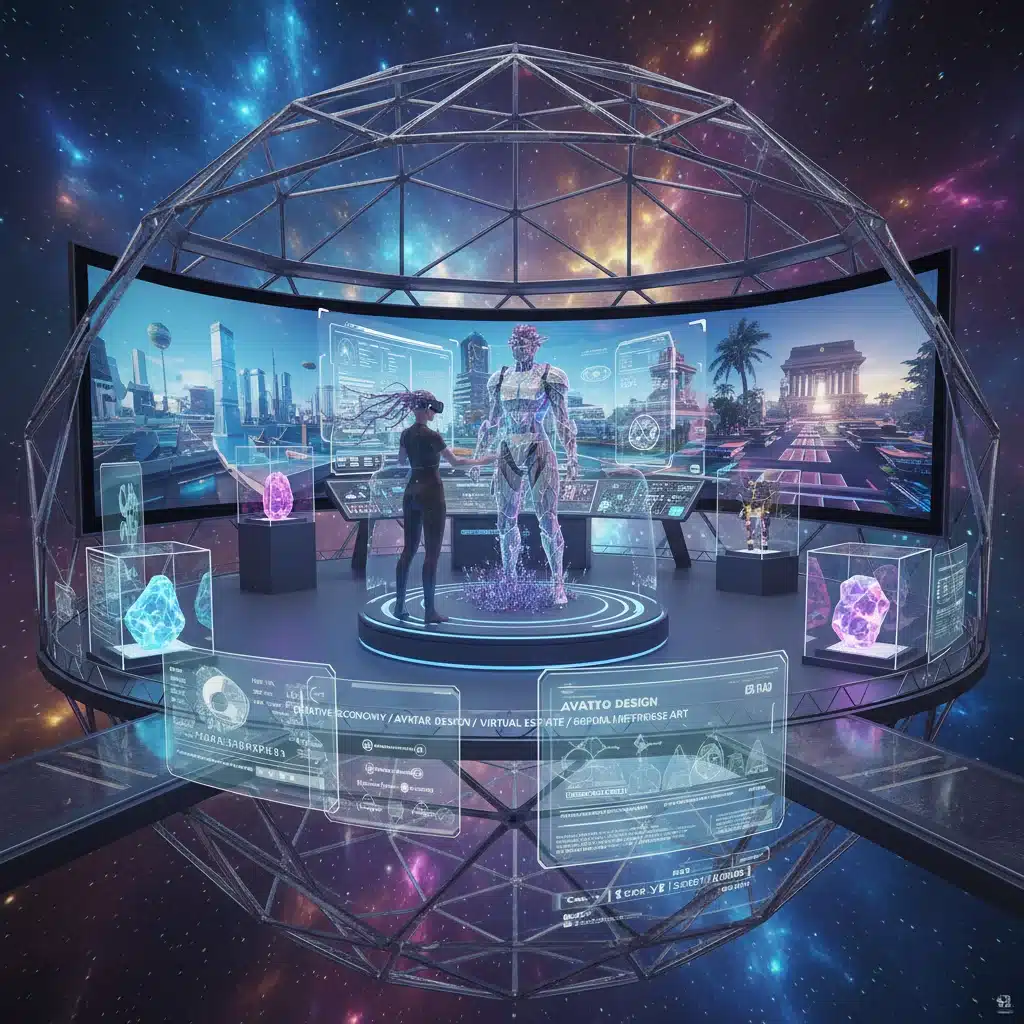
The U.S. boasts a vibrant creative industry and a strong legal framework, making it an ideal hub for NFT innovation. Entrepreneurs can capitalize on this by not only creating their own NFTs but also by offering services such as NFT consulting, smart contract development, or marketplace curation. The potential for the NFT market as a core Metaverse Revenue Stream is immense, particularly as more users enter virtual worlds and seek to personalize their digital identities and experiences.
3. Immersive Experience Design and Virtual Events
The metaverse is fundamentally about experiences. As users spend more time in virtual worlds, the demand for engaging, interactive, and high-quality immersive experiences and virtual events will skyrocket. This presents a significant Metaverse Revenue Stream for U.S. entrepreneurs specializing in design, development, and event management.
Financial Impact and Growth Potential
The virtual events market alone is projected to reach $400 billion by 2027, with a substantial portion of this activity migrating to the metaverse. Companies are increasingly looking to host product launches, conferences, concerts, and even educational seminars in virtual environments, recognizing the global reach and cost-effectiveness. For entrepreneurs, this means opportunities to:
- Design and Build Virtual Worlds: Create custom metaverse environments for brands, educational institutions, or entertainment companies.
- Host Virtual Events: Organize and manage concerts, fashion shows, art exhibitions, and corporate meetings within the metaverse, charging for tickets, sponsorships, or premium access.
- Develop Interactive Experiences: Build engaging games, simulations, or training modules that leverage the immersive capabilities of the metaverse.
- Provide Avatars and Personalization: Offer services for creating custom avatars, digital clothing, and accessories that enhance user identity within these experiences.
The financial potential is diverse. Event organizers can generate revenue from ticket sales, sponsorships, and virtual merchandise. Experience designers can charge for development services, licensing their creations, or even running subscription models for access to exclusive content. U.S. companies are at the forefront of virtual reality (VR) and augmented reality (AR) technology, which are crucial for delivering truly immersive metaverse experiences. This technological advantage, coupled with a strong entertainment and media industry, positions U.S. entrepreneurs to lead in this space.
Strategic Considerations for Entrepreneurs
- Technical Expertise: A strong understanding of 3D modeling, game development engines (e.g., Unity, Unreal Engine), and VR/AR development is essential.
- User Engagement: Focus on creating experiences that are not only visually appealing but also highly interactive and engaging to retain users.
- Monetization Models: Explore various monetization strategies such as pay-per-access, freemium models with in-experience purchases, or sponsorship opportunities.
- Partnerships with Brands: Collaborate with established brands looking to enter the metaverse to create bespoke experiences and reach a wider audience.
The demand for skilled metaverse experience designers and event managers is growing rapidly. U.S. entrepreneurs can establish agencies specializing in metaverse solutions, offering end-to-end services from concept development to execution and post-event analytics. This Metaverse Revenue Stream is not just about creating digital spaces, but about crafting compelling narratives and interactions that resonate with users and provide tangible value.
4. Metaverse Advertising and Brand Activations
As the metaverse attracts a larger and more engaged audience, it naturally becomes a powerful new frontier for advertising and brand activations. This represents a significant Metaverse Revenue Stream for businesses that can effectively connect brands with virtual world users. U.S. entrepreneurs can capitalize on this by offering specialized marketing services, developing advertising technologies, or creating branded metaverse experiences.
Financial Impact and Growth Potential
Global digital advertising spending is projected to reach over $700 billion by 2026, and a growing portion of this budget will inevitably flow into the metaverse. Brands are eager to establish a presence in these new digital spaces to reach younger demographics, enhance brand loyalty, and explore innovative marketing strategies. The financial opportunities include:
- In-Metaverse Advertising: Placing digital billboards, product placements, or interactive ads within virtual environments.
- Branded Virtual Experiences: Creating entire brand-themed worlds or games where users can interact with products and services in an immersive way.
- Metaverse Influencer Marketing: Collaborating with popular metaverse avatars or content creators to promote products and services.
- NFTs as Marketing Tools: Using branded NFTs for loyalty programs, exclusive access, or as digital collectibles that promote brand engagement.
- Data Analytics and Targeting: Developing tools to track user behavior and engagement within the metaverse to offer more precise advertising.
U.S. advertising agencies and marketing tech companies are well-positioned to adapt their expertise to the metaverse. The ability to measure engagement, target specific demographics within virtual worlds, and create memorable brand interactions will be highly valued. This Metaverse Revenue Stream is not just about replicating traditional ads in a 3D environment; it’s about crafting interactive, value-driven engagements that blur the lines between advertising and entertainment.
Strategic Considerations for Entrepreneurs
- Understanding Metaverse Demographics: Tailor advertising strategies to the specific user base and culture of different metaverse platforms.
- Interactive and Experiential Ads: Move beyond static ads to create immersive and engaging brand activations that users want to participate in.
- Ethical Advertising: Be mindful of user privacy and avoid intrusive advertising practices that could alienate metaverse communities.
- Measurement and ROI: Develop robust analytics to demonstrate the effectiveness and return on investment (ROI) of metaverse advertising campaigns to clients.

For U.S. entrepreneurs, this means developing specialized agencies focused solely on metaverse marketing, building proprietary advertising tech for virtual worlds, or consulting with brands on their metaverse entry strategies. The early movers in this space will have a significant advantage in shaping the future of digital advertising within the Metaverse Economy.
5. Decentralized Finance (DeFi) and Blockchain Integration
The metaverse, at its core, is often built upon blockchain technology, enabling true digital ownership and verifiable transactions. This fundamental integration opens up vast opportunities within Decentralized Finance (DeFi) for U.S. entrepreneurs, creating a powerful Metaverse Revenue Stream centered around financial services and blockchain solutions.
Financial Impact and Growth Potential
The DeFi market, already valued in the tens of billions of dollars, is poised for massive expansion as it integrates more deeply with metaverse ecosystems. As virtual economies grow, so does the need for secure, transparent, and efficient financial mechanisms. U.S. entrepreneurs can tap into this by:
- Developing Metaverse-Native Wallets: Creating secure digital wallets specifically designed for storing metaverse assets (NFTs, cryptocurrencies) and facilitating in-world transactions.
- Building Decentralized Exchanges (DEXs): Facilitating the trading of virtual assets, cryptocurrencies, and NFTs directly within metaverse platforms without intermediaries.
- Offering Lending and Borrowing Protocols: Enabling users to lend out their metaverse assets (e.g., virtual land, rare NFTs) for interest or borrow against them.
- Creating Metaverse Payment Solutions: Developing seamless payment gateways that allow users to easily purchase digital goods and services using various cryptocurrencies.
- Providing Financial Advisory for Digital Assets: Offering expert advice on investing in virtual real estate, NFTs, and other metaverse-related financial instruments.
The financial impact of these services is substantial. As more users enter the metaverse, the volume of transactions will increase dramatically, driving demand for robust DeFi infrastructure. The U.S. has a strong financial technology (fintech) sector and a growing embrace of blockchain, making it a fertile ground for entrepreneurs to innovate in this space. The ability to provide secure, user-friendly, and compliant DeFi solutions within the metaverse will be a key differentiator.
Strategic Considerations for Entrepreneurs
- Security and Compliance: Given the financial nature of these services, robust security measures and adherence to regulatory compliance (e.g., KYC/AML) are paramount.
- Interoperability: Develop solutions that can seamlessly integrate across different metaverse platforms and blockchain networks to maximize reach.
- User Experience: Simplify complex DeFi concepts and create intuitive interfaces to attract a broader user base, including those new to blockchain.
- Education and Trust: Educate users about the benefits and risks of DeFi in the metaverse to build trust and foster adoption.
U.S. entrepreneurs with expertise in blockchain development, cybersecurity, and financial services are uniquely positioned to leverage this Metaverse Revenue Stream. From developing new forms of digital currency backed by metaverse assets to creating insurance products for virtual property, the intersection of DeFi and the metaverse is ripe with innovation and significant financial opportunities.
Challenges and Considerations for U.S. Entrepreneurs
While the Metaverse Economy presents immense opportunities, U.S. entrepreneurs must also navigate a landscape filled with challenges. Understanding these hurdles is crucial for developing resilient business models and sustainable Metaverse Revenue Streams.
Technological Maturity and Interoperability
The metaverse is still in its early stages of development. While significant progress has been made, true interoperability – the ability to seamlessly move avatars, assets, and data between different virtual worlds – remains a significant challenge. This fragmentation can limit market reach and user experience. Entrepreneurs must consider which platforms to build on, or focus on solutions that bridge these disparate worlds.
Regulatory Uncertainty
The regulatory landscape for the metaverse, NFTs, and cryptocurrencies is still evolving. Governments, including the U.S., are grappling with how to classify and regulate digital assets, virtual economies, and user interactions within these new environments. This uncertainty can create legal and compliance risks for businesses operating in the metaverse. Entrepreneurs need to stay informed about potential regulations concerning taxation, intellectual property, data privacy, and consumer protection.
User Adoption and Onboarding
Despite the hype, mass adoption of the metaverse is not yet a reality. Many potential users face barriers such as the high cost of VR/AR hardware, technical complexities, or simply a lack of compelling reasons to spend significant time in virtual worlds. Entrepreneurs must focus on creating experiences that offer clear value and are accessible to a broad audience, simplifying the onboarding process for new users.
Cybersecurity and Digital Safety
As the metaverse becomes more integrated into daily life, cybersecurity threats will inevitably increase. Protecting digital assets, personal data, and user identities within virtual worlds is paramount. Entrepreneurs developing metaverse solutions must prioritize robust security measures to prevent hacks, fraud, and other malicious activities, ensuring a safe environment for users and their investments.
Competition and Innovation
The metaverse is a highly competitive space, attracting significant investment from tech giants and startups alike. Maintaining a competitive edge requires continuous innovation, adaptability, and a deep understanding of evolving user needs and technological advancements. U.S. entrepreneurs must be prepared to iterate rapidly and differentiate their offerings in a crowded market.
Economic Volatility
The value of digital assets and cryptocurrencies can be highly volatile, influenced by market sentiment, technological shifts, and broader economic trends. Businesses relying heavily on these assets for their Metaverse Revenue Streams must have strategies in place to mitigate financial risks associated with price fluctuations. Diversification of income sources and prudent financial management are essential.
Addressing these challenges requires a combination of technological expertise, strategic foresight, and a willingness to adapt. U.S. entrepreneurs who can navigate this complex environment while delivering innovative and valuable solutions are best positioned to thrive in the burgeoning Metaverse Economy.
Conclusion: Seizing the Metaverse Opportunity
The Metaverse Economy is not a distant dream but a rapidly unfolding reality, presenting an unparalleled landscape of opportunity for U.S. entrepreneurs. By 2026, the five Metaverse Revenue Streams discussed – virtual real estate, NFT creation, immersive experience design, metaverse advertising, and DeFi integration – will have matured into significant pillars of this new digital frontier. Each offers distinct pathways for innovation, value creation, and substantial financial returns.
For entrepreneurs, the time to engage with the metaverse is now. Early adoption and strategic positioning can lead to significant competitive advantages. Whether it’s through developing compelling virtual worlds, crafting unique digital assets, orchestrating engaging virtual events, pioneering new advertising paradigms, or building the financial infrastructure of the future, the potential for growth is immense. The U.S., with its dynamic entrepreneurial ecosystem, technological prowess, and access to capital, is uniquely positioned to lead this global shift.
However, success in the metaverse will not come without its challenges. Navigating technological complexities, regulatory uncertainties, and the need for continuous innovation will be critical. Entrepreneurs must remain agile, prioritize user experience, and build secure, trustworthy platforms. By understanding the intricacies of the Metaverse Economy and strategically investing in these emerging revenue streams, U.S. entrepreneurs can not only secure their financial future but also play a pivotal role in shaping the next evolution of the internet. The metaverse is an open canvas, and the boldest and most visionary entrepreneurs will be the ones to paint its future, reaping the rewards of this exciting new digital frontier.