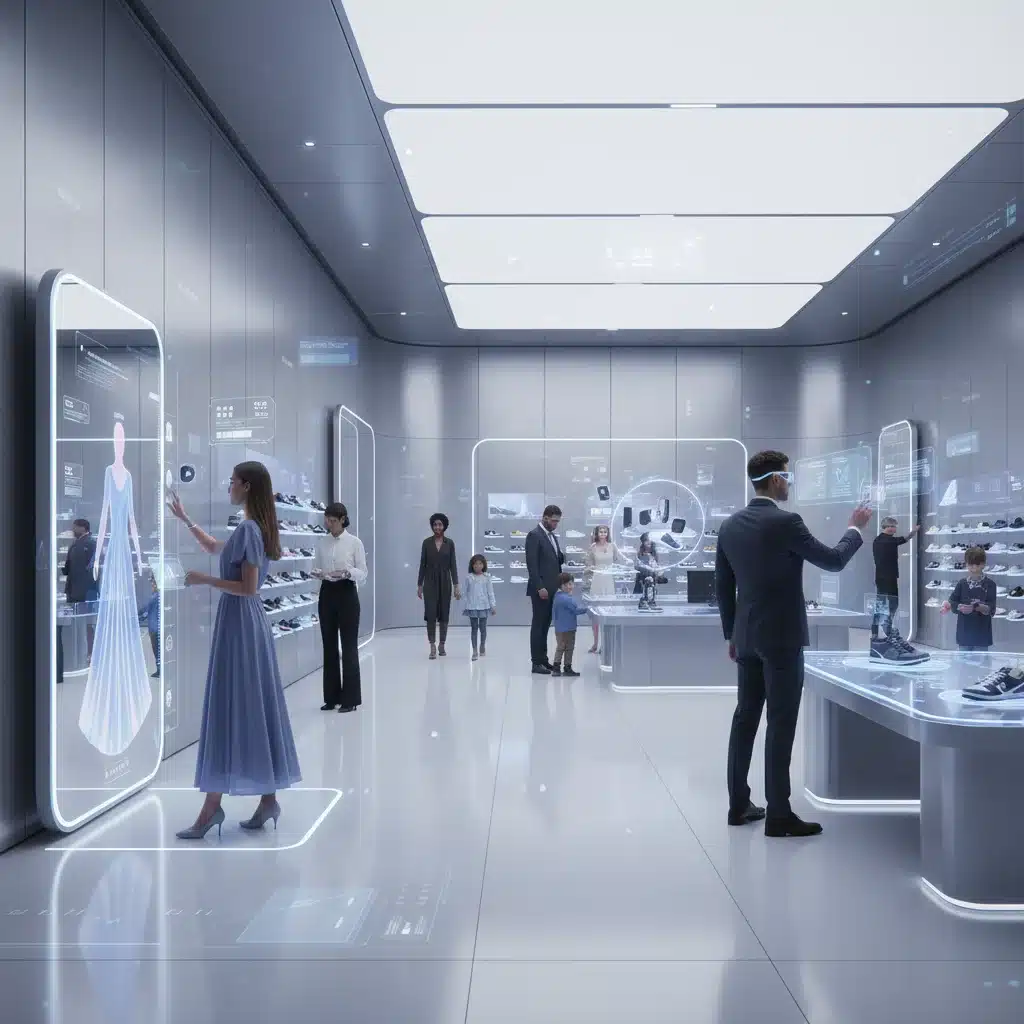
Augmented Reality in Retail: 5 U.S. Brands Leading 2026 Customer Experience
The retail landscape is in a constant state of evolution, driven by technological advancements and ever-increasing consumer expectations. Among the most transformative technologies reshaping this sector, Augmented Reality (AR) stands out. AR retail experience is no longer a futuristic concept; it’s a present-day reality rapidly gaining traction, promising to redefine how we shop, interact with brands, and make purchasing decisions. By 2026, AR will be an indispensable component of the customer journey for forward-thinking U.S. brands.
This comprehensive analysis delves into the pivotal role of AR in retail, examining its current impact and projecting its trajectory. We will explore how AR enhances the customer experience, from visualization and personalization to engagement and efficiency. More importantly, we will shine a spotlight on five prominent U.S. brands that are not merely adopting AR but are actively leading its integration, setting benchmarks for innovation and customer satisfaction. Their strategies offer invaluable insights into the future of retail and the power of the AR retail experience.
The transition from traditional brick-and-mortar shopping to a seamless blend of physical and digital interactions is accelerating. Consumers today expect more than just products; they demand experiences, convenience, and personalization. Augmented Reality delivers on all these fronts, bridging the gap between the digital and physical worlds in ways that were once unimaginable. From virtual try-ons to interactive product demonstrations, AR is empowering customers with information and immersion, transforming passive browsing into active engagement. The brands that master this technology will undoubtedly dominate the market in the coming years.
The Transformative Power of Augmented Reality in Retail
Augmented Reality overlays digital information onto the real world, enhancing our perception and interaction with products and environments. In retail, this translates into a myriad of applications that elevate the customer journey. The core appeal of the AR retail experience lies in its ability to provide immersive, interactive, and highly personalized encounters that traditional retail methods often struggle to deliver.
Bridging the Physical and Digital Divide
One of AR’s most significant contributions is its capacity to blur the lines between online and offline shopping. E-commerce, while convenient, often lacks the tactile and sensory feedback of in-store shopping. AR addresses this by allowing customers to visualize products in their own environment, try on items virtually, or even interact with digital product models. This not only reduces uncertainty but also fosters a stronger sense of connection with the product, a crucial element for enhancing the AR retail experience.
Enhanced Product Visualization and Try-On
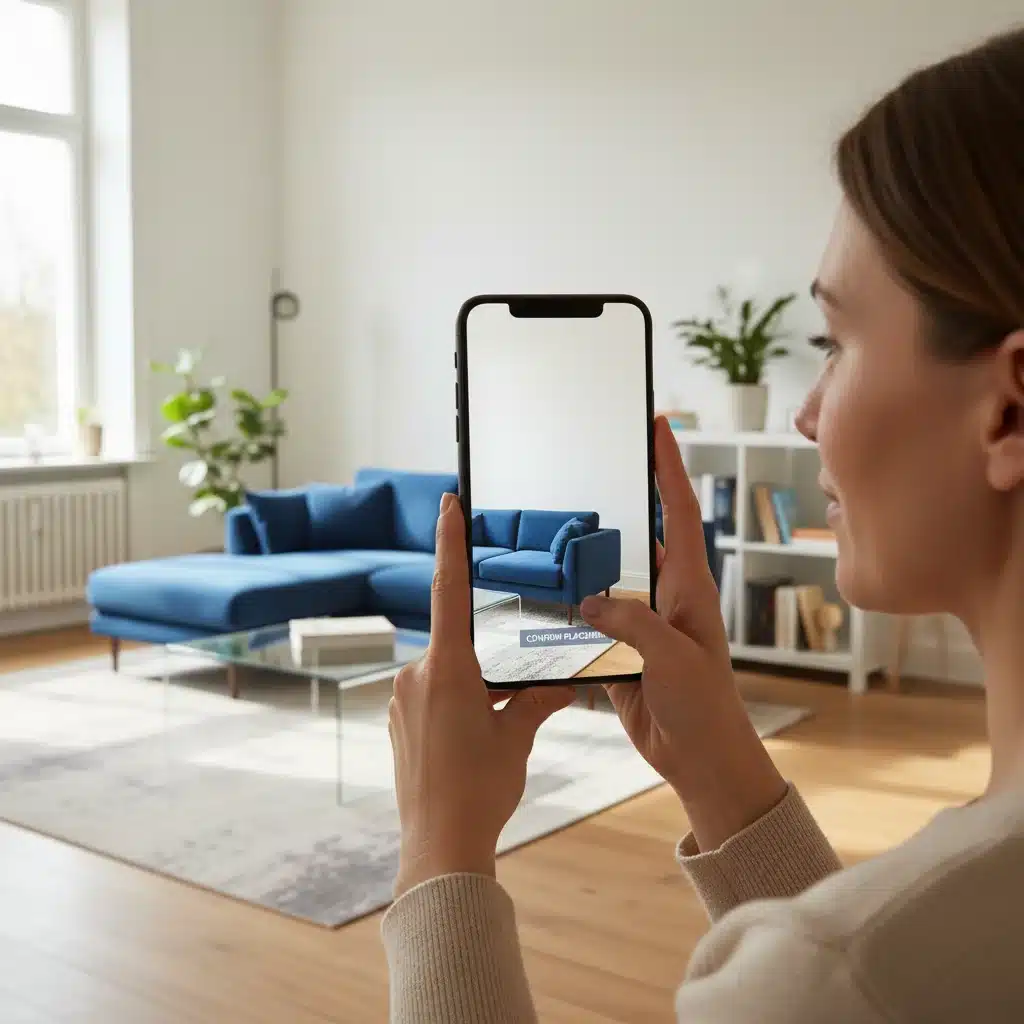
Imagine being able to see how a new sofa would look in your living room before purchasing it, or trying on different shades of lipstick without applying a single physical product. AR makes this possible. For furniture retailers, AR apps allow customers to place 3D models of items in their homes, scaled correctly and viewed from any angle. In fashion and beauty, virtual try-on experiences enable customers to experiment with clothing, accessories, and makeup, reducing the need for physical samples and minimizing returns. This direct visualization is a game-changer for the AR retail experience, building confidence and satisfaction.
Personalization at Scale
AR offers unprecedented opportunities for personalization. By leveraging user data and preferences, AR applications can tailor product recommendations, display relevant information, or even adapt the virtual environment to suit individual tastes. This level of personalized interaction creates a more engaging and memorable shopping experience, making customers feel understood and valued. The AR retail experience is not just about showing products; it’s about showing the right products, in the right way, to the right customer.
Interactive Engagement and Storytelling
Beyond practical applications, AR can transform shopping into an entertaining and informative experience. Brands can use AR to tell compelling product stories, offer interactive tutorials, or create gamified shopping journeys. This increased engagement not only captures attention but also deepens brand loyalty. For instance, a customer could scan a product label with their phone and trigger an AR animation showcasing the product’s origin, manufacturing process, or unique features. Such immersive storytelling significantly enhances the AR retail experience.
Operational Efficiency and Reduced Returns
From a business perspective, AR also brings tangible benefits in terms of operational efficiency. By allowing customers to better visualize products before purchase, AR significantly reduces the likelihood of returns due to dissatisfaction or incorrect fit. This translates into lower operational costs, improved inventory management, and a more sustainable retail model. The positive impact on the bottom line further solidifies the case for investing in the AR retail experience.
5 U.S. Brands Leading the AR Retail Experience by 2026
As we look towards 2026, several U.S. brands are at the forefront of integrating AR into their retail strategies, demonstrating innovative approaches to enhance the customer journey. These brands are not just experimenting with AR; they are embedding it into their core operations, recognizing its potential to create competitive advantages and foster deeper customer relationships. Let’s explore their pioneering efforts in shaping the AR retail experience.
1. IKEA: Furnishing Homes with Virtual Precision
IKEA has long been a trailblazer in democratizing home furnishings, and their adoption of AR is a natural extension of this philosophy. Their ‘IKEA Place’ app, launched years ago, was one of the earliest and most successful examples of AR in retail. By 2026, IKEA’s AR capabilities are expected to be even more sophisticated, offering unparalleled precision and integration.
AR Strategy: IKEA’s AR strategy centers on empowering customers to visualize furniture and decor items in their own living spaces before making a purchase. The ‘IKEA Place’ app uses Apple’s ARKit (and similar Android frameworks) to accurately render 3D models of IKEA products at scale within a user’s room. This eliminates much of the guesswork associated with furniture shopping, reducing buyer’s remorse and returns.
Impact on Customer Experience: For customers, the AR retail experience with IKEA means peace of mind. They can confidently choose items knowing they will fit aesthetically and dimensionally. The app also serves as an inspiration tool, allowing users to experiment with different layouts and styles. By 2026, we anticipate more advanced features such as multi-item placement, AI-driven style recommendations based on existing room decor, and even AR-guided assembly instructions, further solidifying IKEA’s position as a leader in AR retail experience.
Insider Knowledge: IKEA is reportedly exploring AR applications that go beyond simple placement, including virtual room design services where a customer can collaborate with an IKEA designer in an AR environment, making real-time adjustments to a virtual representation of their home. This moves the AR retail experience from visualization to co-creation.
2. Sephora: The Virtual Beauty Advisor
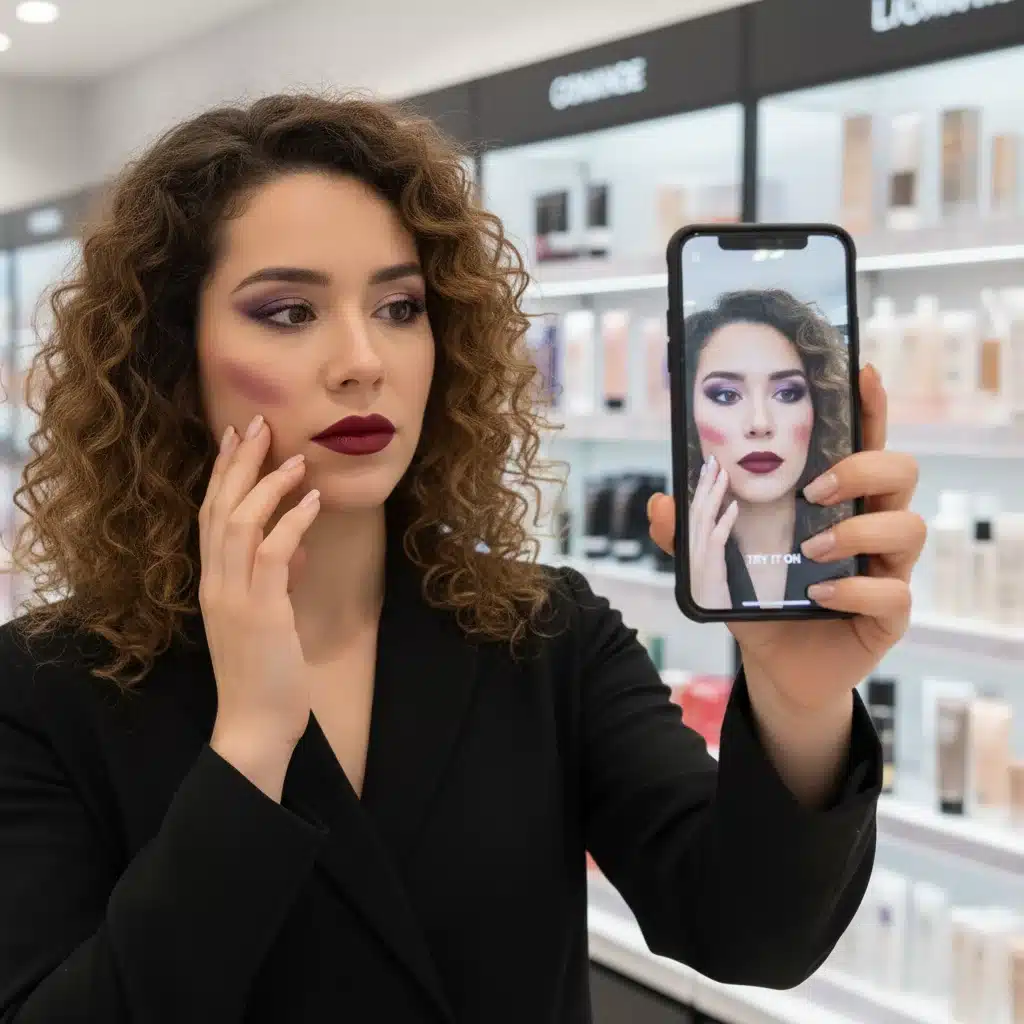
Sephora has consistently been at the forefront of beauty retail innovation, and their embrace of AR has transformed how consumers discover and try on makeup. Their ‘Virtual Artist’ feature, integrated into their app and in-store kiosks, is a prime example of a highly effective AR retail experience.
AR Strategy: Sephora’s AR strategy focuses on virtual try-on for makeup products. Using facial recognition and AR technology, customers can virtually apply various shades of lipstick, eyeshadow, blush, and even false lashes. This allows for experimentation without the need for physical samples, which is particularly appealing from a hygiene perspective and for online shoppers.
Impact on Customer Experience: The AR retail experience offered by Sephora is all about convenience, discovery, and confidence. Customers can quickly browse and test hundreds of products, find their perfect shade, and share looks with friends. By 2026, Sephora is expected to expand its AR capabilities to include virtual skincare consultations, where AR can analyze skin conditions and recommend personalized product routines, as well as AR-powered tutorials for makeup application, further elevating the personalized AR retail experience.
Insider Knowledge: Sephora is investing heavily in AI-powered AR, where machine learning algorithms will not only apply virtual makeup but also provide real-time feedback on color matching based on skin tone, lighting conditions, and even outfit choices. This intelligent integration will make the AR retail experience even more indispensable for beauty enthusiasts.
3. Nike: Immersive Footwear Customization and Fit
Nike, a global leader in athletic footwear and apparel, is leveraging AR to enhance product customization, fit, and immersive brand engagement. Their AR initiatives are designed to bring the digital design studio to the consumer, offering a truly unique AR retail experience.
AR Strategy: Nike’s AR strategy includes tools like ‘Nike Fit,’ which uses computer vision and AR to measure a customer’s foot with incredible accuracy, recommending the perfect shoe size across different styles. Additionally, Nike is experimenting with AR for virtual try-on of shoes and personalized design experiences, allowing customers to visualize custom colorways and materials on their feet.
Impact on Customer Experience: The AR retail experience with Nike addresses a common pain point: finding the right shoe size and fit, especially when shopping online. ‘Nike Fit’ reduces returns and improves customer satisfaction. Furthermore, AR customization tools empower customers to be co-creators, fostering a deeper connection with the brand and its products. By 2026, expect Nike to integrate AR into live sports events for interactive fan experiences, offering virtual merchandise try-ons, and expanding AR design studios into physical retail spaces, creating a hybrid AR retail experience that blurs online and offline.
Insider Knowledge: Nike is reportedly exploring ‘phygital’ experiences where customers can design shoes in AR, then have their designs immediately sent to a local micro-factory for rapid production. This hyper-personalization, driven by an advanced AR retail experience, could revolutionize the footwear industry.
4. Lowe’s: DIY Projects Made Easier with AR
Lowe’s, a major home improvement retailer, is strategically using AR to assist customers with their DIY projects, making complex tasks more manageable and inspiring confidence. Their AR applications are designed to provide practical utility, enhancing the AR retail experience for home renovators.
AR Strategy: Lowe’s has introduced AR tools that allow customers to visualize products like appliances, paint colors, and flooring in their homes. Beyond simple placement, they’ve experimented with features that enable users to measure spaces using AR, or even receive AR-guided instructions for assembly or installation. The ‘Lowe’s HoloRoom’ was an early, albeit more experimental, attempt at immersive design using mixed reality.
Impact on Customer Experience: For home improvement enthusiasts, the AR retail experience from Lowe’s is about reducing project anxiety and increasing success rates. Visualizing how materials will look and fit before purchase saves time, money, and frustration. By 2026, Lowe’s is expected to offer more comprehensive AR project planning tools, including virtual walkthroughs of renovated spaces, AR-powered tutorials for complex installations, and even real-time AR assistance from Lowe’s experts during a project. This focus on practical application makes the AR retail experience highly valuable.
Insider Knowledge: Lowe’s is reportedly collaborating with contractors and professional builders to develop AR tools that streamline on-site planning and material ordering, extending the AR retail experience beyond the consumer and into professional services, further cementing its utility.
5. Amazon: The Omnichannel AR Giant
As the undisputed e-commerce giant, Amazon’s foray into AR is about extending its dominance into the physical world and enriching its vast product catalog with immersive features. Amazon’s AR initiatives are broad, reflecting its diverse product offerings and its ambition to lead the omnichannel AR retail experience.
AR Strategy: Amazon has integrated AR features directly into its main shopping app, allowing customers to view thousands of products – from electronics to home decor – in 3D within their own environment. They’ve also experimented with AR for package delivery visualization and even AR-powered showrooms. Their ‘Amazon AR View’ is a testament to their commitment to integrating AR into everyday shopping.
Impact on Customer Experience: Amazon’s AR retail experience brings the convenience of online shopping together with the visualization benefits of in-store browsing. Customers can confidently purchase items knowing how they will look and fit in their homes. By 2026, Amazon is likely to expand AR to virtually try on clothing and accessories from its fashion brands, offer AR-guided product setup for electronics, and potentially even integrate AR into its physical retail stores (like Amazon Go or Amazon Fresh) for enhanced navigation and product discovery. This comprehensive approach ensures a seamless AR retail experience across all touchpoints.
Insider Knowledge: Amazon is reportedly investing heavily in AR glasses and head-mounted displays, aiming for a future where AR shopping is a hands-free, always-on experience. This long-term vision for the AR retail experience could fundamentally change how consumers interact with products and brands.
The Future of AR Retail Experience: Trends and Predictions for 2026 and Beyond
The innovation demonstrated by these leading brands provides a clear roadmap for the future of the AR retail experience. By 2026, we can expect several key trends to solidify and shape the industry:
Ubiquitous AR Integration
AR will no longer be a niche feature but a standard offering across most major retail platforms and physical stores. From product pages on e-commerce sites to interactive displays in brick-and-mortar locations, the AR retail experience will be seamlessly integrated into every stage of the customer journey. This widespread adoption will make AR a fundamental expectation rather than a novel addition.
Hyper-Personalization Driven by AI and AR
The synergy between Artificial Intelligence and AR will unlock unprecedented levels of personalization. AR applications will use AI to analyze customer data, preferences, and even emotional responses to tailor product recommendations and virtual experiences. This means an AR retail experience that truly understands and anticipates individual needs, making shopping more intuitive and satisfying.
Advanced Sensory and Haptic Feedback
While current AR primarily focuses on visual overlays, future iterations will likely incorporate more sensory feedback. Imagine ‘feeling’ the texture of a virtual fabric or hearing the sound of a virtual appliance. Haptic feedback, combined with advanced visuals, will create an even more immersive and realistic AR retail experience, further bridging the gap between digital and physical products.
AR Wearables and Hands-Free Shopping
The proliferation of AR glasses and other wearables will shift the AR retail experience from smartphone-centric to hands-free. Customers will be able to browse, try on, and compare products simply by looking at them, with digital information and virtual overlays appearing directly in their field of vision. This will create a truly frictionless and integrated shopping environment, potentially revolutionizing how we interact with our surroundings and brands.
The Metaverse and Immersive Shopping Environments
As the metaverse evolves, retailers will establish virtual storefronts and immersive shopping environments within these digital worlds. The AR retail experience will extend into these metaverses, allowing customers to explore virtual malls, interact with hyper-realistic product avatars, and even attend virtual fashion shows or product launches. This will open up entirely new avenues for brand engagement and commerce.
Sustainability and Efficiency Benefits
Beyond customer experience, the AR retail experience contributes to greater sustainability. Reduced returns, optimized inventory management through better forecasting, and fewer physical samples all lead to a smaller environmental footprint. AR can also help reduce the need for extensive physical showroom spaces, potentially leading to more efficient use of retail real estate.
Challenges and Considerations for Widespread AR Adoption
Despite its immense potential, the path to widespread AR retail experience adoption is not without its challenges. Brands must address several key considerations to successfully integrate this technology:
Technological Hurdles
While AR technology has advanced rapidly, challenges remain in terms of processing power, battery life for mobile devices, and the accuracy of spatial tracking and object recognition. Ensuring a smooth, lag-free AR retail experience requires robust hardware and software infrastructure.
Content Creation and 3D Modeling
Creating high-quality 3D models of entire product catalogs is a significant undertaking, requiring specialized skills and resources. The cost and complexity of generating AR-ready content can be a barrier for smaller retailers. However, advancements in photogrammetry and AI-driven 3D modeling are making this process more accessible.
User Adoption and Education
While younger generations are often quick to adopt new technologies, older demographics may require more education and simpler interfaces to embrace the AR retail experience. Brands need to design intuitive and user-friendly AR applications that cater to a broad audience.
Data Privacy and Security
AR applications often collect significant amounts of user data, including spatial information and facial scans. Ensuring the privacy and security of this data is paramount to building trust and encouraging widespread adoption of the AR retail experience.
Integration with Existing Systems
Seamlessly integrating AR platforms with existing e-commerce systems, inventory management, and CRM tools can be complex. A fragmented approach can diminish the overall effectiveness of the AR retail experience.
Conclusion: The AR Retail Experience is the Future
The journey of Augmented Reality in retail is still in its early stages, yet its impact is undeniably profound. The five U.S. brands highlighted – IKEA, Sephora, Nike, Lowe’s, and Amazon – are not just experimenting; they are strategically embedding AR into their core customer experience strategies, demonstrating the tangible benefits and immense potential of the AR retail experience.
By 2026, AR will have moved beyond novelty to become an expected and integral part of how consumers interact with brands, discover products, and make informed purchasing decisions. From virtual try-ons and personalized recommendations to immersive product storytelling and efficient project planning, the AR retail experience is redefining convenience, engagement, and satisfaction. Brands that fail to embrace this transformative technology risk being left behind in an increasingly competitive and dynamic market.
The future of retail is augmented. It’s about empowering customers with information, inspiring them with immersive experiences, and connecting with them on a deeper, more personal level. The AR retail experience is not just a trend; it’s the new standard for excellence in customer engagement, promising a more interactive, intelligent, and exciting shopping journey for everyone.