Generative AI Business Operations 2026: Practical Applications & Future Trends

The landscape of business operations is undergoing a profound transformation, driven by the relentless march of technological innovation. At the forefront of this revolution is Generative AI, a powerful subset of artificial intelligence capable of creating new content, ideas, and solutions. Far from being a mere buzzword, Generative AI is poised to become an indispensable tool for businesses aiming to enhance efficiency, foster innovation, and gain a competitive edge. By 2026, its practical applications will be deeply embedded in core operational processes, reshaping how companies function and interact with their customers.
This article delves into the exciting realm of Generative AI Operations, exploring four pivotal applications that will define its impact in the coming years. We will move beyond the theoretical hype to examine tangible ways in which businesses can leverage this technology to achieve measurable outcomes. From supercharging content creation to optimizing complex supply chains and revolutionizing customer interactions, Generative AI is not just a futuristic concept; it’s a present-day imperative for forward-thinking organizations.
The Rise of Generative AI in Business: A Paradigm Shift
Before diving into specific applications, it’s crucial to understand why Generative AI stands out. Unlike traditional AI, which primarily analyzes and predicts based on existing data, Generative AI creates. This capacity for originality and synthesis unlocks unprecedented possibilities across various business functions. It’s about moving from automation of repetitive tasks to the automation of creative and strategic ones. This shift is not just about doing things faster; it’s about doing entirely new things, discovering novel solutions, and personalizing experiences at scale.
The market for Generative AI is exploding, with projections indicating significant growth across all sectors. Companies that embrace Generative AI Operations early will be better positioned to adapt to rapidly changing market demands, reduce operational costs, and unlock new revenue streams. The competitive advantage will no longer solely rest on data analysis but on the ability to generate valuable outputs from that analysis, whether it’s new product designs, personalized marketing campaigns, or optimized operational workflows.
Understanding the fundamental principles of Generative AI, such as Large Language Models (LLMs) and Generative Adversarial Networks (GANs), is helpful, but for business leaders, the focus must be on its practical utility. How can this technology solve real-world problems and drive measurable business value? That is the question we aim to answer by exploring its key applications.
1. Revolutionizing Content Creation and Marketing Personalization
In today’s digital-first economy, content is king, and personalization is its queen. Businesses constantly need to produce high-quality, engaging, and relevant content across various channels to attract and retain customers. This often requires significant time, resources, and creative talent. Generative AI is set to revolutionize this domain, making content creation faster, more scalable, and intensely personalized.
Automated Content Generation
Generative AI models, particularly LLMs, can now produce a wide array of textual content, from marketing copy, blog posts, and social media updates to product descriptions and email newsletters. Imagine an e-commerce company that needs to write unique descriptions for thousands of products. Traditionally, this would be a monumental task. With Generative AI, a basic product brief can be transformed into compelling, SEO-optimized descriptions in seconds. This not only saves immense time and cost but also ensures consistency in brand voice and messaging.
Beyond text, Generative AI is also making strides in generating images, videos, and even audio. Graphic designers can use AI tools to generate multiple design variations, mood boards, or even entire visual assets based on simple text prompts. Marketers can create personalized video ads with different voiceovers and visual elements tailored to specific demographic segments, all at a fraction of the traditional cost and time.
Hyper-Personalization at Scale
The true power of Generative AI in marketing lies in its ability to enable hyper-personalization. By analyzing vast amounts of customer data – purchase history, browsing behavior, demographics, and preferences – Generative AI can craft highly individualized marketing messages and content. This goes beyond simply inserting a customer’s name into an email. It means generating entire email campaigns, landing pages, and ad creatives that resonate deeply with individual customer needs and interests.
For example, a travel company could use Generative AI to create personalized holiday itineraries for each customer, complete with tailored recommendations for activities, restaurants, and accommodation, based on their past travel preferences and stated interests. This level of personalization significantly boosts engagement, conversion rates, and customer loyalty.
The applications extend to dynamic website content, where elements of a webpage can be generated in real-time to match a visitor’s profile, ensuring a unique and highly relevant experience for every user. This capability will transform the customer journey from a one-size-fits-all approach to a deeply personal and engaging interaction.

2. Enhancing Software Development and IT Operations
The software development lifecycle (SDLC) is another area ripe for Generative AI disruption. From writing code to testing and deployment, Generative AI models are proving to be invaluable assistants, accelerating development cycles, improving code quality, and streamlining IT operations.
Automated Code Generation and Refinement
Generative AI tools, often integrated into Integrated Development Environments (IDEs), can assist developers by generating code snippets, suggesting functions, and even writing entire modules based on natural language descriptions or existing code patterns. This significantly reduces the time spent on boilerplate code and allows developers to focus on more complex, creative problem-solving. It’s like having an incredibly knowledgeable and fast coding assistant at your fingertips.
Furthermore, Generative AI can be used for code refinement and optimization. It can identify potential bugs, suggest performance improvements, and even refactor existing code to make it more efficient and maintainable. This leads to higher quality software, fewer defects, and faster time-to-market for new applications and features. Companies can achieve greater agility in responding to market demands and delivering innovative solutions.
Streamlining IT Operations with AIOps
Beyond development, Generative AI is transforming IT operations, giving rise to advanced AIOps capabilities. Generative AI can analyze vast streams of operational data – logs, metrics, events – to identify anomalies, predict potential system failures, and even generate solutions or remediation steps. For instance, if a server starts showing unusual load patterns, Generative AI could not only flag it but also suggest a scaling solution or a configuration adjustment, potentially even implementing it automatically.
This proactive approach dramatically reduces downtime, minimizes human error, and frees up IT staff from reactive troubleshooting to focus on strategic initiatives. Generative AI can also generate synthetic data for testing purposes, ensuring robust and comprehensive testing without compromising sensitive real-world data. The ability to generate realistic test data accelerates the testing phase and improves the reliability of software deployments.
3. Optimizing Supply Chain and Logistics
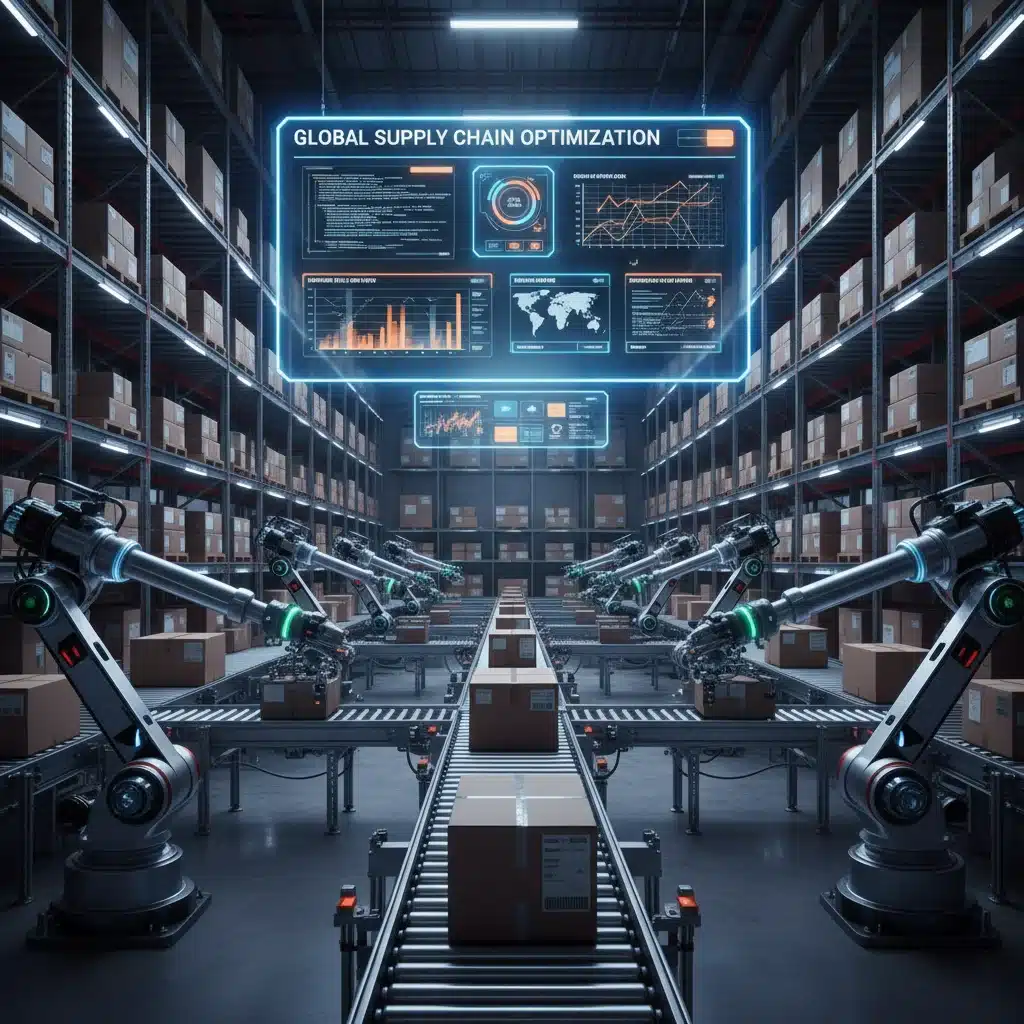
The modern supply chain is a complex web of interconnected processes, vulnerable to disruptions and inefficiencies. Generative AI offers powerful tools for optimizing every stage, from demand forecasting and inventory management to logistics and risk mitigation.
Predictive and Generative Demand Forecasting
Traditional demand forecasting relies heavily on historical data and statistical models. Generative AI takes this a step further by not only predicting future demand with greater accuracy but also generating scenarios and potential impacts of various external factors. By analyzing a wide array of data – weather patterns, social media trends, geopolitical events, economic indicators – Generative AI can create more nuanced and robust demand forecasts. This allows businesses to optimize inventory levels, reduce waste, and prevent stockouts, leading to significant cost savings and improved customer satisfaction.
For instance, a retail company can use Generative AI to predict how a new influencer trend might impact demand for a specific product category, and then generate optimal ordering schedules and distribution plans to meet that anticipated surge. This proactive capability transforms reactive supply chains into agile, responsive networks.
Dynamic Route Optimization and Resource Allocation
Logistics is another area where Generative AI can deliver substantial value. Generating optimal delivery routes, especially in dynamic environments with changing traffic, weather, and delivery priorities, is a computationally intensive task. Generative AI algorithms can analyze real-time data to generate the most efficient routes for fleets, minimizing fuel consumption, delivery times, and labor costs. This is particularly beneficial for last-mile delivery services, where efficiency can make or break profitability.
Furthermore, Generative AI can optimize resource allocation across the supply chain, from warehouse space utilization to workforce scheduling. It can generate optimal staffing plans based on predicted demand fluctuations and operational constraints, ensuring that resources are always aligned with operational needs. This leads to greater operational fluidity and resilience in the face of unforeseen challenges.
4. Revolutionizing Customer Service and Support
Customer service is often the frontline of a business, directly impacting customer satisfaction and brand loyalty. Generative AI is set to transform customer service by providing more intelligent, personalized, and efficient support experiences.
Intelligent Virtual Assistants and Chatbots
While traditional chatbots follow predefined scripts, Generative AI-powered virtual assistants can understand natural language nuances, engage in more fluid conversations, and generate human-like responses. They can resolve complex queries, provide detailed product information, and even guide customers through troubleshooting steps with a level of sophistication previously unattainable. This leads to higher first-contact resolution rates and reduces the burden on human agents, allowing them to focus on more complex and empathetic interactions.
Imagine a customer service chatbot that can not only answer questions about a product but also generate personalized recommendations based on the customer’s purchase history and stated preferences, or even draft a custom return label and instructions on the fly. This level of proactive and personalized service elevates the entire customer experience.
Personalized Customer Engagement and Proactive Support
Generative AI can analyze customer interactions across all touchpoints to build a comprehensive profile, enabling highly personalized engagement. This includes generating tailored responses to customer feedback, crafting proactive outreach messages based on potential issues, and even creating personalized follow-up communications after a service interaction. The goal is to make every customer feel understood and valued, fostering deeper relationships.
Moreover, Generative AI can be used for proactive problem-solving. By monitoring customer sentiment on social media or analyzing support ticket trends, Generative AI can identify emerging issues and generate solutions or communications to address them before they escalate. For example, if many customers are reporting a similar issue with a product, Generative AI could generate an FAQ update, a proactive email to affected users, or even a software patch description, significantly reducing the volume of incoming support requests.
Challenges and Ethical Considerations in Generative AI Operations
While the potential of Generative AI Operations is immense, it’s crucial to acknowledge the challenges and ethical considerations that accompany its adoption. Data privacy, algorithmic bias, and the potential for misuse are significant concerns that businesses must address proactively.
Data Privacy and Security
Generative AI models often require vast amounts of data for training, some of which may be sensitive customer or proprietary business information. Ensuring the privacy and security of this data is paramount. Robust data governance policies, anonymization techniques, and secure infrastructure are essential to prevent breaches and maintain trust. Compliance with regulations like GDPR and CCPA will be non-negotiable for any business leveraging Generative AI.
Algorithmic Bias and Fairness
Generative AI models learn from the data they are trained on, and if that data contains biases, the AI will perpetuate and even amplify them. This can lead to unfair or discriminatory outcomes, particularly in areas like hiring, lending, or personalized marketing. Businesses must implement rigorous testing and auditing processes to identify and mitigate bias in their Generative AI systems. Developing diverse training datasets and employing fairness-aware AI techniques will be critical to ensure equitable outcomes.
Ethical Use and Accountability
The ability of Generative AI to create realistic content, including ‘deepfakes’ or misleading information, raises serious ethical questions. Businesses must establish clear ethical guidelines for the use of Generative AI, ensuring transparency about when AI is being used and holding themselves accountable for the outputs generated. Developing responsible AI frameworks and fostering a culture of ethical AI development will be crucial for long-term success and public acceptance.
Integration Complexity and Skill Gap
Integrating Generative AI into existing business operations is not always straightforward. It requires significant technical expertise, robust infrastructure, and careful planning. Many organizations face a skill gap in AI development and deployment, making it challenging to fully harness the power of these technologies. Investing in talent development, partnering with AI specialists, and adopting a phased integration approach will be vital for successful implementation.
The Future of Generative AI in Business Operations Beyond 2026
Looking beyond 2026, the capabilities of Generative AI will only continue to expand. We can anticipate even more sophisticated models that are multimodal, capable of understanding and generating across various data types (text, image, audio, video) seamlessly. This will unlock new levels of creativity and automation.
Imagine AI systems that can not only design a new product but also simulate its performance, generate marketing campaigns for it, and even predict its market reception, all before a single physical prototype is built. The synergy between Generative AI and other emerging technologies like quantum computing, edge AI, and advanced robotics will lead to truly transformative operational paradigms.
The role of human workers will also evolve. Instead of being replaced, humans will increasingly collaborate with Generative AI, leveraging its creative and analytical power to augment their own capabilities. This human-in-the-loop approach will foster a new era of productivity and innovation, where complex problems are solved faster and creative potential is unleashed like never before.
Businesses that invest in Generative AI Operations now will not only secure their competitive position in the near future but also lay the groundwork for sustained innovation and growth in the decades to come. The journey is just beginning, and the organizations that embrace this powerful technology thoughtfully and ethically will be the ones that thrive.
Conclusion: Embracing the Generative AI Revolution
The era of Generative AI Operations is not a distant future; it is here, and its impact will be profoundly felt across all sectors by 2026. From transforming how content is created and personalized to streamlining software development, optimizing complex supply chains, and revolutionizing customer service, Generative AI offers unparalleled opportunities for efficiency, innovation, and competitive advantage.
While challenges related to data privacy, bias, and integration exist, proactive engagement with these issues will ensure responsible and effective deployment. Businesses that strategically integrate Generative AI into their core operations will not only meet the evolving demands of the market but will also redefine what is possible, setting new benchmarks for productivity and customer engagement.
The message is clear: to remain competitive and foster sustainable growth, organizations must look beyond the hype and embrace the practical applications of Generative AI. The time to act is now, to explore, experiment, and integrate this transformative technology, securing a leading position in the dynamic business landscape of tomorrow.