Measuring Social Impact: Key Metrics for Nonprofits in 2026

In an increasingly data-driven world, the ability for social impact organizations to effectively measure and articulate their impact is no longer a luxury but a fundamental necessity. As we look towards 2026, the landscape for nonprofits and social enterprises is evolving rapidly, with donors, funders, and beneficiaries demanding greater transparency, accountability, and demonstrable results. This article delves into the critical social impact metrics that organizations must prioritize to track progress effectively, secure funding, and ultimately, achieve their mission.
The quest for meaningful impact measurement is driven by several factors. Firstly, there’s a growing expectation from philanthropic foundations and government agencies for robust evidence of impact before allocating funds. Secondly, beneficiaries themselves are becoming more empowered, seeking organizations that can prove they deliver tangible improvements to their lives. Finally, the internal drive for efficiency and effectiveness pushes organizations to understand what works, what doesn’t, and how to optimize their programs for maximum social impact metrics.
The Evolving Landscape of Social Impact Measurement in 2026
The year 2026 brings with it new challenges and opportunities for social impact organizations. Technological advancements, particularly in AI and big data analytics, are transforming how data is collected, analyzed, and reported. This shift allows for more granular insights and predictive modeling, enabling organizations to be more proactive in their interventions. However, it also necessitates a higher level of data literacy and strategic planning.
Moreover, the global challenges of climate change, social inequality, and public health crises underscore the urgency of effective interventions. Organizations that can clearly demonstrate their contribution to solving these complex problems will be better positioned to attract resources and support. This demands a move beyond simple output reporting to a more sophisticated understanding of long-term outcomes and systemic change – all captured through well-defined social impact metrics.
Why Robust Social Impact Metrics Matter More Than Ever
The importance of robust social impact metrics cannot be overstated. They serve multiple crucial functions:
- Accountability: Demonstrating to stakeholders (donors, beneficiaries, board members) that resources are being used effectively and achieving intended results.
- Learning and Improvement: Providing insights into program effectiveness, allowing organizations to pivot, adapt, and refine their strategies for greater impact.
- Funding and Resource Mobilization: Strong evidence of impact is a powerful tool for attracting new funding and retaining existing donors.
- Advocacy and Policy Influence: Data-driven insights can inform policy discussions and advocate for systemic change.
- Organizational Legitimacy: Building trust and credibility within the community and the broader social sector.
Without clear social impact metrics, organizations risk operating in a vacuum, unable to prove their value or learn from their experiences. This can lead to inefficient resource allocation, donor fatigue, and ultimately, a failure to achieve their mission.
Defining Key Social Impact Metrics: Outputs, Outcomes, and Impact
Before diving into specific metrics, it’s essential to understand the fundamental distinctions between outputs, outcomes, and impact. These form the bedrock of any effective impact measurement framework.
Outputs: These are the direct, tangible results of your activities. They answer the question: "What did we do?" Examples include the number of people served, workshops conducted, meals distributed, or trees planted. While important for tracking activity levels, outputs alone do not tell the story of change.
Outcomes: These are the changes that occur in individuals, communities, or systems as a direct result of your outputs. They answer the question: "What changed because of what we did?" Outcomes can be short-term, medium-term, or long-term. Examples include increased knowledge, improved health behaviors, enhanced skills, or stronger community cohesion. Measuring outcomes requires more sophisticated data collection methods, such as surveys, interviews, and pre/post assessments.
Impact: This refers to the long-term, significant, and sustainable changes in society that your organization contributes to. Impact is often broader than outcomes and may involve systemic shifts. It answers the question: "What is the ultimate societal change we are contributing to?" Examples include reduced poverty rates, improved environmental quality, increased gender equality, or a more equitable justice system. Attributing impact solely to one organization can be challenging, as many factors contribute to large-scale societal change. Therefore, organizations often talk about their ‘contribution to impact’.
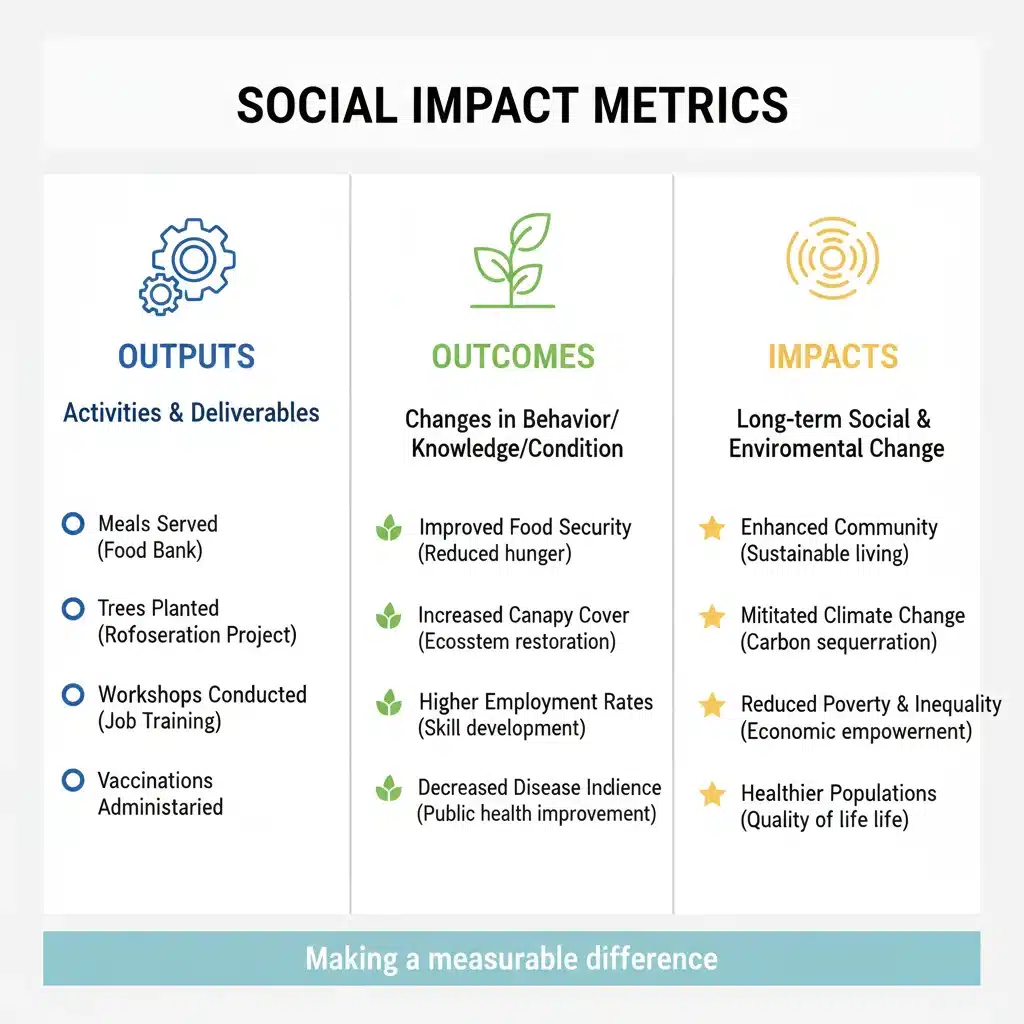
The Interconnectedness of Outputs, Outcomes, and Impact
It’s crucial to see these three levels as interconnected. Outputs lead to outcomes, which in turn contribute to broader impact. A robust measurement framework will track all three, providing a holistic view of an organization’s journey towards its mission. For example, a literacy program might have:
- Outputs: Number of tutoring sessions delivered, number of books distributed.
- Outcomes: Improved reading levels among participants, increased confidence in reading, higher school attendance.
- Impact: Reduced illiteracy rates in the community, increased economic opportunities for participants, a more educated workforce.
Understanding this hierarchy is the first step in selecting appropriate social impact metrics for your organization.
Essential Social Impact Metrics for 2026
While specific metrics will vary depending on an organization’s mission and programs, several categories of social impact metrics are becoming increasingly vital across the sector in 2026. These metrics go beyond simple counts and aim to capture the depth and breadth of change.
1. Participant-Centric Outcomes
Focus on the direct changes experienced by individuals or groups your programs serve. These are often measured through surveys, interviews, and direct assessments.
- Change in Knowledge/Skills: Pre/post assessments to measure learning.
- Behavioral Change: Documenting shifts in actions or practices (e.g., adoption of healthy habits, democratic participation).
- Well-being Scores: Using validated scales to measure mental, physical, or emotional well-being.
- Economic Empowerment: Changes in income, employment status, financial literacy, or access to resources.
- Access to Services: Measuring improved access to education, healthcare, clean water, etc.
2. Community and Systemic Change Metrics
These metrics assess the broader shifts within communities or systems, often requiring a longer timeframe and more complex data collection.
- Policy Changes: Documenting new policies or regulations influenced by your advocacy.
- Community Resilience Indexes: Measuring a community’s ability to withstand and recover from shocks.
- Environmental Indicators: Reductions in pollution, increases in biodiversity, sustainable resource management.
- Social Cohesion: Measuring trust, cooperation, and sense of belonging within a community.
- Equity and Inclusion Metrics: Tracking changes in disparities across different demographic groups.
3. Efficiency and Financial Sustainability Metrics
While not direct social impact, these metrics are crucial for organizational health and the sustained delivery of impact.
- Cost per Outcome Achieved: How much does it cost to achieve one unit of a specific outcome? This helps compare program efficiency.
- Leveraged Resources: The extent to which your activities attract additional resources (e.g., volunteer hours, in-kind donations, matching funds).
- Donor Retention Rate: A key indicator of trust and satisfaction among your supporters.
- Program Sustainability: Measures of whether programs can continue independently after initial support, or if local capacity has been built.
4. Stakeholder Engagement and Satisfaction
Understanding the perceptions and satisfaction of your beneficiaries, partners, and donors is vital for continuous improvement and building strong relationships.
- Beneficiary Satisfaction: Surveys or feedback mechanisms to gauge how well programs meet their needs.
- Partner Satisfaction: Assessing the quality of collaborations and partnerships.
- Net Promoter Score (NPS): Measuring the willingness of beneficiaries or supporters to recommend your organization.
Developing Your Social Impact Measurement Framework
Implementing effective social impact metrics requires a well-thought-out framework. Here’s a step-by-step guide:
Step 1: Define Your Theory of Change
A Theory of Change (ToC) is a comprehensive description and illustration of how and why a desired change is expected to happen in a particular context. It maps out the causal pathways from your activities to your desired long-term impact, identifying all intermediate outcomes. This is the foundational step, as it clarifies what you intend to achieve and how, providing the basis for selecting relevant social impact metrics.
Step 2: Identify Key Performance Indicators (KPIs)
Based on your Theory of Change, select specific, measurable, achievable, relevant, and time-bound (SMART) KPIs for each level: outputs, outcomes, and impact. These should directly align with the changes you aim to create.
Step 3: Choose Appropriate Data Collection Methods
The methods you use will depend on the metrics. Options include:
- Quantitative Data: Surveys, administrative records, program databases, pre/post tests, observational data.
- Qualitative Data: Interviews, focus groups, case studies, storytelling, ethnographic observations.
A mixed-methods approach often provides the richest insights.
Step 4: Establish Baselines and Targets
Before you can measure change, you need to know where you started. Establish baselines for all your chosen metrics. Then, set realistic and ambitious targets for what you aim to achieve within a specific timeframe.
Step 5: Implement Data Collection and Management Systems
Invest in robust data collection and management systems. This could range from simple spreadsheets to sophisticated CRM or impact measurement software. Ensure data integrity, privacy, and security.
Step 6: Analyze and Interpret Data
Regularly analyze your data to identify trends, successes, and areas for improvement. Data analysis should go beyond just reporting numbers; it should tell a story about the change you are creating. Consider using data visualization tools to make your findings accessible and compelling.
Step 7: Report and Communicate Impact
Share your findings with all stakeholders – funders, beneficiaries, staff, and the public. Tailor your communication to different audiences. Use compelling narratives alongside data to paint a complete picture of your social impact metrics.
Step 8: Use Data for Learning and Adaptation
The ultimate goal of impact measurement is not just to prove, but to improve. Use the insights gained from your social impact metrics to adapt your programs, refine your strategies, and make more informed decisions.
Leveraging Technology for Enhanced Social Impact Measurement
In 2026, technology plays an indispensable role in streamlining impact measurement. Organizations can leverage various tools and platforms to enhance their data collection, analysis, and reporting capabilities.
Impact Measurement Software
Dedicated software solutions are emerging that help organizations track their social impact metrics more effectively. These platforms often offer features such as:
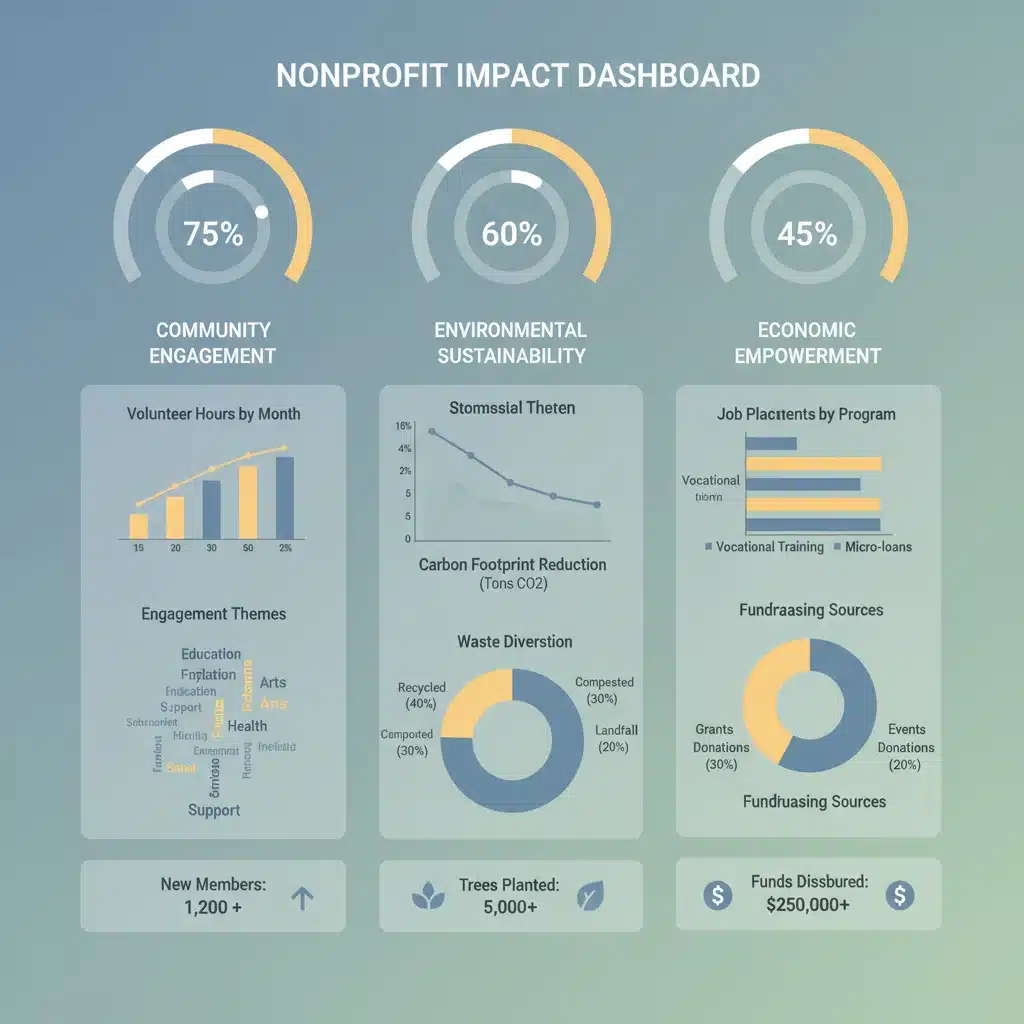
- Customizable dashboards for real-time tracking.
- Automated data collection and aggregation.
- Tools for survey creation and distribution.
- Advanced analytics and reporting functionalities.
- Integration with other organizational systems (e.g., CRM, accounting).
Artificial Intelligence (AI) and Machine Learning (ML)
AI and ML can revolutionize impact measurement by:
- Predictive Analytics: Forecasting potential outcomes and identifying at-risk populations.
- Natural Language Processing (NLP): Analyzing qualitative data from interviews and open-ended survey responses to identify themes and sentiments at scale.
- Automated Data Cleaning: Reducing manual effort and improving data accuracy.
- Personalized Interventions: Tailoring program delivery based on individual needs identified through data analysis.
Blockchain for Transparency and Trust
Blockchain technology, while still nascent in the social sector, holds promise for increasing transparency and trust in impact reporting. It can create immutable records of transactions and impact data, allowing stakeholders to verify information independently. This can be particularly powerful for tracking funds and verifying the delivery of aid or services.
Challenges and Best Practices in Impact Measurement
While the benefits of strong social impact metrics are clear, organizations often face challenges in their implementation.
Common Challenges:
- Resource Constraints: Lack of funding, staff, and expertise for robust measurement.
- Data Overload: Collecting too much data without a clear purpose, leading to analysis paralysis.
- Attribution vs. Contribution: Difficulty in isolating an organization’s specific impact amidst other influencing factors.
- Lack of Standardization: Varied definitions and reporting requirements across different funders.
- Resistance to Change: Staff or stakeholders may resist new measurement practices.
- Ethical Considerations: Ensuring data privacy, informed consent, and avoiding harm to beneficiaries.
Best Practices for 2026:
- Start Small, Scale Up: Don’t try to measure everything at once. Begin with a few key metrics and expand as capacity grows.
- Integrate Measurement into Operations: Make impact measurement a core part of program design and delivery, not an add-on.
- Build a Culture of Learning: Encourage staff at all levels to engage with data and use it for continuous improvement.
- Collaborate and Share: Work with other organizations to standardize metrics and share best practices.
- Invest in Capacity Building: Train staff in data literacy, collection, and analysis.
- Be Transparent: Share both successes and failures, demonstrating a commitment to learning and accountability.
- Prioritize Beneficiary Voice: Ensure that the perspectives and experiences of those you serve are central to your impact measurement.
The Future of Social Impact Metrics: What to Expect Beyond 2026
Looking beyond 2026, the field of social impact measurement is expected to continue its rapid evolution. We can anticipate:
- Greater Harmonization and Standardization: Efforts to create common metrics and reporting standards across the sector will intensify, making it easier to compare and aggregate impact data.
- Real-time Impact Reporting: Advancements in IoT (Internet of Things) and sensor technology could enable real-time data collection in certain contexts, offering immediate insights into program effectiveness.
- Blockchain for Social Impact Bonds: The use of blockchain to track outcomes in social impact bonds and other innovative financing mechanisms will likely become more prevalent, ensuring transparent and verifiable results.
- AI-Driven Personalized Impact: AI could be used to tailor interventions and measure their specific impact on individuals, leading to highly customized and effective programs.
- Integrated Reporting: A move towards more integrated reporting, where financial, environmental, social, and governance (ESG) performance are presented holistically.
- Emphasis on Systems Change: A stronger focus on measuring contributions to broader systems change, rather than just isolated outcomes, reflecting a deeper understanding of complex social problems.
These trends highlight a future where social impact metrics are not just about compliance, but about genuine insight, continuous learning, and ultimately, maximizing positive change in the world.
Conclusion: Embracing Data for a Greater Purpose
Measuring social impact effectively in 2026 and beyond is not just about satisfying funders; it’s about fulfilling the core mission of social impact organizations. By carefully selecting and consistently tracking relevant social impact metrics, organizations can gain invaluable insights into their programs, demonstrate their value to a diverse range of stakeholders, and make data-driven decisions that lead to greater effectiveness and sustainability.
The journey towards robust impact measurement is ongoing and requires commitment, resources, and a willingness to learn and adapt. However, the rewards – increased accountability, enhanced learning, stronger funding opportunities, and ultimately, a greater positive difference in the world – are immeasurable. Embrace the power of data not as a burden, but as a catalyst for profound and lasting social change.
Start today by reviewing your current measurement practices, identifying key areas for improvement, and investing in the tools and training necessary to elevate your organization’s ability to track and communicate its vital contributions to society. The future of social impact depends on it.