Choosing the Best Social Impact Framework 2026: A Comparative Guide

Comparison of 2026 Social Impact Measurement Frameworks: Which One is Right for Your Initiative?
In an increasingly interconnected world, the drive to create positive social and environmental change is no longer a niche endeavor but a core expectation for organizations across all sectors. From non-profits and social enterprises to corporations and governmental bodies, demonstrating tangible impact is paramount. However, merely stating an intention to do good is insufficient; robust, credible, and transparent measurement is essential. As we look towards 2026, the landscape of social impact measurement frameworks continues to evolve, offering sophisticated tools and methodologies to capture, evaluate, and communicate the true value of interventions. But with a growing array of options, discerning which framework is the most appropriate for your specific initiative can be a daunting task. This comprehensive guide aims to demystify the leading Social Impact Frameworks 2026, providing a detailed comparison to help you make an informed decision.
The Imperative of Measuring Social Impact in 2026
Before diving into specific frameworks, it’s crucial to understand why measuring social impact has become an indispensable practice. In 2026, stakeholders – including investors, donors, customers, employees, and regulators – demand accountability and transparency. They want to see quantifiable evidence that resources are being used effectively to generate meaningful change. This demand is fueled by several factors:
- Increased Scrutiny: Greenwashing and impact-washing concerns have led to a greater need for verifiable data.
- Strategic Decision-Making: Robust impact data enables organizations to refine their strategies, allocate resources efficiently, and scale successful programs.
- Access to Capital: Impact investors and philanthropic foundations increasingly tie funding decisions to demonstrable impact, often requiring adherence to specific Social Impact Frameworks 2026.
- Reputation and Trust: Proving positive impact builds trust with all stakeholders and enhances an organization’s reputation.
- Regulatory Pressure: Emerging regulations and reporting standards, particularly in the ESG (Environmental, Social, and Governance) space, necessitate structured impact measurement.
The choice of a Social Impact Frameworks 2026 is not merely a compliance exercise; it’s a strategic imperative that underpins an organization’s long-term sustainability and ability to achieve its mission. The right framework provides a common language, a structured approach, and a credible methodology for understanding and communicating the difference your work makes.
Key Considerations When Choosing a Social Impact Framework
Selecting the optimal framework requires a thoughtful assessment of your organization’s context, goals, and capacity. Here are critical factors to consider:
1. Your Organization’s Mission and Goals
What specific social or environmental problems are you trying to solve? Are your goals primarily focused on direct beneficiaries, systemic change, or broader societal shifts? The framework should align with the nature and scale of your intended impact.
2. Stakeholder Requirements
Who are your primary stakeholders (donors, investors, beneficiaries, government, internal teams) and what are their information needs? Some frameworks are better suited for reporting to specific audiences, such as impact investors or regulatory bodies.
3. Resources and Capacity
Implementing an impact measurement framework requires time, expertise, and financial resources. Consider your organization’s capacity for data collection, analysis, and reporting. Some frameworks are more resource-intensive than others.
4. Type of Intervention
Are you implementing a specific program, a policy change, a product innovation, or a broader systemic initiative? Different frameworks are designed to evaluate different types of interventions.
5. Data Availability and Quality
Do you have access to reliable data? What kind of data can you realistically collect? The chosen framework should be compatible with your data ecosystem.
6. Desired Depth of Analysis
Do you need a high-level overview of impact, or a deep dive into attribution, counterfactuals, and long-term effects? Frameworks vary in the depth of analysis they facilitate.
7. Adaptability and Scalability
Can the framework adapt as your programs evolve or scale? Is it flexible enough to accommodate different contexts or geographies?
With these considerations in mind, let’s explore some of the most prominent Social Impact Frameworks 2026.
Leading Social Impact Frameworks in 2026: A Comparative Analysis
The field of social impact measurement is rich with diverse methodologies. While many frameworks share common principles, their approaches, terminologies, and emphasis can differ significantly. Here, we compare several leading Social Impact Frameworks 2026 that are widely recognized and utilized today.
1. The Impact Management Project (IMP)
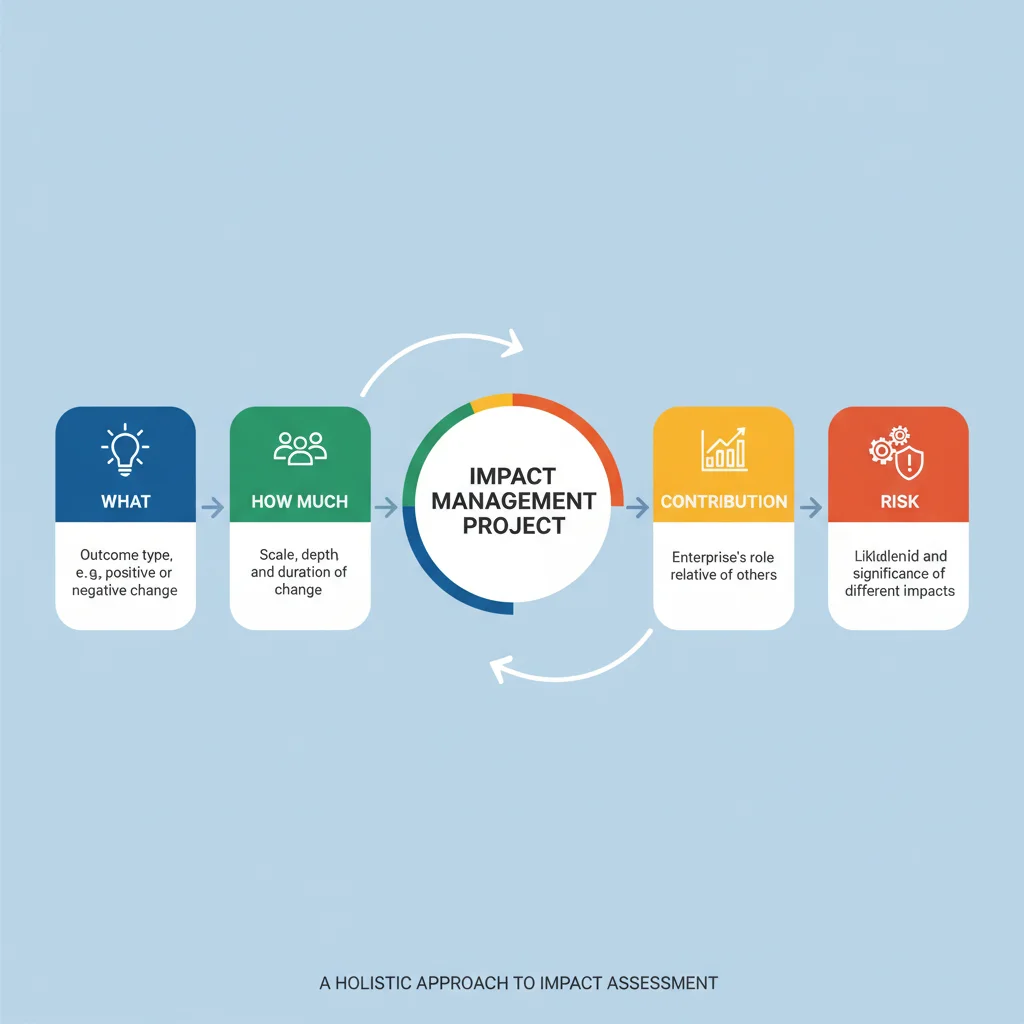
The Impact Management Project (IMP) is not a single framework but rather a consensus-building initiative that has created shared norms for how organizations can measure, manage, and report their impact. It provides a common language for impact management, focusing on five dimensions of impact:
- What: What outcome occurs?
- Who: Who experiences the outcome?
- How Much: How much of the outcome occurs (scale, depth, duration)?
- Contribution: What is your organization’s contribution to the outcome?
- Risk: What is the risk that impact does not occur as expected?
Strengths:
- Universality: Provides a flexible, principles-based approach applicable across sectors and types of interventions.
- Holistic View: Encourages a comprehensive understanding of impact, moving beyond simple outputs.
- Standardization: Promotes a common language, facilitating comparability and aggregation of impact data.
- Investor-Friendly: Highly regarded by impact investors for its rigorous approach to understanding impact performance.
Weaknesses:
- Complexity: Can be challenging for organizations new to impact measurement due to its conceptual depth.
- Implementation Varies: As it’s a set of principles, actual implementation requires significant internal effort to translate into practice.
- Data Intensive: Requires robust data collection and analysis capabilities to fully address all five dimensions.
Best Suited For: Organizations seeking a rigorous, comprehensive, and globally recognized approach to impact management, particularly those engaging with impact investors or aiming for high-level strategic impact reporting. It’s a foundational approach for many other Social Impact Frameworks 2026.
2. Social Return on Investment (SROI)
Social Return on Investment (SROI) is a principles-based framework that measures social, environmental, and economic value not captured in conventional financial accounts. It aims to put a monetary value on impact, typically expressed as a ratio (e.g., for every $1 invested, $X of social value is created).
The SROI process generally involves six stages:
- Establishing scope and identifying stakeholders.
- Mapping outcomes.
- Evidencing outcomes and valuing them.
- Establishing impact.
- Calculating SROI.
- Reporting, using, and embedding.
Strengths:
- Monetary Valuation: Translates social outcomes into financial proxies, making impact tangible and comparable for financially-minded stakeholders.
- Stakeholder Engagement: Emphasizes active participation of stakeholders in defining and valuing outcomes.
- Comprehensive: Considers both positive and negative, intended and unintended outcomes.
- Decision-Making Tool: Can be a powerful tool for resource allocation and demonstrating value to investors and funders.
Weaknesses:
- Complexity and Cost: Can be very resource-intensive, requiring significant expertise and data to assign monetary values to social outcomes.
- Subjectivity: Valuing non-market outcomes can be subjective and prone to criticism if not done rigorously and transparently.
- Risk of Oversimplification: Critics argue that reducing complex social change to a single ratio can oversimplify the narrative.
Best Suited For: Organizations needing to demonstrate the financial value of their social interventions, particularly when engaging with investors, government bodies, or corporate partners who require a clear return on investment metric. It’s one of the more detailed Social Impact Frameworks 2026 for financial correlation.
3. Logic Models and Theory of Change (ToC)
While not strictly measurement frameworks, Logic Models and Theories of Change (ToC) are foundational tools for planning and evaluating social impact. They visually represent the causal pathway from inputs to activities, outputs, outcomes, and ultimately, long-term impact.
- Logic Model: A linear, often tabular, representation of program components and their expected sequence of results.
- Theory of Change: A more comprehensive and dynamic articulation of how and why an initiative expects to lead to specific changes. It often includes assumptions, external factors, and feedback loops.
Strengths:
- Clarity and Alignment: Ensures all stakeholders understand the program’s objectives and how they will be achieved.
- Planning Tool: Excellent for program design, identifying key indicators for measurement.
- Adaptability: Flexible enough to be used by any organization, regardless of size or sector.
- Foundation for Other Frameworks: Often a prerequisite for implementing more complex measurement approaches.
Weaknesses:
- Not a Measurement Framework Itself: While they guide measurement, they don’t prescribe specific metrics or collection methods.
- Can Be Simplistic: Logic models can sometimes oversimplify complex social processes.
- Requires Ongoing Review: ToCs need regular revisiting and refinement as contexts change.
Best Suited For: All organizations, especially at the program design and planning stages. They are essential for developing a coherent impact strategy and serve as a crucial precursor to any formal impact measurement using other Social Impact Frameworks 2026.
4. Sustainable Development Goals (SDGs)
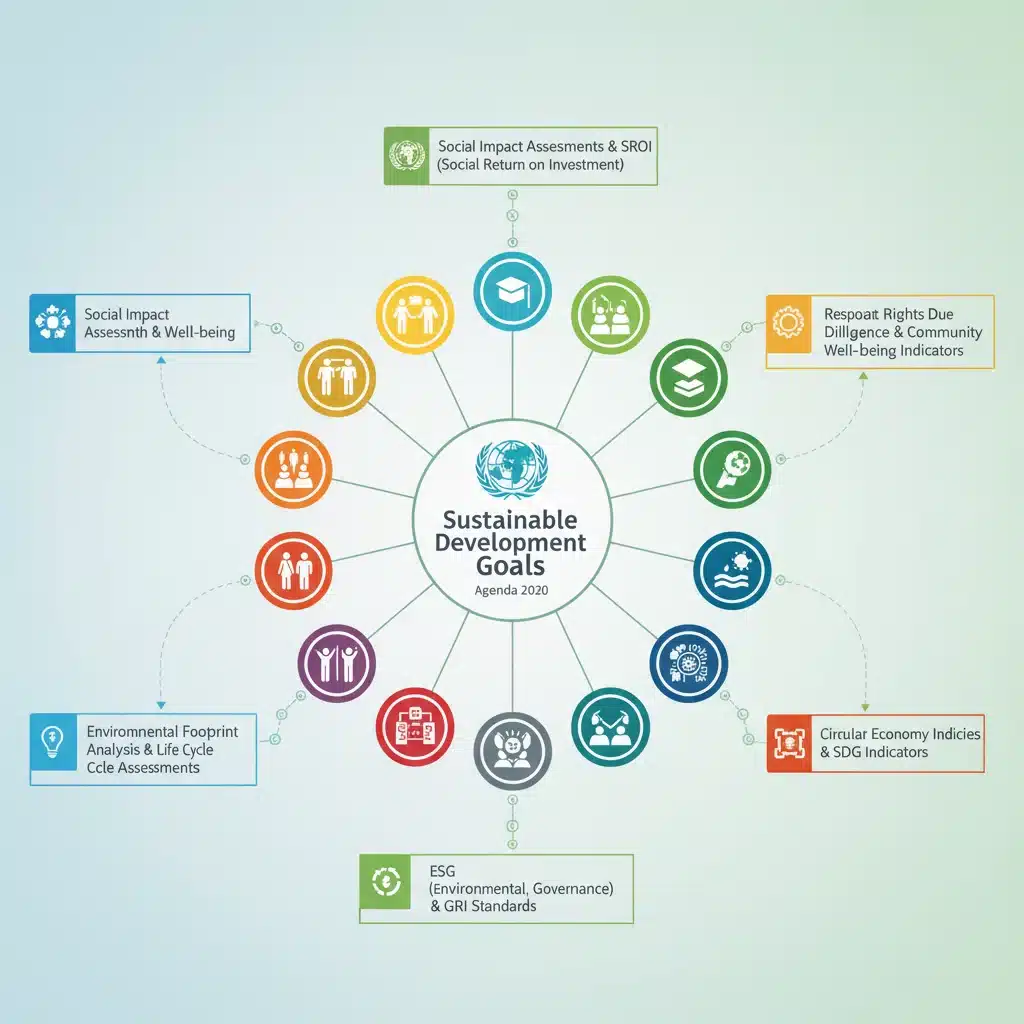
The 17 Sustainable Development Goals (SDGs) and their 169 targets, established by the United Nations, provide a universal framework for sustainable development. While not a measurement methodology in themselves, the SDGs offer a powerful global language and set of objectives against which organizations can align and report their impact.
Strengths:
- Global Relevance: Widely recognized and understood, facilitating communication and collaboration on a global scale.
- Comprehensive Scope: Covers a broad range of environmental, social, and economic issues.
- Alignment with Global Agendas: Helps organizations connect their local impact to global sustainability efforts.
- Engagement Tool: Excellent for communicating commitment to sustainability to a wide audience.
Weaknesses:
- High-Level: The SDGs are broad goals; organizations need to define specific, measurable indicators to track their contribution.
- Not a Measurement Methodology: Requires integration with other frameworks or internal systems for actual impact measurement.
- Risk of ‘SDG Washing’: Without rigorous measurement, simply aligning with SDGs can be perceived as superficial.
Best Suited For: Any organization looking to align its mission with global sustainability objectives, communicate its contribution to a broad international audience, and integrate its impact reporting with a universally understood framework. Many Social Impact Frameworks 2026 now incorporate SDG alignment.
5. Global Reporting Initiative (GRI) Standards
The Global Reporting Initiative (GRI) Standards are a comprehensive set of global standards for sustainability reporting. They enable organizations to report on their economic, environmental, and social impacts in a structured and transparent manner. While broader than just social impact, the social standards within GRI are highly relevant.
Strengths:
- Global Standard: Widely adopted and recognized, particularly for corporate sustainability reporting.
- Comprehensive: Covers a vast array of topics, ensuring thorough reporting on material issues.
- Credibility: Adherence to GRI Standards enhances the credibility and comparability of sustainability reports.
- Stakeholder Focus: Emphasizes materiality assessment to identify topics most relevant to stakeholders.
Weaknesses:
- Resource-Intensive: Implementing GRI Standards can be complex and require significant resources for data collection and reporting.
- Reporting, Not Pure Measurement: Primarily a reporting framework; while it guides what to measure, it doesn’t prescribe the granular measurement methodologies.
- Corporate Bias: Historically more geared towards larger corporations, though adaptable for others.
Best Suited For: Corporations, large non-profits, and public sector organizations that need to produce comprehensive, public-facing sustainability reports, particularly those with a strong focus on ESG compliance and stakeholder communication. It’s among the most robust Social Impact Frameworks 2026 for corporate reporting.
6. IRIS+ (Impact Reporting and Investment Standards)
IRIS+ is a catalog of generally accepted performance metrics used to measure social, environmental, and financial performance. Developed by the Global Impact Investing Network (GIIN), it provides a common language for impact investors and enterprises to describe, track, and report their impact performance. It’s often used in conjunction with the IMP principles.
Strengths:
- Standardized Metrics: Offers a vast library of standardized metrics, making it easier to compare impact data across different investments and organizations.
- Investor-Oriented: Specifically designed to meet the needs of impact investors and enterprises seeking impact investment.
- Flexibility: Allows organizations to select metrics most relevant to their specific activities and desired impact.
- Guidance and Resources: Provides extensive guidance on how to use metrics effectively and align with IMP.
Weaknesses:
- Metric-Heavy: Can be overwhelming given the sheer number of available metrics.
- Requires Context: While metrics are standardized, interpreting them still requires a deep understanding of the context.
- Focus on Outputs/Outcomes: While it supports outcomes, the emphasis is often on selecting and reporting on specific, quantifiable metrics.
Best Suited For: Impact investors, social enterprises, and organizations seeking to attract impact investment. It’s ideal for those who need a standardized way to measure and report on specific impact performance indicators. IRIS+ is a critical component among Social Impact Frameworks 2026 for the financial sector.
Emerging Trends and Future Directions for Social Impact Frameworks in 2026
As we move further into 2026, several trends are shaping the evolution of social impact measurement:
1. Integration of Technology and AI
AI and machine learning are increasingly being used to collect, analyze, and interpret large datasets, making impact measurement more efficient and accurate. Blockchain technology also offers potential for greater transparency and traceability of impact data. Digital tools are streamlining data collection and reporting for all Social Impact Frameworks 2026.
2. Focus on Systems Change
Beyond measuring direct outcomes, there’s a growing emphasis on understanding and influencing systemic change. Frameworks are evolving to better capture the ripple effects and broader societal shifts brought about by interventions.
3. Double Materiality
The concept of ‘double materiality’ – assessing both the financial impact of sustainability issues on an organization and the organization’s impact on society and the environment – is gaining traction, particularly in corporate reporting. This will influence how organizations select and integrate different Social Impact Frameworks 2026.
4. Harmonization and Interoperability
Efforts to harmonize different frameworks and promote interoperability are ongoing. The goal is to reduce reporting burdens and enable more meaningful comparisons across organizations and sectors. Initiatives like the Impact Management Platform (IMP) are central to this.
5. Greater Emphasis on Qualitative Data and Storytelling
While quantitative data remains crucial, there’s a renewed appreciation for qualitative data, case studies, and storytelling to provide context, deepen understanding, and humanize impact reports. The best Social Impact Frameworks 2026 will integrate both.
6. Standardized ESG Data for Investors
The demand for standardized, comparable ESG data from investors is driving the adoption of more robust and auditable impact measurement practices. This includes frameworks that can feed directly into ESG ratings and disclosures.
Implementing Your Chosen Framework: Best Practices
Once you’ve selected a Social Impact Frameworks 2026, successful implementation is key. Here are some best practices:
- Start Small and Iterate: Don’t try to measure everything at once. Begin with a pilot program or a few key indicators, learn, and then expand.
- Engage Stakeholders Early: Involve beneficiaries, staff, partners, and funders in the design and review of your measurement approach. This builds buy-in and ensures relevance.
- Invest in Capacity Building: Provide training for staff on data collection, analysis, and interpretation. Consider external expertise if needed.
- Ensure Data Quality: Establish clear protocols for data collection, validation, and storage to ensure accuracy and reliability.
- Integrate into Operations: Don’t treat impact measurement as an add-on. Embed it into your regular planning, monitoring, and evaluation cycles.
- Communicate Transparently: Share your findings – both successes and challenges – with stakeholders. Transparency builds trust.
- Use Data for Learning and Adaptation: The ultimate goal is to use impact data to improve your programs and strategies, not just for reporting.
- Be Prepared to Adapt: The world changes, and so should your measurement approach. Regularly review and refine your chosen framework and metrics.
Conclusion: Making the Right Choice for Your Social Impact Journey
Choosing the right Social Impact Frameworks 2026 is a critical decision that will shape your organization’s ability to understand, communicate, and amplify its positive change. There is no one-size-fits-all solution; the best framework is the one that aligns most closely with your mission, stakeholder needs, resources, and desired depth of analysis.
Whether you opt for the comprehensive principles of the Impact Management Project, the monetary valuation of SROI, the foundational planning of Logic Models/Theory of Change, the global alignment of the SDGs, the detailed reporting of GRI Standards, or the investor-focused metrics of IRIS+, the key is to embark on this journey with intentionality and commitment. By embracing rigorous impact measurement, your organization not only demonstrates accountability but also gains invaluable insights to enhance its effectiveness and drive even greater positive change in the world.
As the field continues to mature, staying informed about emerging trends and best practices will be essential. The frameworks discussed here represent the vanguard of Social Impact Frameworks 2026, offering robust pathways to articulate and achieve your impact goals.
Further Resources:
- Impact Management Project (IMP)
- Social Value International (SROI)
- United Nations Sustainable Development Goals (SDGs)
- Global Reporting Initiative (GRI) Standards
- IRIS+ by GIIN