AI Healthcare Breakthroughs: Transforming US Patient Care by 2026

The landscape of healthcare is perpetually evolving, driven by relentless innovation and a burgeoning need for more efficient, personalized, and accessible patient care. In this dynamic environment, Artificial Intelligence (AI) has emerged as a transformative force, poised to redefine virtually every facet of the medical field. The United States, a global leader in healthcare technology and research, is at the forefront of this revolution. By 2026, we anticipate witnessing the maturation and widespread integration of several groundbreaking AI technologies that will fundamentally alter how patient care is delivered, experienced, and managed across the nation.
The promise of AI in healthcare extends far beyond mere automation. It encompasses the ability to process and analyze vast datasets with unprecedented speed and accuracy, uncover hidden patterns, predict outcomes, and provide critical insights that human cognition alone cannot achieve. This article delves into four pivotal AI healthcare transformation breakthroughs that are not just theoretical possibilities but are already demonstrating tangible impacts and are on track for significant adoption in U.S. patient care within the next three years. These advancements promise to enhance diagnostic precision, customize treatment pathways, streamline operational efficiencies, and expand the reach of quality medical services, ultimately leading to a healthier, more connected, and more empowered patient population.
Understanding these developments is crucial for healthcare providers, policymakers, patients, and technology enthusiasts alike. The insights shared here are based on insider knowledge and recent updates from leading research institutions, technology firms, and clinical trials, offering a glimpse into the near future of medicine. As we explore each breakthrough, we will consider its specific applications, the challenges it addresses, and its potential to reshape the patient experience in profound ways. The journey towards an AI-augmented healthcare system is well underway, and the next few years will be pivotal in solidifying its role as an indispensable ally in the pursuit of optimal health outcomes.
1. Hyper-Personalized Medicine through AI-Driven Genomics and Proteomics
One of the most profound areas where AI is catalyzing a significant AI healthcare transformation is in the realm of personalized medicine. Traditionally, medical treatments have often followed a ‘one-size-fits-all’ approach, which, while effective for many, can be suboptimal for individuals due to inherent biological variability. The advent of genomics and proteomics has opened the door to understanding these individual differences at a molecular level. However, the sheer volume and complexity of genomic and proteomic data present an insurmountable challenge for human analysis alone. This is where AI steps in as a game-changer.
The Power of AI in Decoding the Human Blueprint
AI algorithms are now capable of processing vast amounts of genetic and protein data, identifying subtle mutations, biomarkers, and genetic predispositions that were previously undetectable. By analyzing an individual’s unique genetic code, AI can predict their susceptibility to certain diseases, their likely response to specific medications, and even the aggressiveness of particular cancers. This predictive power allows for the development of highly targeted therapies, moving away from broad-spectrum treatments towards interventions precisely tailored to a patient’s biological makeup.
For instance, in oncology, AI is being used to analyze tumor genomics, matching specific genetic mutations in cancer cells with targeted therapies that are known to be effective against those mutations. This not only increases the efficacy of treatment but also reduces the likelihood of adverse side effects associated with less precise approaches. Similarly, in pharmacogenomics, AI helps predict how a patient will metabolize certain drugs based on their genetic profile, enabling clinicians to prescribe the optimal dosage and avoid medications that might be ineffective or harmful.
Clinical Integration and Impact by 2026
By 2026, we expect to see a significant expansion in the clinical integration of AI-driven genomics and proteomics in U.S. healthcare. Major medical centers and specialized clinics are already investing heavily in infrastructure to support these technologies. The availability of more affordable and rapid genetic sequencing, coupled with increasingly sophisticated AI platforms, will make hyper-personalized medicine a reality for a broader patient base. This will particularly impact areas such as:
- Cancer Treatment: Precision oncology will become standard, with AI guiding treatment decisions based on individual tumor profiles.
- Rare Disease Diagnosis: AI will accelerate the diagnosis of rare genetic disorders, often ending diagnostic odysseys for affected families.
- Preventive Medicine: Genetic risk assessments powered by AI will inform personalized prevention strategies, allowing individuals to proactively manage their health risks.
- Drug Development: AI will streamline the identification of new drug targets and predict drug efficacy, significantly accelerating the development of novel therapies.
The ethical implications surrounding data privacy and equitable access to these advanced technologies will remain critical discussion points. However, the immense potential for improved patient outcomes and reduced healthcare costs through more effective treatments makes AI-driven personalized medicine an undeniable force in the ongoing AI healthcare transformation.
2. Advanced AI Diagnostics and Predictive Analytics
The accurate and timely diagnosis of diseases is the cornerstone of effective medical treatment. Yet, even with highly skilled professionals, diagnostic errors can occur, leading to delayed or inappropriate care. AI is set to radically transform this area through advanced diagnostic tools and sophisticated predictive analytics, marking another crucial AI healthcare transformation.
Revolutionizing Medical Imaging and Pathology
One of the most prominent applications of AI in diagnostics is in the analysis of medical images (X-rays, CT scans, MRIs, ultrasounds) and pathology slides. AI algorithms, trained on vast datasets of annotated images, can detect subtle anomalies that might be missed by the human eye, even by experienced radiologists and pathologists. These systems can identify early signs of cancer, neurological disorders, cardiovascular diseases, and other conditions with remarkable accuracy and speed.
For example, AI models are now demonstrating superior performance in detecting early-stage lung cancer from CT scans, identifying diabetic retinopathy from retinal images, and classifying skin lesions as benign or malignant. In pathology, AI can analyze tissue samples to quantify disease severity, predict treatment response, and even assist in discovering new disease markers. This not only enhances diagnostic accuracy but also significantly reduces the workload on medical professionals, allowing them to focus on more complex cases and patient interaction.

Predictive Analytics for Proactive Healthcare
Beyond diagnostics, AI’s ability to analyze complex patterns in patient data – including electronic health records (EHRs), demographic information, and even social determinants of health – is enabling powerful predictive analytics. These systems can forecast a patient’s risk of developing certain conditions, predict readmission rates, identify individuals at high risk for sepsis or cardiac arrest, and even anticipate disease outbreaks within communities. This proactive approach to healthcare is a monumental AI healthcare transformation.
By 2026, predictive AI tools will be integral to many U.S. hospitals and clinics. They will:
- Enable Early Intervention: Clinicians will receive alerts about patients at high risk, allowing for timely interventions that can prevent adverse events and improve outcomes.
- Optimize Resource Allocation: Hospitals can better manage bed capacity, staffing, and equipment by anticipating patient flow and demand.
- Support Public Health: Predictive models will assist public health officials in tracking and responding to infectious disease outbreaks more effectively.
- Personalize Prevention: Individuals can receive personalized recommendations for lifestyle changes or preventive screenings based on their predicted health risks.
The integration of these advanced diagnostic and predictive AI tools promises to usher in an era of more precise, proactive, and preventive medicine, ultimately leading to better patient outcomes and a more efficient healthcare system. The challenge will be ensuring these tools are integrated seamlessly into clinical workflows and that healthcare professionals are adequately trained to leverage their full potential.
3. AI-Powered Operational Efficiency and Workflow Optimization
The U.S. healthcare system, while advanced, often grapples with significant operational inefficiencies, administrative burdens, and resource constraints. These challenges can lead to burnout among healthcare professionals, increased costs, and ultimately, compromises in patient care. AI is emerging as a powerful solution to streamline operations and optimize workflows, representing a critical AI healthcare transformation that often goes unnoticed by the public but is deeply felt by providers.
Automating Administrative Tasks
A substantial portion of a healthcare professional’s time is consumed by administrative tasks, from scheduling appointments and managing patient records to processing insurance claims and documenting clinical notes. AI-powered automation is poised to revolutionize these areas. Robotic Process Automation (RPA) can handle repetitive, rule-based tasks, freeing up human staff to focus on more complex and patient-centric activities. Natural Language Processing (NLP) AI is transforming documentation, allowing clinicians to dictate notes that are automatically transcribed, structured, and integrated into EHRs, significantly reducing documentation time and improving data accuracy.
By 2026, we anticipate widespread adoption of AI-driven tools for:
- Smart Scheduling: AI algorithms can optimize appointment scheduling, reducing wait times, minimizing no-shows, and ensuring efficient use of clinic resources.
- Billing and Claims Processing: AI can automate the complex process of medical billing and insurance claims, reducing errors, accelerating reimbursements, and improving financial health for providers.
- Supply Chain Management: AI can predict demand for medical supplies, optimize inventory levels, and manage procurement, reducing waste and ensuring essential resources are always available.
- Patient Engagement: AI-powered chatbots and virtual assistants can handle routine patient inquiries, provide appointment reminders, and offer personalized health information, improving patient satisfaction and reducing staff workload.
Optimizing Clinical Workflows and Resource Allocation
Beyond administrative tasks, AI is also enhancing clinical workflows. In emergency departments, AI can predict patient influx, helping hospitals allocate staff and resources proactively. In operating rooms, AI can optimize surgical scheduling to maximize efficiency and minimize delays. AI-driven systems can also monitor equipment performance, predict maintenance needs, and manage asset utilization, ensuring that critical medical devices are always operational.
The impact of this AI healthcare transformation on operational efficiency is multifaceted. It leads to reduced operational costs, improved staff morale by alleviating administrative burdens, and ultimately, a more seamless and responsive healthcare experience for patients. The focus shifts from managing logistics to delivering high-quality care, a change that will resonate throughout the entire healthcare ecosystem.
4. Expanding Access through AI-Enhanced Telemedicine and Remote Monitoring
Access to quality healthcare remains a significant challenge for many Americans, particularly those in rural areas, underserved communities, or individuals with limited mobility. The COVID-19 pandemic accelerated the adoption of telemedicine, demonstrating its immense potential. AI is now taking telemedicine and remote patient monitoring to the next level, facilitating an unprecedented AI healthcare transformation in accessibility and continuity of care.
Intelligent Telehealth Platforms
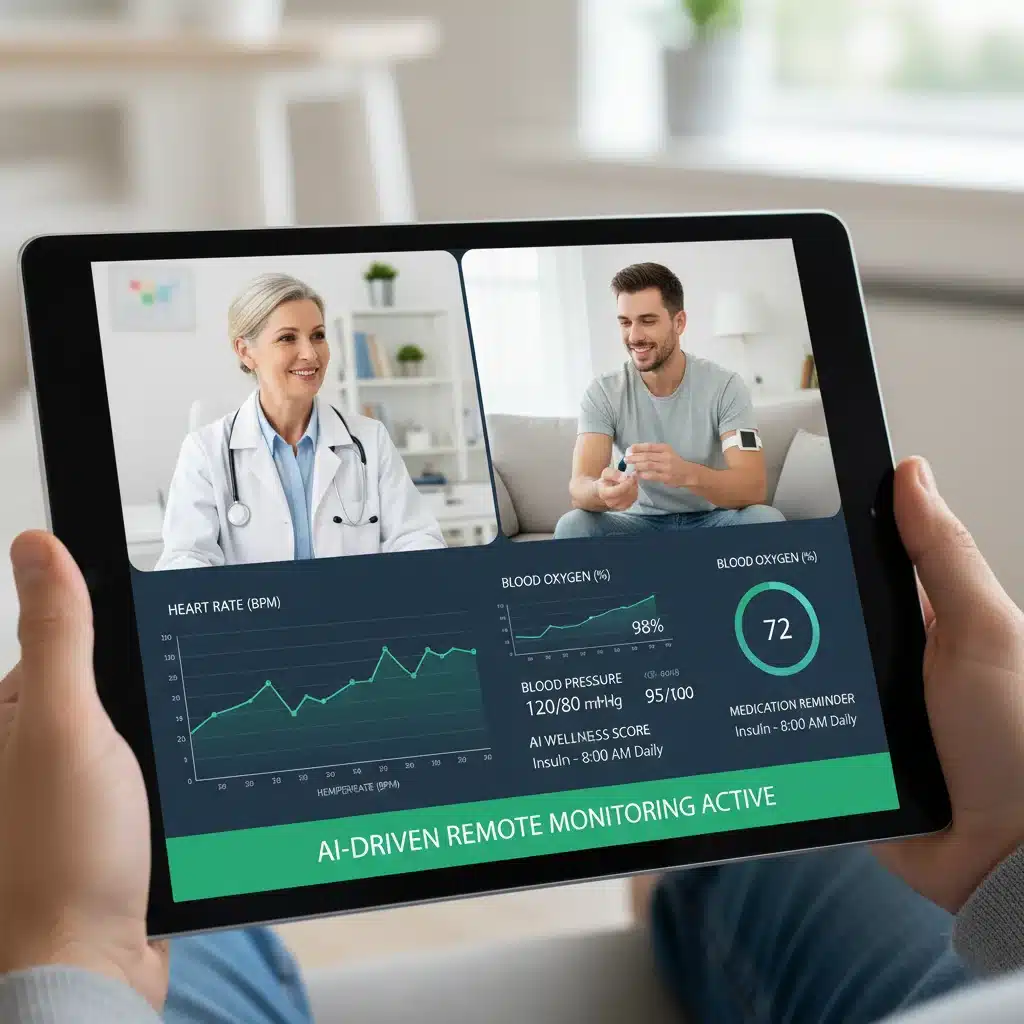
AI is making telehealth platforms smarter and more effective. AI-powered chatbots can conduct initial symptom assessments, triage patients to the appropriate level of care, and provide evidence-based health information. During virtual consultations, AI can assist clinicians by analyzing patient speech patterns for signs of distress, identifying potential drug interactions, or even suggesting relevant diagnostic questions based on the patient’s medical history. This enhances the quality of virtual visits and ensures that patients receive comprehensive care, even from a distance.
By 2026, we expect these intelligent telehealth platforms to be a standard offering across most U.S. healthcare providers, significantly reducing geographical barriers to care and improving access to specialists who might otherwise be unavailable in certain regions.
Advanced Remote Patient Monitoring (RPM)
Remote patient monitoring (RPM) leverages wearable devices and in-home sensors to continuously collect vital health data (e.g., heart rate, blood pressure, glucose levels, activity levels). AI algorithms analyze this continuous stream of data, identifying subtle deviations from a patient’s baseline that could indicate a worsening condition or the onset of a new health issue. This proactive monitoring allows for early intervention, often before a crisis develops, preventing hospitalizations and improving chronic disease management.
The benefits of AI-enhanced RPM are profound:
- Chronic Disease Management: Patients with conditions like diabetes, heart failure, or hypertension can be monitored continuously, with AI alerting clinicians to concerning trends, allowing for timely adjustments to medication or lifestyle recommendations.
- Post-Surgical Care: RPM can monitor recovery at home, detecting complications early and reducing the need for readmissions.
- Elderly Care: AI-powered sensors can monitor activity patterns and detect falls in elderly individuals living independently, providing peace of mind for families and caregivers.
- Mental Health Support: AI can analyze voice patterns and communication to identify early signs of deteriorating mental health, prompting timely intervention.
This AI healthcare transformation in remote care not only improves patient outcomes but also empowers individuals to take a more active role in managing their health. It shifts the paradigm from reactive care (responding to illness) to proactive care (preventing illness and managing conditions effectively), making healthcare more patient-centric and accessible than ever before.
Challenges and Ethical Considerations in AI Healthcare Transformation
While the potential of AI in healthcare is immense, its widespread adoption is not without challenges. Several critical issues must be addressed to ensure that this AI healthcare transformation is equitable, ethical, and truly beneficial for all.
Data Privacy and Security
AI systems rely on vast amounts of patient data, much of which is highly sensitive. Ensuring the privacy and security of this data is paramount. Robust cybersecurity measures, adherence to regulations like HIPAA, and transparent data governance policies are essential to build and maintain public trust. The threat of data breaches is a constant concern, and continuous innovation in data protection will be necessary.
Bias in AI Algorithms
AI algorithms are only as unbiased as the data they are trained on. If training data reflects existing societal biases (e.g., underrepresentation of certain demographic groups), the AI system can perpetuate and even amplify these biases, leading to inequities in diagnosis or treatment for specific patient populations. Addressing algorithmic bias requires diverse and representative datasets, rigorous testing, and continuous monitoring of AI system performance across different groups.
Regulatory Frameworks and Accountability
The rapid pace of AI development often outstrips the creation of appropriate regulatory frameworks. Clear guidelines are needed for the development, validation, and deployment of AI in medical settings. Questions of accountability – who is responsible when an AI system makes an error – also need to be clearly defined to ensure patient safety and legal clarity. Regulatory bodies like the FDA are actively working on these frameworks, but it’s an ongoing process.
Integration into Clinical Workflows and Professional Training
For AI to be effective, it must be seamlessly integrated into existing clinical workflows without adding undue burden on healthcare professionals. This requires intuitive user interfaces, interoperability with existing EHR systems, and comprehensive training for doctors, nurses, and other staff. Resistance to new technology, lack of digital literacy, or insufficient training can hinder adoption and limit the impact of AI tools.
Cost and Accessibility
The development and implementation of advanced AI technologies can be expensive. Ensuring equitable access to these breakthroughs, particularly for smaller hospitals, rural clinics, and underserved populations, will be crucial. Business models that promote affordability and widespread distribution, alongside government initiatives and subsidies, may be necessary to prevent a widening of the healthcare disparity gap.
Ethical Use and Human Oversight
Ultimately, AI should augment, not replace, human intelligence and empathy in healthcare. Ethical considerations regarding autonomous AI decision-making, the doctor-patient relationship, and the role of human oversight in AI-driven care must be continuously evaluated. Maintaining a human-in-the-loop approach, where AI provides insights and recommendations but human clinicians make final decisions, is generally considered the most responsible path forward.
Addressing these challenges proactively will be essential to fully realize the transformative potential of AI in U.S. patient care by 2026 and beyond. It requires a collaborative effort from technology developers, healthcare providers, policymakers, and the public to navigate this complex yet promising future.
Conclusion: The Future of U.S. Patient Care is AI-Augmented
The journey towards an AI-augmented healthcare system in the United States is not a distant vision but a rapidly unfolding reality. By 2026, the four breakthroughs discussed – hyper-personalized medicine through AI-driven genomics and proteomics, advanced AI diagnostics and predictive analytics, AI-powered operational efficiency, and AI-enhanced telemedicine and remote monitoring – will have fundamentally reshaped the landscape of patient care. This AI healthcare transformation promises a future where medical treatments are more precise, diagnoses are more accurate, healthcare operations are more efficient, and access to care is significantly expanded.
These advancements are poised to create a healthcare system that is more proactive, preventive, and patient-centric. Imagine a world where diseases are detected earlier, treatments are tailored to your unique biology, hospital visits are more streamlined, and quality medical advice is available from the comfort of your home. This is the promise of AI in healthcare, a promise that is rapidly being delivered.
However, the successful integration of AI will hinge on our collective ability to navigate the inherent challenges, including data privacy, algorithmic bias, regulatory complexities, and the need for continuous education and ethical oversight. It requires a concerted effort from all stakeholders to ensure that these powerful tools are developed and deployed responsibly, equitably, and always with the patient’s well-being at the forefront.
The next few years will be a period of exhilarating change and profound progress in U.S. patient care. As AI continues to evolve and integrate deeper into the fabric of medicine, we can look forward to a future where healthcare is not just better, but truly transformative for every individual. The AI healthcare transformation is here, and its impact will be felt by millions, leading to healthier lives and a more resilient healthcare system for generations to come.