Cutting-Edge Carbon Capture: 5 Innovations for 2026

Cutting-Edge Carbon Capture: 5 Innovations for 2026 and Beyond
The imperative to address climate change has never been more urgent. As global temperatures continue to rise, driven largely by anthropogenic greenhouse gas emissions, the world is scrambling for effective solutions. While reducing emissions at the source remains paramount, the reality is that a significant amount of carbon dioxide (CO2) is already in our atmosphere, and certain industrial processes are inherently difficult to decarbonize fully. This is where carbon capture, utilization, and storage (CCUS) technologies emerge as a critical component of a comprehensive climate strategy. These technologies aim to prevent large amounts of CO2 from entering the atmosphere, or even remove CO2 that is already present, offering a vital pathway to achieving net-zero emissions.
For decades, carbon capture has been a topic of intense research and development. Early iterations faced challenges in terms of cost, energy consumption, and efficiency. However, as the climate crisis deepens and technological advancements accelerate, a new generation of innovative solutions is gaining traction. These carbon capture innovations are more efficient, cost-effective, and scalable than their predecessors, moving from theoretical concepts to deployable realities. By 2026, several of these groundbreaking technologies are expected to be at the forefront of the fight against climate change, offering tangible hope for a more sustainable future.
This article will delve into five such innovative carbon capture innovations that are poised to make a significant impact in the coming years. We will explore their underlying mechanisms, their unique advantages, and the challenges they still face, providing a comprehensive overview of the exciting developments in this crucial field.
1. Direct Air Capture (DAC) with Enhanced Adsorbents
Direct Air Capture (DAC) is perhaps one of the most ambitious carbon capture innovations. Unlike point-source capture, which targets CO2 emissions from large industrial facilities like power plants, DAC systems are designed to remove CO2 directly from the ambient air. This is a monumental task, given that CO2 constitutes only about 0.04% of the atmosphere. However, the ability to remove legacy emissions and address diffuse sources makes DAC an incredibly powerful tool in the climate mitigation arsenal.
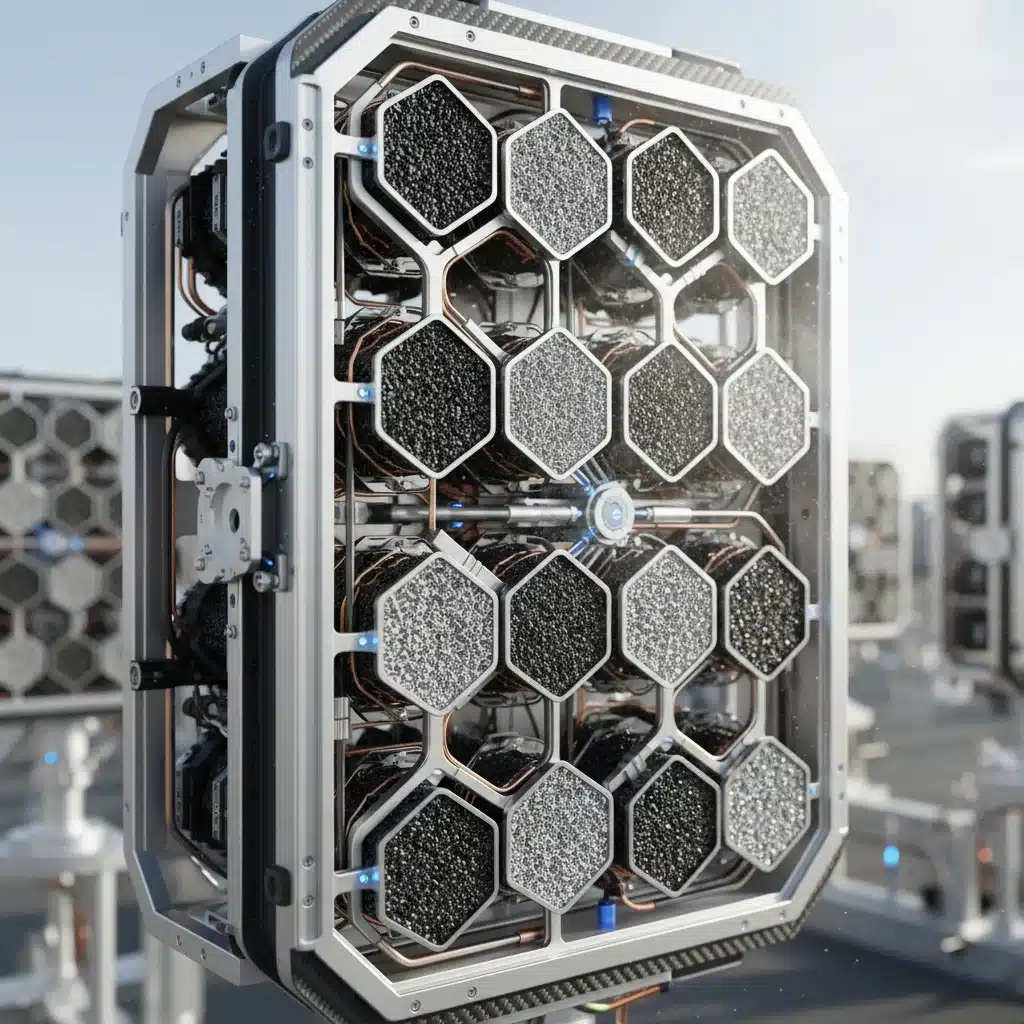
Early DAC technologies faced significant hurdles, primarily due to the low concentration of CO2 in the air, which necessitates large volumes of air processing and substantial energy input. However, recent advancements, particularly in the development of enhanced adsorbents, are transforming the landscape. Researchers are engineering novel materials, such as metal-organic frameworks (MOFs), porous polymers, and advanced amine-based sorbents, that exhibit high selectivity and capacity for CO2 even at low concentrations. These new adsorbents are designed to bind CO2 efficiently at ambient temperatures and then release it in a concentrated form with minimal energy input during regeneration. The regeneration process is often achieved through mild heating or pressure changes, making the overall energy footprint more manageable.
Companies like Carbon Engineering and Climeworks are leading the charge in deploying DAC at scale. Carbon Engineering utilizes a liquid solvent-based system, while Climeworks employs solid sorbent filters. Both are continuously refining their processes, aiming for greater energy efficiency and lower operational costs. The modular nature of some DAC systems also allows for flexible deployment, potentially in areas with access to renewable energy sources, further enhancing their sustainability profile. By 2026, we anticipate seeing more large-scale DAC plants coming online, demonstrating the viability and scalability of this crucial carbon capture innovation.
The benefits of DAC are profound. It offers a solution for emissions that are difficult to abate, such as those from agriculture or aviation, and can even help reverse historical emissions. The captured CO2 can then be stored underground in geological formations or utilized in various industrial processes, creating a circular carbon economy. However, challenges remain, including the high capital costs of building DAC facilities and the energy requirements for operation. Continued research into even more efficient adsorbents and integration with renewable energy sources will be key to unlocking the full potential of DAC as a leading carbon capture innovation.
2. Bioenergy with Carbon Capture and Storage (BECCS)
Bioenergy with Carbon Capture and Storage (BECCS) is another carbon capture innovation that holds significant promise, often considered a “negative emissions” technology. The concept behind BECCS is elegantly simple yet powerful: biomass (such as agricultural waste, dedicated energy crops, or forestry residues) absorbs CO2 from the atmosphere as it grows. When this biomass is then used to generate energy (e.g., in power plants or for biofuel production), the CO2 released during combustion or processing is captured before it enters the atmosphere and subsequently stored permanently underground. The net effect is the removal of CO2 from the atmosphere.
The innovation in BECCS lies not just in the capture technology itself, which often involves established post-combustion capture methods, but in the sustainable sourcing and management of the biomass, and the integration of the entire value chain. Recent advancements focus on optimizing biomass cultivation to maximize CO2 uptake, developing more efficient conversion technologies (e.g., advanced gasification or pyrolysis), and improving the economics of carbon capture and storage at bioenergy facilities. For instance, new solvent systems and membrane technologies are being adapted for the unique flue gas compositions from biomass combustion, which can differ from fossil fuel power plants.
Several pilot and demonstration projects for BECCS are already underway globally. These projects are refining the processes and addressing critical questions around land use, water consumption, and the overall lifecycle emissions of BECCS. The potential for BECCS to generate electricity, heat, or biofuels while simultaneously removing CO2 makes it a highly attractive carbon capture innovation for hard-to-decarbonize sectors. By 2026, we expect to see an increased number of commercial-scale BECCS plants, particularly in regions with abundant sustainable biomass resources and suitable geological storage sites.
However, the successful deployment of BECCS hinges on careful planning to ensure sustainability. Concerns about competition for land with food production, biodiversity impacts, and the energy intensity of biomass harvesting and transport need to be rigorously addressed. When implemented responsibly, BECCS can play a crucial role in achieving negative emissions, acting as a powerful complement to other decarbonization efforts and a significant carbon capture innovation.
3. Carbon Mineralization and Enhanced Weathering
While many carbon capture innovations focus on capturing CO2 and storing it in gaseous or liquid forms, carbon mineralization offers a different, highly stable approach: transforming CO2 into solid carbonate minerals. This process mimics natural geological weathering, where CO2 reacts with certain rocks (like basalt or peridotite) to form stable carbonates, effectively locking away the carbon for geological timescales. The innovation here lies in accelerating and optimizing this natural process to sequester CO2 on a human-relevant timescale.
Enhanced weathering techniques involve crushing silicate rocks (rich in magnesium and calcium) into fine powders and spreading them over land or ocean surfaces. The increased surface area dramatically speeds up the reaction with atmospheric CO2 and water, forming bicarbonates that eventually precipitate as stable carbonate minerals. This approach not only captures CO2 but also has the potential to mitigate ocean acidification. Research is focused on identifying optimal rock types, particle sizes, and deployment strategies to maximize CO2 uptake while minimizing environmental impacts.
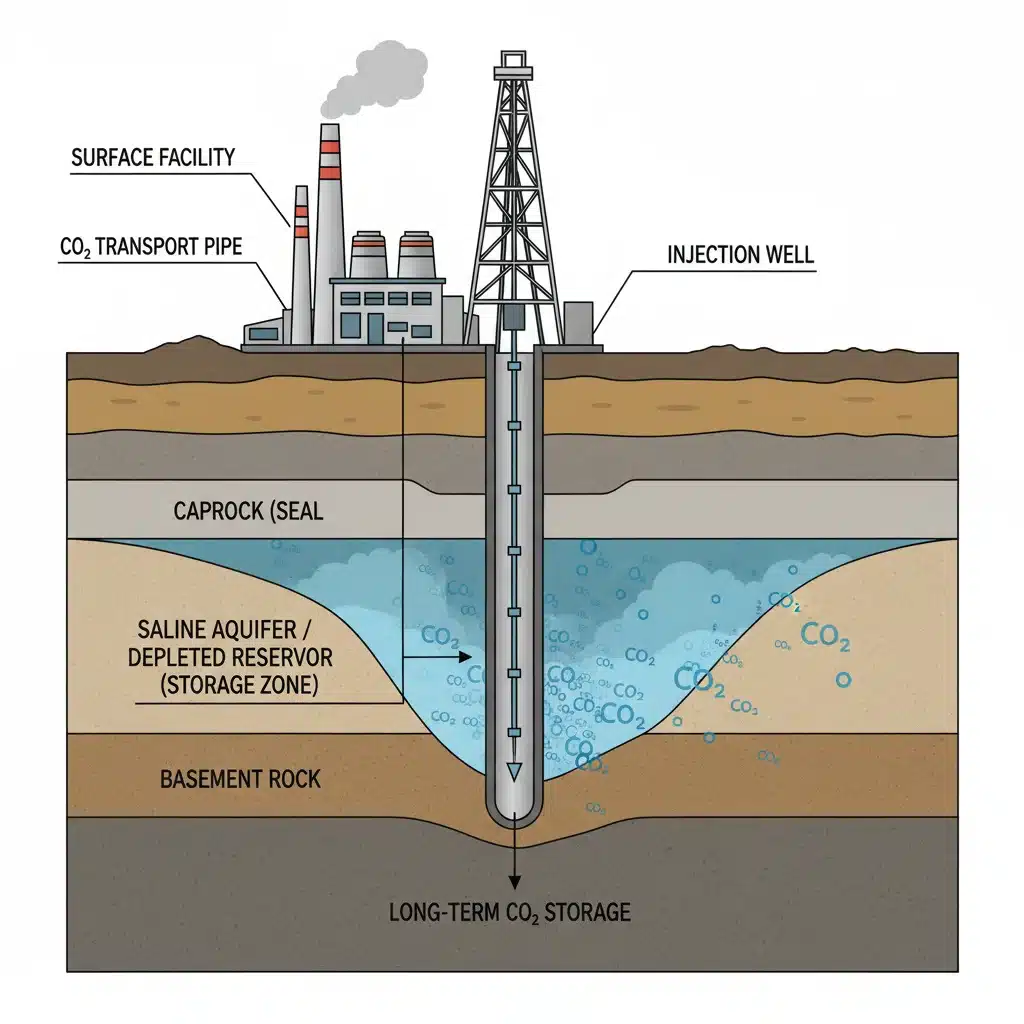
Another facet of carbon mineralization involves injecting CO2 into specific geological formations, such as basaltic rocks, where it reacts with the minerals to form solid carbonates. This method, pioneered by projects like CarbFix in Iceland, offers a permanent and intrinsically safe storage solution, as the CO2 is converted into rock and cannot leak back into the atmosphere. The beauty of this carbon capture innovation is its permanence and the absence of long-term monitoring requirements associated with traditional geological storage.
By 2026, we anticipate seeing more pilot projects and commercial deployments of enhanced weathering, particularly in agricultural settings where finely ground silicate minerals can also act as soil amendments, offering co-benefits. Similarly, more geological sites suitable for CO2 mineralization are being identified and explored. While the scalability of these methods can be limited by the availability of suitable rock feedstocks and the energy required for crushing and transport, their inherent safety and permanence make them a highly attractive long-term carbon capture innovation.
4. Advanced Membrane Separation Technologies
Membrane separation technologies represent a rapidly evolving carbon capture innovation, offering a potentially more energy-efficient alternative to traditional solvent-based absorption processes. These technologies utilize selective membranes that allow CO2 molecules to pass through while retaining other gases, such as nitrogen, oxygen, and water vapor, from flue gas streams or even ambient air.
The innovation in this field is driven by the development of novel membrane materials with enhanced permeability and selectivity for CO2. Researchers are exploring a wide array of materials, including polymeric membranes, mixed matrix membranes (which combine polymers with inorganic fillers), and even inorganic membranes. These advanced materials are designed to operate under various temperature and pressure conditions, offering flexibility for different industrial applications. The goal is to create membranes that can efficiently separate CO2 with minimal energy input, reducing both operational costs and the overall carbon footprint of the capture process.
Advantages of membrane-based capture include their modular design, smaller footprint compared to traditional absorption towers, and the absence of corrosive solvents, which can reduce maintenance costs. They are also particularly well-suited for integration with existing industrial facilities due to their compact nature. By 2026, we expect to see significant commercialization of advanced membrane systems, especially in applications where space is limited or where energy efficiency is a primary concern, such as in cement production or steel manufacturing.
Challenges still exist, including membrane fouling, long-term stability under harsh operating conditions, and achieving sufficiently high CO2 purity for subsequent storage or utilization. However, ongoing research and material science breakthroughs are continuously addressing these issues, positioning membrane separation as a key carbon capture innovation for the coming years. The modularity and scalability of these systems also make them attractive for a broader range of emission sources.
5. Carbon Capture and Utilization (CCU) for Sustainable Products
While carbon capture and storage (CCS) focuses on permanent sequestration, Carbon Capture and Utilization (CCU) represents a transformative carbon capture innovation by converting captured CO2 into valuable products. This approach not only prevents CO2 from entering the atmosphere but also creates economic incentives for capture, potentially offsetting some of the costs. The range of products that can be derived from CO2 is vast and expanding rapidly.
Innovations in CCU are focused on developing efficient and scalable processes for converting CO2 into fuels, chemicals, building materials, and even food. For instance, captured CO2 can be reacted with hydrogen (produced from renewable electricity through electrolysis) to synthesize synthetic fuels like methanol or jet fuel, offering a carbon-neutral alternative to fossil fuels. In the chemical sector, CO2 can be used as a feedstock for producing polymers, plastics, and various chemical intermediates, reducing reliance on petroleum-based feedstocks.
Another exciting area is the use of CO2 in building materials. Technologies are emerging that inject CO2 into concrete curing processes, strengthening the concrete while permanently embedding the carbon. This not only sequesters CO2 but also enhances the performance and durability of construction materials. Furthermore, CO2 can be used in greenhouses to boost plant growth, or even in advanced bioreactors to cultivate algae for biofuels or food supplements.
By 2026, we anticipate a significant increase in the commercial deployment of CCU technologies, driven by growing market demand for sustainable products and policies incentivizing carbon utilization. Companies are actively investing in R&D to make these conversion processes more energy-efficient and cost-effective. While CCU doesn’t necessarily achieve “net-negative” emissions in the same way as permanent storage, it plays a crucial role in creating a circular carbon economy, where CO2 is viewed as a resource rather than a waste product. This shift in perspective is a powerful carbon capture innovation in itself, fostering a new generation of sustainable industries.
The Road Ahead for Carbon Capture Innovations
The landscape of carbon capture innovations is dynamic and rapidly evolving. The five technologies discussed—Direct Air Capture with enhanced adsorbents, Bioenergy with Carbon Capture and Storage, Carbon Mineralization and Enhanced Weathering, Advanced Membrane Separation Technologies, and Carbon Capture and Utilization for sustainable products—represent just a snapshot of the ingenuity being applied to tackle the climate crisis. Each of these approaches offers unique advantages and addresses different facets of the CO2 emission challenge.
The journey from laboratory breakthroughs to widespread commercial deployment is complex and requires sustained investment, supportive policy frameworks, and continued public-private partnerships. The costs associated with carbon capture technologies, while decreasing, still pose a significant barrier. Governments worldwide are recognizing this and implementing incentives such as tax credits, grants, and carbon pricing mechanisms to accelerate adoption. Regulatory clarity for CO2 transport and storage infrastructure is also crucial for scaling up these solutions.
Furthermore, public acceptance and understanding of carbon capture technologies are essential. Addressing concerns about safety, environmental impact, and the long-term efficacy of storage will be vital for successful implementation. Education and transparent communication about the benefits and risks are key to building trust and fostering widespread support for these critical climate solutions.
By 2026, the progress in these carbon capture innovations is expected to be substantial. We will likely see more large-scale demonstration projects, commercial facilities coming online, and further reductions in costs and energy penalties. The integration of these technologies with renewable energy sources will become even more critical, ensuring that the capture process itself is as low-carbon as possible.
The future of carbon capture is not about a single “silver bullet” solution, but rather a portfolio of diverse technologies working in concert. A combination of point-source capture, direct air capture, and nature-based solutions, coupled with robust utilization and storage options, will be necessary to achieve the ambitious climate goals set by nations globally. These carbon capture innovations offer a powerful set of tools to mitigate the worst effects of climate change, paving the way for a cleaner, healthier, and more sustainable planet for generations to come. The next few years will be pivotal in translating this innovation into tangible climate action.
Conclusion: A Future Forged by Innovation
The urgency of the climate crisis demands bold and innovative solutions, and the advancements in carbon capture technologies are rising to meet this challenge. From capturing CO2 directly from the atmosphere with enhanced adsorbents to transforming it into stable minerals or valuable products, the frontier of carbon capture innovations is expanding at an unprecedented pace.
The five technologies explored—Direct Air Capture, BECCS, Carbon Mineralization, Advanced Membrane Separation, and Carbon Capture and Utilization—each bring unique strengths to the table. They represent a collective effort to not only reduce new emissions but also to actively remove existing CO2 from our environment, a critical step towards achieving net-zero and potentially net-negative emissions targets. By 2026, these innovations are expected to move beyond pilot stages into more widespread commercial deployment, marking a significant turning point in our global decarbonization efforts.
However, the success of these carbon capture innovations is not solely dependent on technological prowess. It requires a concerted global effort encompassing policy support, substantial investment, interdisciplinary collaboration, and a commitment to sustainable resource management. The integration of carbon capture with renewable energy sources, the development of robust infrastructure for CO2 transport and storage, and the creation of viable markets for CO2-derived products are all essential pieces of this complex puzzle.
As we look towards 2026 and beyond, the continued evolution of carbon capture innovations will be instrumental in shaping a resilient and sustainable future. These technologies offer more than just a means to reduce emissions; they represent an opportunity to redefine our relationship with carbon, transforming it from a pollutant into a valuable resource. The journey is challenging, but with ongoing dedication to research, development, and deployment, carbon capture will undoubtedly play a pivotal role in securing a livable planet for future generations.