Bridging Generational Communication Gaps in American Society 2026

Bridging Generational Communication Gaps in American Society 2026
In an ever-evolving world, the landscape of communication is constantly shifting. As we navigate 2026, American society finds itself at a fascinating crossroads, where multiple generations coexist, each with its unique lens through which it perceives and interacts with the world. These distinct perspectives often lead to what we commonly refer to as generational communication gaps. Understanding and effectively bridging these gaps is not merely a matter of politeness; it’s a critical component for fostering cohesive workplaces, stronger families, and a more harmonious society.
The term ‘generation’ itself isn’t just about age; it encapsulates shared experiences, technological exposure, cultural touchstones, and socio-economic realities that shape worldviews. From the Silent Generation and Baby Boomers to Generation X, Millennials, and Gen Z, each group brings invaluable strengths and distinct communication preferences to the table. Ignoring these differences can lead to misunderstandings, reduced productivity, and fractured relationships. Conversely, recognizing and leveraging them can unlock unprecedented levels of innovation, empathy, and collaboration.
This comprehensive article will delve deep into the intricacies of generational communication gaps in American society in 2026. We will explore the defining characteristics of each generation’s communication style, identify common challenges, and most importantly, provide actionable strategies and best practices to bridge these divides. Whether you’re a manager aiming for a more productive team, a family member seeking deeper connections, or simply an individual interested in fostering better understanding, this guide offers valuable insights to navigate the rich tapestry of intergenerational interaction.
Understanding the Generations: A Communication Profile
Before we can bridge the gaps, we must first understand the terrain. Each generation has been shaped by unique historical events, technological advancements, and cultural norms that profoundly influence their communication habits. Let’s briefly profile the communication tendencies of the key generations currently active in American society in 2026:
The Silent Generation (Born 1928-1945)
- Defining Characteristics: Shaped by the Great Depression and World War II, they value hard work, respect for authority, and tradition.
- Communication Style: Often formal, respectful, and direct. They prefer face-to-face interactions, phone calls, and written letters. They value privacy and may be less comfortable with overly casual or public communication. Hierarchy and established protocols are important.
- Strengths: Clear, concise, and thorough communication. Strong sense of duty and loyalty.
- Challenges: May be less familiar or comfortable with modern digital communication tools, leading to potential exclusion if not accommodated.
Baby Boomers (Born 1946-1964)
- Defining Characteristics: Grew up during a time of economic prosperity and social change. Value personal fulfillment, loyalty, and career advancement.
- Communication Style: Prefer in-person meetings and phone calls. They appreciate detailed information and a structured approach. Email is generally accepted, but instant messaging or social media for professional communication might be less favored. Value direct feedback and often enjoy debate.
- Strengths: Strong interpersonal skills, experience in formal settings, comfortable with negotiation.
- Challenges: Can sometimes be perceived as resistant to new technologies or faster-paced communication methods. May prefer longer, more detailed discussions over quick, succinct updates.
Generation X (Born 1965-1980)
- Defining Characteristics: Often described as independent, resourceful, and skeptical. Witnessed the rise of personal computing and the internet.
- Communication Style: Adaptable and pragmatic. They are comfortable with both traditional and digital communication. Email is a primary tool, but they also use phone calls and face-to-face interactions. Value work-life balance and efficient, no-nonsense communication. They prefer directness and appreciate autonomy.
- Strengths: Bridging generation, comfortable with diverse communication channels, results-oriented.
- Challenges: Can sometimes be seen as cynical or preferring to work independently, which might be misconstrued as disengagement in highly collaborative, always-on environments.
Millennials (Generation Y, Born 1981-1996)
- Defining Characteristics: Grew up with the internet and mobile technology. Value collaboration, feedback, work-life integration, and purpose-driven work.
- Communication Style: Highly digitally fluent. Prefer email, instant messaging, and collaborative online platforms. Value transparency, immediate feedback, and open communication. They are comfortable with informal communication and often use emojis and GIFs.
- Strengths: Excellent at leveraging technology for communication, collaborative, responsive, and open to diverse viewpoints.
- Challenges: Their preference for speed and digital interaction can sometimes be perceived as a lack of formality or depth by older generations. May struggle with strictly hierarchical communication structures.
Generation Z (Born 1997-2012)
- Defining Characteristics: Digital natives, grew up with smartphones and social media. Value authenticity, diversity, speed, and social impact.
- Communication Style: Extremely comfortable with short-form digital communication: instant messaging, social media, video snippets, and visual content. They process information quickly and prefer concise, direct messages. They value authenticity and expect immediate responses.
- Strengths: Highly adept at rapid, multi-channel digital communication, visually oriented, and globally connected.
- Challenges: Their reliance on digital and often abbreviated communication can sometimes lead to misunderstandings in more formal or nuanced contexts. May prefer texting to phone calls, which can be seen as impersonal by others.
Common Manifestations of Generational Communication Gaps
Now that we understand the individual profiles, let’s explore how these differences often manifest as generational communication gaps in real-world scenarios. These gaps aren’t about one style being inherently ‘better’ than another, but rather about differing expectations and interpretations.
1. Preferred Communication Channels
A classic example is the choice of communication medium. A Baby Boomer might pick up the phone for a quick query, while a Gen Z individual would send a text or a direct message on a collaborative platform. If these preferences aren’t understood, one might feel ignored or disrespected by the other’s chosen method of contact. For instance, a manager (Gen X) might send an important email expecting a detailed response, while a younger employee (Millennial) might see a brief ‘Got it!’ as sufficient, leading to the manager feeling the employee isn’t thorough.
2. Formality vs. Informality
The level of formality in language, tone, and even greetings varies significantly. The Silent Generation and Baby Boomers often prefer more formal language, titles, and structured conversations. Younger generations, particularly Millennials and Gen Z, tend to be more informal, using slang, emojis, and a more casual tone, even in professional settings. This can lead to older generations perceiving younger ones as disrespectful or unprofessional, while younger generations might view older ones as rigid or unapproachable.
3. Speed of Response and Expectations
Digital natives expect near-instantaneous responses, mirroring the pace of social media and instant messaging. Older generations, accustomed to slower communication cycles (mail, scheduled meetings), may not feel the same urgency. This discrepancy in response time can cause frustration, with younger generations feeling ignored and older generations feeling rushed or overwhelmed by constant notifications.
4. Information Density and Detail
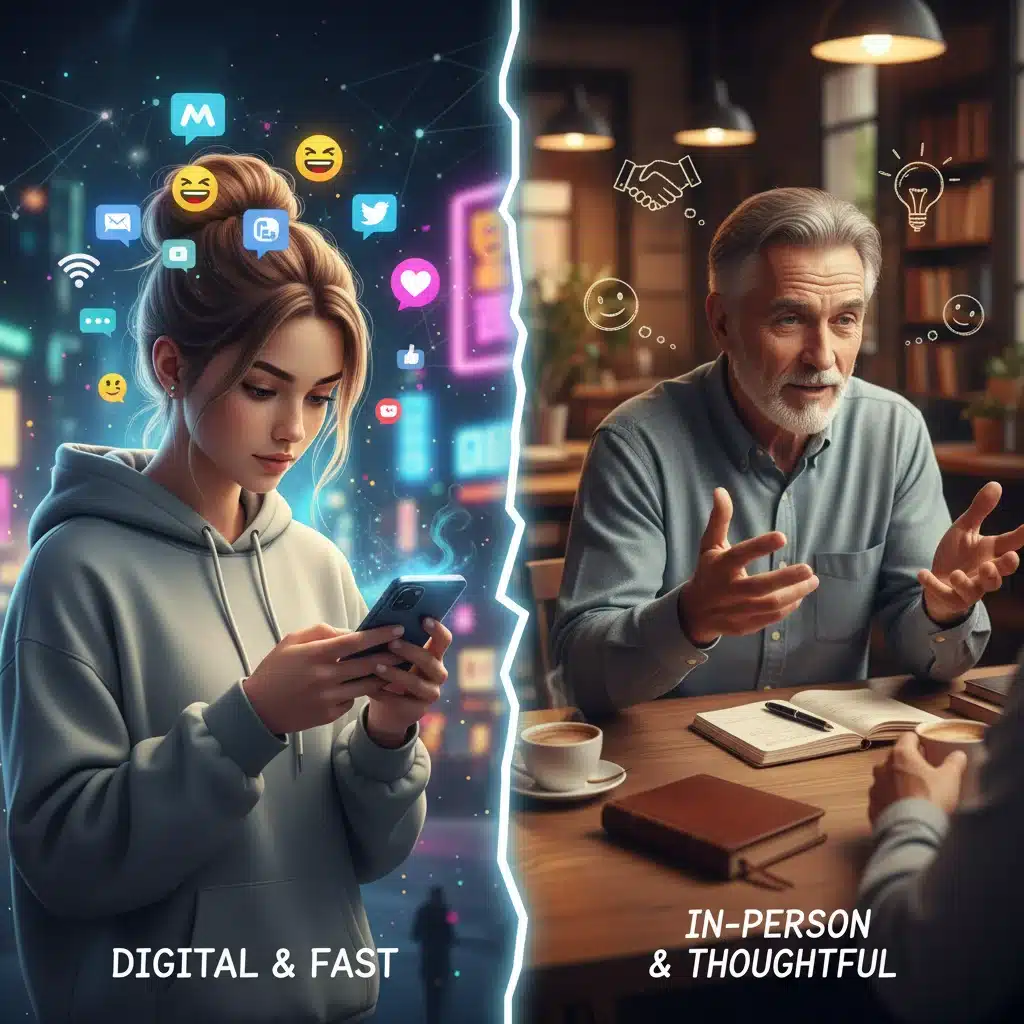
Some generations prefer comprehensive, detailed explanations, often in long-form documents or lengthy emails. Others prefer concise, bullet-pointed information, or even visual summaries. When a Baby Boomer sends a lengthy email, a Gen Z recipient might skim it for keywords or feel overwhelmed. Conversely, a Gen Z’s brief message might be perceived as lacking important context by a Gen X or Boomer recipient.
5. Feedback and Recognition
The preferred style and frequency of feedback also differ. Millennials and Gen Z often seek regular, constructive feedback and recognition, sometimes preferring it delivered in real-time or through digital platforms. Older generations might be accustomed to less frequent, more formal performance reviews or believe that ‘no news is good news.’ This can lead to younger employees feeling unsupported or unappreciated, and older managers feeling that younger employees are overly demanding of praise.
6. Technological Fluency and Adoption
While technology is a powerful enabler, it can also be a source of division. The comfort level with new tools, software, and digital platforms varies greatly. Implementing new communication software without adequate training or consideration for all generations can exacerbate generational communication gaps, potentially alienating those less technologically adept.
Strategies for Bridging Generational Communication Gaps in 2026
Bridging generational communication gaps is not about forcing everyone to communicate in the same way, but rather about fostering an environment of mutual understanding, respect, and adaptability. Here are actionable strategies for individuals, teams, and organizations in American society in 2026:
1. Emphasize Empathy and Active Listening
The foundational step to bridging any communication gap is empathy. Encourage individuals to put themselves in another’s shoes and understand their perspective. Active listening – truly hearing and understanding what someone is saying, rather than just waiting for your turn to speak – is crucial. This means paying attention to both verbal and non-verbal cues, and asking clarifying questions without judgment. When people feel heard and understood, trust is built, and communication flows more freely.
2. Promote Diverse Communication Channels
Instead of dictating a single communication method, offer a range of options and encourage flexibility. For important information, consider multi-channel communication: send an email, follow up with a quick team chat message, and perhaps mention it briefly in a team meeting. This ensures that information reaches everyone through their preferred channel, accommodating different generational preferences. For instance, a critical announcement could be sent via email (Gen X, Boomers, Millennials) and summarized in a short video or infographic on an internal social platform (Gen Z, Millennials).
3. Foster Intergenerational Mentorship and Reverse Mentorship
Structured mentorship programs can be incredibly powerful. Traditional mentorship pairs younger individuals with older, more experienced mentors. Reverse mentorship, where younger employees mentor older ones on topics like technology, social media, or new cultural trends, is equally valuable. These programs build relationships, facilitate knowledge transfer, and expose individuals to different communication styles in a supportive environment, directly addressing generational communication gaps.
4. Provide Communication Training and Workshops
Organizations should invest in training that focuses on intergenerational communication. These workshops can help employees understand different generational communication styles, identify potential friction points, and learn strategies for adapting their own communication. Role-playing exercises can be particularly effective in practicing these new skills. The focus should be on building bridges, not on highlighting differences negatively.
5. Establish Clear Communication Protocols and Expectations
While flexibility is key, there are times when clear guidelines are necessary, especially in professional settings. Define when certain channels should be used (e.g., email for formal announcements, chat for quick questions), expected response times for different types of communication, and preferred formats for information sharing. Documenting these protocols can reduce ambiguity and prevent misunderstandings arising from differing generational expectations.

6. Leverage Technology Thoughtfully
Technology should be an enabler, not a barrier. When introducing new tools, provide comprehensive training and support for all generations. Ensure that communication platforms are user-friendly and accessible. Consider hybrid meeting formats that allow both in-person and remote participants to engage effectively, accommodating those who prefer face-to-face and those who thrive in digital spaces. The goal is to use technology to enhance connections, not to create new divides.
7. Encourage Face-to-Face Interaction (Even if Brief)
While digital communication is efficient, face-to-face interactions remain invaluable for building rapport, understanding nuances, and resolving complex issues. Encourage regular, even if brief, in-person check-ins or video calls. These interactions can significantly reduce misunderstandings that might arise from purely text-based communication, helping to bridge generational communication gaps by adding human context.
8. Focus on Shared Goals and Values
Despite differences in communication style, all generations often share fundamental goals and values, such as wanting to contribute meaningfully, achieve success, and be respected. By emphasizing these commonalities, individuals can find common ground and work towards shared objectives, making communication differences less significant and more manageable.
9. Be Patient and Open to Learning
Bridging generational communication gaps is an ongoing process that requires patience and a willingness to learn from others. Avoid making assumptions or stereotyping based on age. Instead, approach every interaction with curiosity and an open mind, recognizing that each individual, regardless of their generation, brings unique experiences and valuable insights.
10. Cultivate a Culture of Respect and Inclusivity
Ultimately, a culture that values diversity in all its forms – including generational diversity – is key. When respect is the cornerstone of interactions, differences in communication styles become opportunities for learning and growth, rather than sources of conflict. Leaders play a crucial role in modeling inclusive behaviors and setting the tone for intergenerational respect.
The Future of Intergenerational Communication in American Society
As we look beyond 2026, the importance of bridging generational communication gaps will only grow. The workforce will continue to diversify, with more generations working side-by-side than ever before. Society will become even more interconnected, requiring a nuanced understanding of how different age groups interact and share information.
The rise of artificial intelligence and advanced communication technologies will undoubtedly introduce new dynamics. While AI can personalize communication and translate different styles, the human element of empathy and understanding will remain paramount. The ability to adapt one’s communication style, to listen actively, and to seek common ground will be critical skills for individuals and organizations alike.
Families, too, will benefit immensely from these strategies. Understanding why a grandparent might prefer a phone call to a text, or why a teenager communicates primarily through visuals, can transform strained interactions into moments of connection and shared joy. It’s about meeting people where they are, rather than expecting them to conform to a single mold.
Conclusion
Generational communication gaps are a natural byproduct of a diverse and dynamic society. In American society in 2026, these gaps represent both challenges and immense opportunities. By understanding the unique communication profiles of each generation, recognizing the common friction points, and implementing thoughtful strategies, we can transform potential divides into bridges of understanding.
The goal is not to erase generational differences but to celebrate them, leveraging the rich tapestry of perspectives and experiences that each age group brings. When we commit to empathy, flexibility, and proactive communication, we can foster environments – be they workplaces, families, or communities – where every voice is heard, respected, and valued. Bridging these gaps is an investment in a more collaborative, inclusive, and ultimately, more successful future for all.