Edge AI Deployment: A U.S. Business Guide to Reducing Latency by 30% in 2026
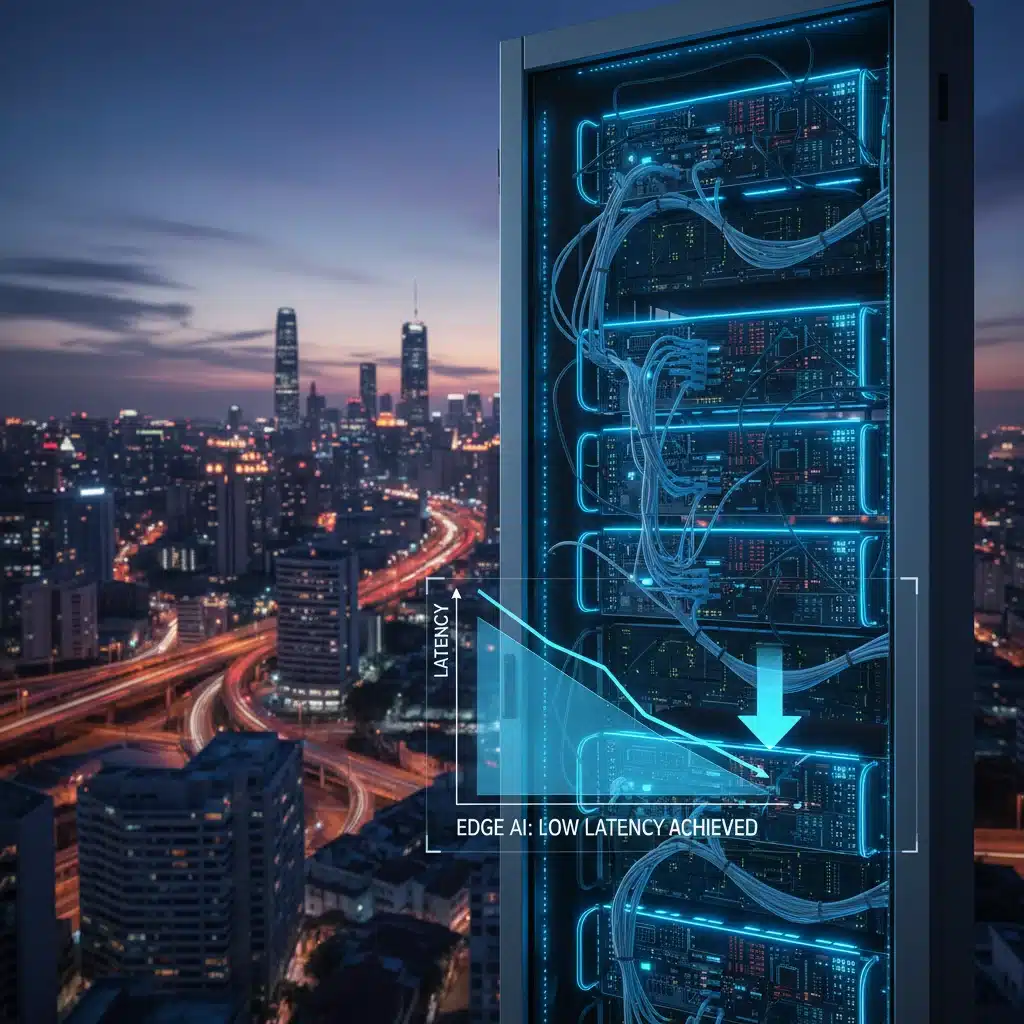
In the rapidly evolving landscape of artificial intelligence, U.S. businesses are constantly seeking innovative ways to gain a competitive edge. One of the most significant frontiers is Edge AI Deployment, a paradigm shift that brings computation and data storage closer to the sources of data. The promise? Drastically reduced latency, enhanced real-time decision-making, and unparalleled operational efficiency. This comprehensive guide provides U.S. businesses with insider knowledge and practical solutions to achieve a remarkable 30% reduction in latency by 2026 through strategic Edge AI implementation.
The digital transformation journey for many enterprises has been primarily cloud-centric. While the cloud offers immense scalability and flexibility, it often introduces a critical bottleneck: latency. For applications demanding instantaneous responses – think autonomous vehicles, smart manufacturing, remote surgery, or sophisticated fraud detection – every millisecond counts. This is where Edge AI Latency Reduction becomes not just an advantage, but a necessity for survival and growth.
The Imperative of Edge AI Latency Reduction for U.S. Businesses
The U.S. business landscape is characterized by its dynamism and a relentless pursuit of innovation. Industries ranging from manufacturing and healthcare to retail and logistics are grappling with ever-increasing data volumes and the need for faster insights. Traditional cloud-based AI, while powerful, often struggles to meet the real-time demands of these modern applications due to the round-trip time required to send data to a centralized cloud, process it, and send results back. This delay, known as latency, can lead to inefficiencies, missed opportunities, and even critical safety concerns.
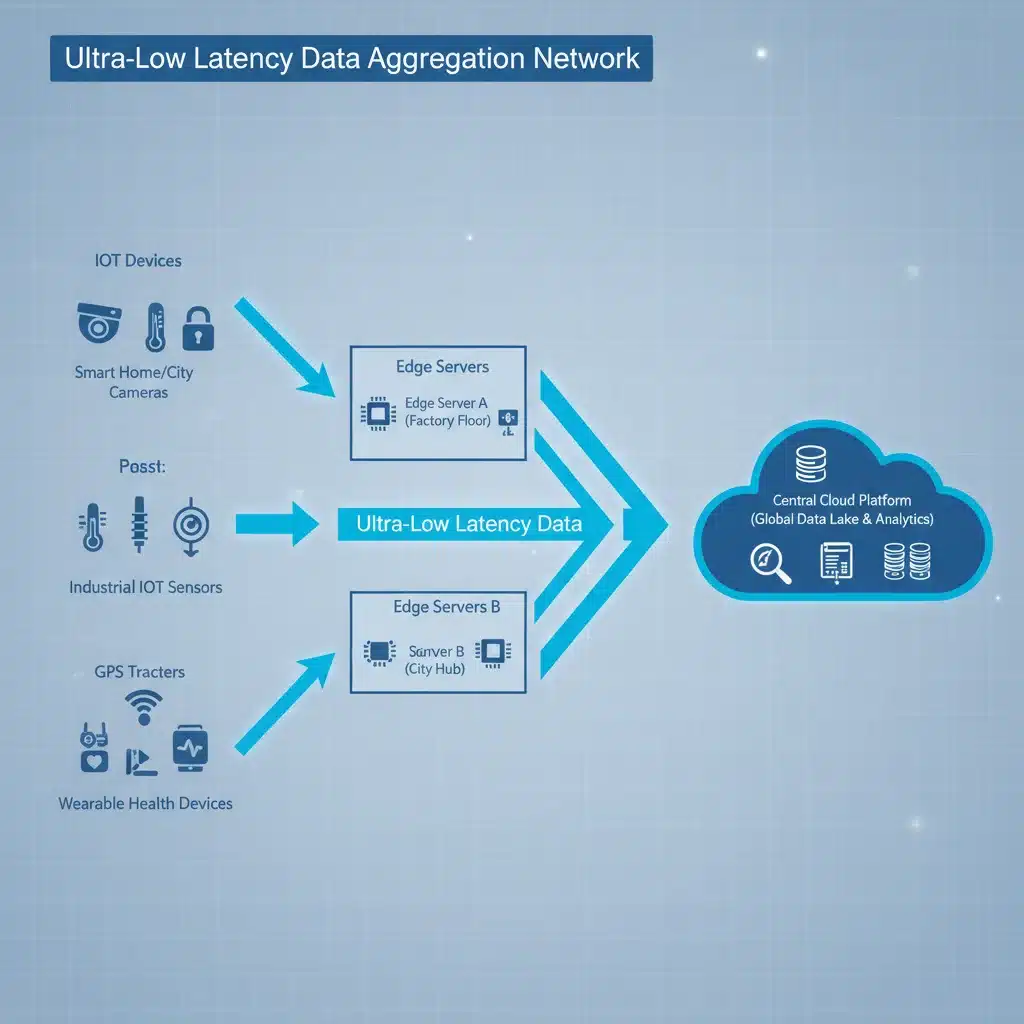
Edge AI Latency Reduction directly addresses this challenge by processing data closer to its origin. Imagine a smart factory where sensors on machinery generate terabytes of data per hour. Sending all this data to a remote cloud for analysis and then waiting for instructions to return can result in production delays and suboptimal performance. By deploying AI models at the edge – on the factory floor itself – decisions can be made instantaneously, leading to predictive maintenance, optimized production lines, and enhanced safety protocols in real-time.
Understanding Latency in the Context of AI
Latency, in simple terms, is the delay between a cause and effect. In computing, it’s the time it takes for data to travel from its source to its destination and back. For AI applications, this involves several components:
- Data Acquisition Latency: The time it takes for sensors or devices to capture and transmit data.
- Network Latency: The time data spends traveling over the network (local, WAN, internet) to the processing unit.
- Processing Latency: The time taken by the CPU/GPU to execute the AI model and generate an inference.
- Actuation Latency: The time it takes for the system to act upon the AI’s decision.
Edge AI primarily targets reducing network and, to some extent, processing latency by bringing the computational power closer to the data source. This proximity minimizes the distance data needs to travel, thereby cutting down transmission time significantly. For U.S. businesses operating in geographically dispersed areas or those with critical real-time operations, this reduction is paramount.
Key Drivers for Edge AI Adoption in the U.S. Market
Several factors are accelerating the adoption of Edge AI in the U.S., making Edge AI Latency Reduction a central theme in digital transformation strategies:
- Proliferation of IoT Devices: The sheer volume of data generated by billions of interconnected IoT devices across industries demands localized processing.
- Rise of 5G Networks: 5G’s ultra-low latency and high bandwidth capabilities complement Edge AI perfectly, enabling faster data transfer and enhanced edge processing.
- Demand for Real-time Analytics: Industries like finance (fraud detection), healthcare (patient monitoring), and autonomous systems require immediate insights and actions.
- Data Privacy and Security Concerns: Processing sensitive data locally at the edge can mitigate risks associated with transmitting it to the cloud, addressing stringent U.S. data regulations.
- Cost Optimization: Reducing the amount of data sent to the cloud can significantly lower bandwidth and cloud storage costs, especially for high-volume data streams.
These drivers collectively underscore why U.S. businesses are increasingly prioritizing Edge AI for its ability to deliver faster, more secure, and cost-effective AI solutions.
Strategic Approaches to Achieve 30% Latency Reduction by 2026
Achieving a 30% reduction in latency by 2026 is an ambitious yet attainable goal for U.S. businesses willing to invest in strategic Edge AI initiatives. This requires a multi-faceted approach encompassing infrastructure, software, and operational changes.
1. Optimized Edge Infrastructure Deployment
The foundation of effective Edge AI is robust and strategically placed infrastructure. This isn’t just about buying more powerful hardware; it’s about intelligent deployment:
- Micro Data Centers and Edge Servers: Deploying compact, ruggedized servers or micro data centers closer to data sources. These can be on factory floors, in retail stores, or even within vehicles.
- Specialized Edge Hardware: Utilizing hardware optimized for AI inference, such as GPUs, TPUs, or custom AI accelerators, which are more energy-efficient and performant for specific AI workloads at the edge.
- Network Architecture Redesign: Shifting from a purely hub-and-spoke cloud model to a distributed, hierarchical architecture where edge nodes act as local processing hubs, only sending aggregated or critical data to the central cloud.
- 5G and Private Networks: Leveraging the ultra-low latency capabilities of 5G, particularly private 5G networks, to ensure rapid data transfer between devices and edge nodes. This is crucial for applications requiring extremely high reliability and speed.
For instance, a major U.S. logistics company could deploy edge servers in their distribution centers. These servers would process real-time data from inventory robots, conveyor belts, and package scanners. Instead of sending all this raw data to a central cloud, the edge server identifies anomalies, optimizes routing, and manages robot movements locally, dramatically reducing the decision-making latency and improving throughput.
2. Intelligent Data Management and Processing
Not all data needs to travel to the cloud. A key aspect of Edge AI Latency Reduction is smart data management:
- Data Filtering and Pre-processing at the Edge: Implementing algorithms on edge devices to filter out irrelevant data, aggregate similar data points, or compress data before transmission. This reduces the volume of data sent upstream, thereby lowering network latency.
- Event-Driven Architectures: Designing systems where AI models at the edge are triggered by specific events or thresholds, processing only necessary data in real-time, rather than continuously streaming all data.
- Federated Learning: Training AI models on decentralized edge devices without exchanging raw data. Only model updates (weights) are sent to a central server, preserving privacy and reducing bandwidth, though this primarily impacts training rather than inference latency directly.
- Model Optimization for Edge Devices: Developing or compressing AI models to run efficiently on resource-constrained edge hardware. This involves techniques like quantization, pruning, and knowledge distillation to reduce model size and computational demands without significant loss of accuracy.
Consider a retail chain using AI for customer behavior analysis. Instead of streaming all video footage to the cloud, edge devices can run lightweight AI models to detect specific actions (e.g., dwell time, product interaction) and only send anonymized metadata or alerts to the cloud, significantly reducing data transfer and processing latency for real-time insights.

3. Advanced Software and Orchestration
Hardware is only one part of the equation; the software stack and how it’s managed are equally critical for achieving optimal Edge AI Latency Reduction:
- Containerization and Kubernetes at the Edge: Using technologies like Docker and Kubernetes to deploy, manage, and scale AI applications consistently across diverse edge devices. This enables agile deployment and updates of AI models.
- Edge Orchestration Platforms: Implementing platforms that allow centralized management, monitoring, and updating of distributed edge AI models and infrastructure. These platforms ensure that the right models are deployed to the right edge devices at the right time.
- Optimized AI Frameworks: Utilizing AI frameworks and libraries specifically designed for edge deployment, such as TensorFlow Lite, PyTorch Mobile, or OpenVINO, which are optimized for inference on resource-constrained devices.
- Hybrid Cloud-Edge Integration: Designing seamless integration between edge and cloud environments, where the edge handles real-time inference and immediate actions, while the cloud provides broader analytics, long-term storage, and model retraining. This ensures that the most latency-sensitive tasks remain at the edge.
A U.S. utility company monitoring critical infrastructure (e.g., power grids, pipelines) can deploy containerized AI models on edge gateways near sensors. An orchestration platform would ensure these models are always up-to-date and operating optimally, providing real-time anomaly detection and preventing outages with minimal delay.
4. Leveraging Emerging Technologies
The future of Edge AI Latency Reduction will be shaped by ongoing technological advancements:
- Compute Express Link (CXL): CXL promises to revolutionize memory and processor interconnects, enabling more efficient sharing of resources between CPUs, GPUs, and other accelerators, which will be critical for next-generation edge devices.
- Photonics and Optical Computing: While still in early stages, optical computing could offer unparalleled speed and energy efficiency for AI inference, potentially pushing latency to near-zero levels at the edge.
- Quantum Computing (Long-term): Though not directly impacting current edge latency, advancements in quantum computing could eventually enable incredibly complex AI models to run with extreme efficiency, potentially influencing future edge architectures.
- Advanced Sensor Technology: Improvements in sensor fusion and smart sensors with built-in processing capabilities (e.g., neuromorphic chips) will further reduce the need to transmit raw data, enabling more intelligence directly at the data source.
U.S. businesses should keep a close watch on these emerging technologies, as they will undoubtedly play a role in future iterations of their Edge AI strategies.
Industry-Specific Applications of Edge AI for Latency Reduction
The impact of Edge AI Latency Reduction is profound across various U.S. industries:
Manufacturing and Industrial IoT (IIoT)
- Predictive Maintenance: Real-time analysis of sensor data from machinery at the edge to predict failures before they occur, reducing downtime and maintenance costs. Latency reduction is critical here to prevent catastrophic equipment failures.
- Quality Control: Edge AI vision systems inspect products on the assembly line in real-time, identifying defects instantly and preventing faulty products from progressing further.
- Robotics and Automation: Autonomous robots performing tasks on the factory floor rely on ultra-low latency for navigation, object manipulation, and collision avoidance.
A U.S. automotive plant, for example, can deploy edge AI for real-time quality checks on welds. If a weld deviates from specifications, the edge system can immediately flag it, stopping the line or alerting technicians within milliseconds, preventing costly recalls and ensuring product integrity.
Healthcare and Life Sciences
- Remote Patient Monitoring: Wearable devices and home sensors use edge AI to analyze vital signs and activity levels, alerting healthcare providers to critical changes in real-time, especially for elderly patients or those with chronic conditions.
- Medical Imaging Analysis: Edge AI can pre-process and analyze medical images (X-rays, MRIs) at the point of care, providing immediate insights to clinicians, especially in remote or underserved areas where cloud connectivity might be poor.
- Surgical Robotics: Minimally invasive surgical robots require extremely low latency for precise control and real-time feedback, ensuring patient safety and surgical accuracy.
In an emergency room, an edge AI system could analyze incoming patient data from monitors, identifying early signs of sepsis or cardiac arrest faster than human observation, prompting immediate intervention and potentially saving lives.
Retail and Smart Spaces
- Inventory Management: Edge AI cameras and sensors track product movement and shelf stock in real-time, automating reordering and reducing stockouts.
- Personalized Customer Experiences: Edge AI can analyze in-store customer behavior to offer personalized recommendations or promotions instantly, enhancing the shopping experience.
- Loss Prevention: Real-time anomaly detection at the edge can identify suspicious activities, reducing theft and improving security without relying on constant cloud connectivity.
A smart retail store can use edge AI to analyze foot traffic patterns and queue lengths, dynamically opening new checkout lanes or dispatching staff to busy areas, optimizing customer flow and reducing wait times.
Autonomous Vehicles and Transportation
- Real-time Decision Making: Autonomous vehicles rely heavily on edge AI to process sensor data (Lidar, radar, cameras) and make instantaneous decisions for navigation, obstacle avoidance, and path planning. Any latency here can have catastrophic consequences.
- Traffic Management: Edge AI deployed at intersections can optimize traffic flow by analyzing real-time vehicle and pedestrian data, adjusting signal timings to reduce congestion.
- Fleet Management: Edge devices in commercial vehicles can monitor driver behavior, vehicle performance, and route optimization, providing immediate feedback and improving safety and efficiency.
For a self-driving truck, the ability of its onboard edge AI to process sensor data and react to a sudden road hazard in milliseconds is paramount for safety. Sending this data to a distant cloud for processing would introduce unacceptable delays.
Challenges and Considerations for U.S. Businesses
While the benefits of Edge AI Latency Reduction are clear, U.S. businesses must navigate several challenges:
- Security at the Edge: Edge devices are often physically exposed and can be vulnerable to tampering or cyberattacks. Robust security measures, including encryption, secure boot, and access control, are essential.
- Device Management and Orchestration: Managing a vast, geographically distributed network of edge devices and AI models can be complex. Centralized orchestration tools are critical.
- Resource Constraints: Edge devices often have limited computational power, memory, and battery life compared to cloud servers. AI models must be optimized to run efficiently within these constraints.
- Connectivity and Bandwidth: While Edge AI reduces reliance on constant cloud connectivity, reliable local network infrastructure (e.g., Wi-Fi 6, 5G, private LTE) is still crucial for data ingestion and occasional cloud synchronization.
- Talent Gap: There’s a shortage of professionals with expertise in Edge AI development, deployment, and maintenance. U.S. businesses need to invest in training or seek external partnerships.
- Cost of Initial Investment: The upfront cost of deploying edge infrastructure can be significant, although this is often offset by long-term operational savings and enhanced competitiveness.
Addressing these challenges requires careful planning, strategic partnerships, and a clear understanding of an organization’s specific needs and capabilities.
Measuring and Benchmarking Latency Reduction
To achieve a 30% latency reduction, businesses must first establish clear benchmarks and metrics. This involves:
- Baseline Measurement: Accurately measure current end-to-end latency for critical AI applications, from data acquisition to action.
- Key Performance Indicators (KPIs): Define specific KPIs related to latency, such as inference time, network round-trip time, and decision-to-action time.
- Continuous Monitoring: Implement robust monitoring tools to track latency metrics in real-time, allowing for immediate identification and resolution of bottlenecks.
- A/B Testing and Iteration: Deploy Edge AI solutions incrementally and perform A/B testing to compare performance against existing cloud-based or legacy systems.
Regularly reviewing these metrics and iterating on deployment strategies will be crucial for U.S. businesses to validate their progress towards the 2026 goal.
The Future Outlook: Beyond 2026
The journey towards optimal Edge AI Latency Reduction doesn’t end in 2026. As technology continues to evolve, we can expect:
- Hyper-Personalization: Even more localized and personalized AI experiences, from smart homes anticipating needs to hyper-targeted retail offers.
- Autonomous Everything: Further advancements in autonomous systems across all sectors, from logistics to healthcare, driven by near-zero latency AI.
- Sustainable AI: Edge AI’s ability to process data locally can contribute to more energy-efficient AI systems by reducing the need for massive cloud data centers and long-distance data transmission.
- New Business Models: The capabilities unlocked by ultra-low latency Edge AI will enable entirely new services and business models, fostering innovation and creating new market opportunities for U.S. enterprises.
For U.S. businesses, embracing Edge AI is not merely about technological adoption; it’s about future-proofing operations, enhancing customer experiences, and securing a leading position in the global digital economy.
Conclusion
The strategic deployment of Edge AI is no longer a futuristic concept but a present-day imperative for U.S. businesses aiming for superior performance and competitiveness. By meticulously planning their edge infrastructure, intelligently managing data, leveraging advanced software, and embracing emerging technologies, companies can realistically achieve a 30% reduction in latency by 2026. This focus on Edge AI Latency Reduction will unlock unprecedented levels of real-time insights, operational efficiency, and transformative capabilities, driving innovation and securing a resilient future in an increasingly data-driven world. The time to act is now, transforming theoretical advantages into tangible business outcomes.