Smart Manufacturing: Implementing AI and IoT for a 20% Efficiency Boost by 2026
The manufacturing landscape is undergoing a profound transformation, driven by technological advancements that are reshaping every aspect of production, from supply chain management to shop floor operations. At the heart of this revolution lies smart manufacturing efficiency, a paradigm that leverages the power of Artificial Intelligence (AI) and the Internet of Things (IoT) to create highly optimized, responsive, and sustainable production systems. As industries worldwide strive for greater competitiveness and resilience, the integration of AI and IoT is no longer a luxury but a strategic imperative. The goal for many forward-thinking enterprises is ambitious yet achievable: to realize a 20% efficiency boost by 2026 through these cutting-edge technologies.
This article delves into the core tenets of smart manufacturing, exploring how AI and IoT are synergistically deployed to unlock unprecedented levels of operational excellence. We will examine the tangible benefits, practical implementation strategies, and the critical success factors that will enable manufacturers to not only meet but exceed their efficiency targets in the coming years. From predictive maintenance and quality control to optimized resource allocation and real-time decision-making, the potential for smart manufacturing efficiency is vast and transformative.
The Dawn of Smart Manufacturing: A Paradigm Shift
Smart manufacturing represents the next evolutionary step in industrial production, building upon the principles of Industry 4.0. It envisions a fully connected and intelligent factory environment where machines, sensors, and software communicate seamlessly, generating vast amounts of data that can be analyzed by AI algorithms to drive continuous improvement. This interconnectedness is the bedrock of smart manufacturing efficiency, enabling a level of visibility and control previously unimaginable.
What Defines Smart Manufacturing?
- Connectivity and Data Exchange: At its core, smart manufacturing relies on the ability of various devices and systems to connect and exchange data in real-time. This is primarily facilitated by IoT technologies.
- Advanced Analytics and AI: Raw data collected from the shop floor is transformed into actionable insights through advanced analytics and AI, enabling predictive capabilities and autonomous decision-making.
- Automation and Robotics: While not new, automation takes on a new dimension in smart manufacturing, with intelligent robots and automated guided vehicles (AGVs) working collaboratively with humans.
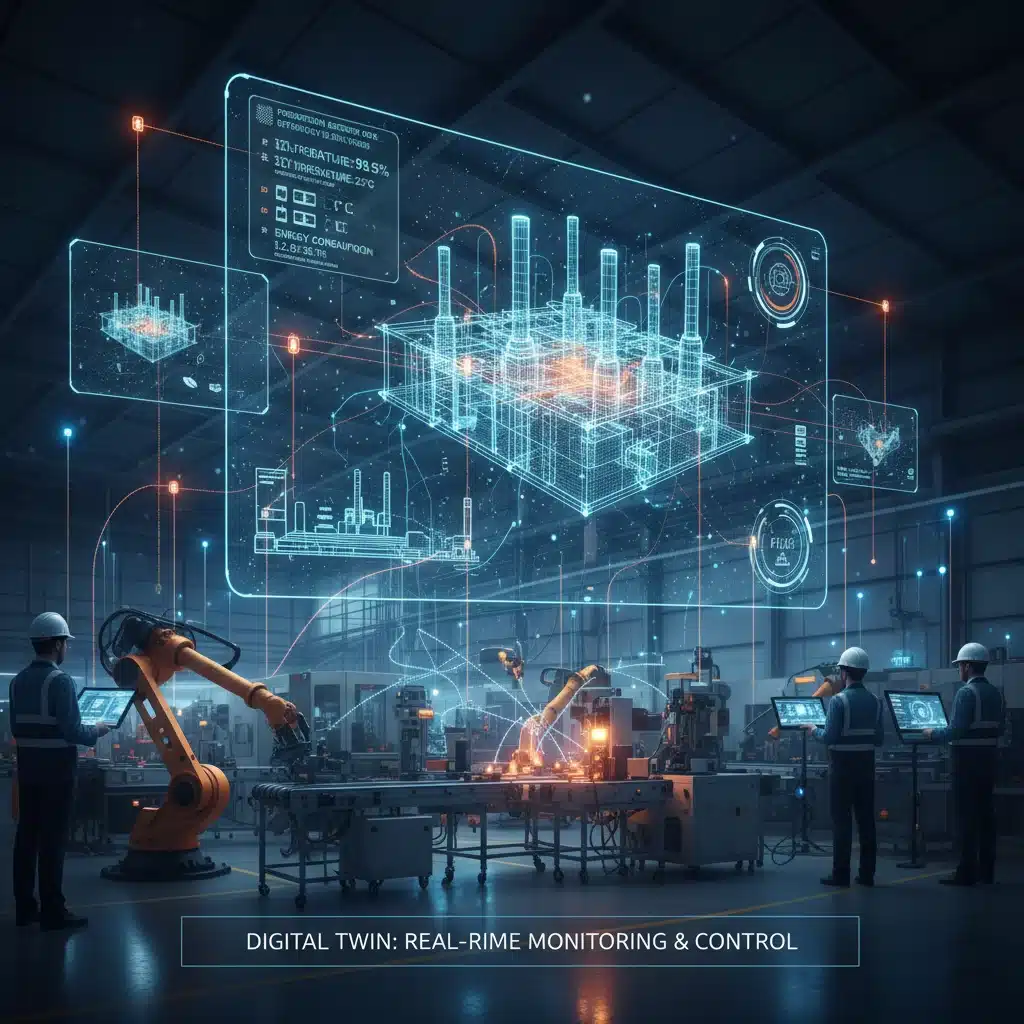
- Cyber-Physical Systems: The integration of physical processes with computational capabilities, creating a digital twin of the factory floor for simulation, monitoring, and optimization.
- Adaptability and Flexibility: Smart factories are designed to be agile, capable of quickly adapting to changing market demands, product variations, and production schedules.
The benefits of embracing this paradigm are multifaceted. Enhanced productivity, reduced operational costs, improved product quality, and greater sustainability are just a few of the outcomes that contribute to overall smart manufacturing efficiency. Companies that successfully navigate this transition are poised to gain a significant competitive advantage in the global market.
The Role of AI in Boosting Smart Manufacturing Efficiency
Artificial Intelligence is the brain behind smart manufacturing, empowering machines and systems to learn, reason, and make informed decisions. Its applications are diverse and impactful, directly contributing to a substantial increase in smart manufacturing efficiency.
Predictive Maintenance: Minimizing Downtime
One of the most significant contributions of AI to manufacturing is predictive maintenance. Traditional maintenance approaches (reactive or preventive) often lead to unexpected breakdowns or unnecessary servicing. AI algorithms, fed with data from IoT sensors (vibration, temperature, acoustics, etc.), can accurately predict when a machine is likely to fail. This allows maintenance teams to intervene precisely when needed, before a critical failure occurs, thereby minimizing costly downtime and optimizing asset utilization. This proactive approach is a cornerstone of achieving high smart manufacturing efficiency.
Quality Control and Defect Detection
AI-powered vision systems and machine learning algorithms can analyze product quality at an unprecedented speed and accuracy. By learning from vast datasets of product images, these systems can identify defects that might be missed by human inspection, or even detect subtle anomalies that indicate potential future failures. This leads to reduced scrap rates, improved product consistency, and a stronger brand reputation, all vital for enhancing smart manufacturing efficiency.
Process Optimization and Real-time Adjustment
AI can analyze complex production data to identify bottlenecks, inefficiencies, and areas for improvement. Machine learning models can optimize parameters for various processes, such as injection molding temperatures, welding speeds, or robotic arm trajectories, to achieve optimal output and energy consumption. Furthermore, AI can enable real-time adjustments to production schedules and resource allocation in response to unforeseen events, ensuring continuous flow and maximizing smart manufacturing efficiency.
Supply Chain Optimization
Beyond the factory floor, AI plays a crucial role in optimizing the entire supply chain. From demand forecasting and inventory management to logistics and supplier selection, AI algorithms can process vast amounts of data to make more accurate predictions and recommendations. This reduces waste, improves delivery times, and enhances overall supply chain resilience, directly impacting the holistic smart manufacturing efficiency of an enterprise.
IoT: The Foundation of Connectivity for Smart Manufacturing Efficiency
The Internet of Things (IoT) provides the sensory nervous system for smart manufacturing. It’s the network of physical devices embedded with sensors, software, and other technologies that connect and exchange data over the internet. Without IoT, AI would lack the real-time, granular data it needs to function effectively, making IoT an indispensable component for driving smart manufacturing efficiency.
Real-time Data Collection and Monitoring
IoT sensors collect a continuous stream of data from every corner of the factory: machine performance, environmental conditions, energy consumption, material flow, and more. This real-time data provides an accurate and up-to-the-minute picture of operations, allowing managers and AI systems to monitor processes, identify deviations, and respond swiftly. This immediate feedback loop is critical for maintaining and improving smart manufacturing efficiency.
Asset Tracking and Management
IoT devices can be used to track the location and status of assets, from raw materials and work-in-progress to finished goods and tools. This improves inventory accuracy, reduces loss, and optimizes material handling, contributing to a leaner and more efficient production process. Effective asset management is a direct contributor to overall smart manufacturing efficiency.
Remote Operation and Control
IoT enables remote monitoring and control of machinery and processes. Operators can oversee multiple production lines from a central control room or even off-site, making adjustments as needed. This enhances operational flexibility, reduces the need for constant physical presence, and can be particularly valuable in hazardous environments, all while boosting smart manufacturing efficiency.
Enhanced Safety and Environmental Monitoring
IoT sensors can monitor critical safety parameters, such as gas leaks, temperature extremes, or unsafe machinery operation, triggering immediate alerts in case of anomalies. They can also track environmental factors like emissions and waste generation, helping manufacturers adhere to sustainability goals and regulatory compliance, further contributing to a well-rounded smart manufacturing efficiency strategy.
Synergistic Power: AI and IoT for Unprecedented Efficiency Gains
The true power of smart manufacturing emerges when AI and IoT are integrated, forming a symbiotic relationship where each technology amplifies the capabilities of the other. IoT provides the eyes and ears of the factory, collecting the raw data, while AI acts as the brain, interpreting this data and making intelligent decisions. This powerful combination is the engine for achieving significant boosts in smart manufacturing efficiency.
Digital Twins: Virtual Replicas for Optimization
One of the most compelling applications of integrated AI and IoT is the creation of digital twins. A digital twin is a virtual replica of a physical asset, process, or even an entire factory, fed with real-time data from IoT sensors. AI algorithms then analyze this data within the digital twin to simulate different scenarios, predict performance, identify potential issues, and optimize operations without disrupting the physical system. This allows for proactive problem-solving and continuous improvement, directly impacting smart manufacturing efficiency.
Autonomous Systems and Adaptive Production
With AI and IoT working in tandem, factories can move towards more autonomous operations. Machines can communicate with each other, share data, and even adapt their behavior based on real-time conditions and AI-driven insights. For example, if a machine detects a quality issue, it can automatically adjust its parameters or even reroute production to another machine, minimizing waste and maintaining production flow. This level of autonomy is key to unlocking the full potential of smart manufacturing efficiency.
Personalized and Mass Customization
The flexibility afforded by AI and IoT allows manufacturers to cater to increasing demands for personalized products and mass customization. By rapidly reconfiguring production lines and adjusting parameters based on individual customer orders, factories can produce a wider variety of products without sacrificing efficiency. This adaptability is a hallmark of advanced smart manufacturing efficiency.
Strategic Roadmap to a 20% Efficiency Boost by 2026
Achieving a 20% efficiency boost within a few years requires a clear, strategic roadmap. It’s not merely about adopting technology but about a holistic transformation that encompasses people, processes, and technology. Focusing on smart manufacturing efficiency demands a structured approach.
1. Assess Current State and Define Clear Objectives
Before embarking on any transformation, it’s crucial to understand your current operational baseline. Identify key pain points, bottlenecks, and areas with the most potential for improvement. Define specific, measurable, achievable, relevant, and time-bound (SMART) objectives for your efficiency gains. What does a 20% boost in smart manufacturing efficiency look like for your organization?
2. Develop a Phased Implementation Plan
A ‘big bang’ approach can be risky. Instead, develop a phased implementation plan, starting with pilot projects in areas with high impact potential and manageable complexity. This allows for learning, iteration, and demonstrating early successes to build momentum and internal buy-in. Focus on specific use cases that directly contribute to smart manufacturing efficiency.
3. Invest in the Right Technology Infrastructure
This includes robust network connectivity (5G, industrial Ethernet), cloud computing capabilities for data storage and processing, and advanced analytics platforms. Selecting the right IoT sensors and AI software is paramount. Consider scalability and interoperability from the outset to ensure long-term smart manufacturing efficiency.
4. Focus on Data Governance and Cybersecurity
With vast amounts of data being collected and exchanged, robust data governance policies and stringent cybersecurity measures are non-negotiable. Protecting sensitive operational data from breaches and ensuring data integrity is vital for maintaining trust and the reliability of your smart manufacturing efficiency systems.
5. Upskill Your Workforce
The transition to smart manufacturing requires a workforce with new skills. Invest in training programs to equip employees with the knowledge to operate, maintain, and interact with AI-powered systems and IoT devices. Foster a culture of continuous learning and adaptation. Human capital is a critical component of sustainable smart manufacturing efficiency.
6. Foster a Culture of Innovation and Collaboration
Encourage cross-functional collaboration between IT, operations, engineering, and maintenance teams. Create an environment where experimentation is encouraged, and lessons learned from failures are used to drive further improvements. A collaborative culture accelerates the adoption and optimization of new technologies, bolstering smart manufacturing efficiency.
7. Measure and Iterate
Continuously monitor key performance indicators (KPIs) related to your efficiency goals. Use the data collected to evaluate the effectiveness of your AI and IoT implementations, identify new opportunities for optimization, and make necessary adjustments. Smart manufacturing is an ongoing journey of continuous improvement, where iteration is key to sustained smart manufacturing efficiency.
Overcoming Challenges in Smart Manufacturing Implementation
While the benefits are clear, the path to achieving a 20% efficiency boost is not without its hurdles. Manufacturers must be prepared to address several common challenges:
Integration Complexity
Integrating disparate legacy systems with new AI and IoT platforms can be complex and time-consuming. Careful planning and the use of open standards and APIs are crucial to ensure seamless data flow and interoperability, which are foundational for smart manufacturing efficiency.
Data Overload and Quality
The sheer volume of data generated by IoT devices can be overwhelming. Ensuring data quality, cleansing, and contextualization are essential for AI algorithms to produce accurate and valuable insights. Without high-quality data, AI’s ability to enhance smart manufacturing efficiency is severely limited.
Initial Investment Costs
The upfront investment in AI and IoT technologies can be substantial. Manufacturers need to conduct thorough cost-benefit analyses and build a strong business case to justify the investment, highlighting the long-term ROI in terms of improved smart manufacturing efficiency and competitiveness.
Talent Gap
A shortage of skilled professionals in AI, data science, and industrial IoT can hinder implementation. Companies may need to invest in extensive training programs or seek external expertise to bridge this talent gap, ensuring they have the human capital to drive smart manufacturing efficiency.
Cybersecurity Risks
As factories become more connected, they also become more vulnerable to cyber threats. Robust cybersecurity strategies, including network segmentation, encryption, and regular security audits, are vital to protect operational technology (OT) systems and maintain the integrity of your smart manufacturing efficiency initiatives.
The Future of Smart Manufacturing and Beyond 2026
The journey towards enhanced smart manufacturing efficiency doesn’t end in 2026. The technologies of AI and IoT are continuously evolving, promising even greater advancements. We can anticipate more sophisticated AI models capable of handling increasingly complex tasks, deeper integration of robotics and automation, and the emergence of fully autonomous factories.
The focus will shift towards hyper-personalization, sustainable manufacturing practices driven by AI-optimized resource usage, and resilient supply chains capable of adapting to global disruptions with minimal impact. The concept of ‘lights-out’ manufacturing, where factories can operate with minimal human intervention, will become more prevalent in certain sectors, pushing the boundaries of smart manufacturing efficiency even further.
Furthermore, the convergence of smart manufacturing with other emerging technologies like blockchain for supply chain transparency, augmented reality (AR) for maintenance and training, and quantum computing for advanced simulations will unlock new possibilities, reinforcing the trajectory of continuous improvement in smart manufacturing efficiency.
Conclusion: Seizing the Opportunity for Smart Manufacturing Efficiency
The aspiration for a 20% efficiency boost by 2026 through the implementation of AI and IoT in manufacturing is not merely a technological objective; it’s a strategic imperative for long-term viability and growth. By embracing smart manufacturing efficiency, companies can transform their operations, reduce costs, accelerate innovation, and deliver higher quality products to market faster.
The path requires careful planning, significant investment, and a commitment to continuous adaptation and learning. However, the rewards – increased competitiveness, enhanced profitability, and a more sustainable operational footprint – far outweigh the challenges. Manufacturers who act decisively now to integrate AI and IoT into their core processes will be the leaders of tomorrow, defining the future of industrial production and setting new benchmarks for smart manufacturing efficiency across the globe.
The time to invest in smart manufacturing is now. The future of production is intelligent, connected, and incredibly efficient. Are you ready to be a part of it?