Edge AI Adoption: 3 Industries Seeing 15% Growth by Early 2026
In an era defined by rapid technological advancement, artificial intelligence (AI) stands out as a transformative force. While cloud-based AI has dominated discussions for years, a new paradigm is quickly gaining traction: Edge AI. This innovative approach brings AI computations closer to the data source, rather than relying on centralized cloud servers. The implications for speed, security, and efficiency are profound, leading to a significant surge in Edge AI adoption across various sectors. Recent projections indicate a remarkable 15% growth in Edge AI adoption within key industries by early 2026, signaling a pivotal shift in how businesses leverage AI.
This comprehensive article will explore the burgeoning landscape of Edge AI adoption, focusing on three industries that are at the forefront of this revolution: manufacturing, healthcare, and retail. We will delve into the specific applications, benefits, and challenges driving this rapid expansion, providing a detailed understanding of why Edge AI is becoming an indispensable component of modern enterprise strategies.
Understanding Edge AI: The Foundation of Future Innovation
Before diving into industry-specific trends, it’s crucial to grasp the fundamental concept of Edge AI. Traditionally, AI models process data in centralized cloud data centers. While effective for many applications, this model introduces latency, bandwidth constraints, and potential security vulnerabilities, especially when dealing with massive volumes of real-time data from IoT devices.
Edge AI, conversely, involves deploying AI algorithms and machine learning models directly onto edge devices – devices located at or near the source of data generation. These can range from industrial sensors and cameras to smart medical devices and retail kiosks. By processing data locally, Edge AI minimizes the need to send raw data to the cloud, resulting in several critical advantages:
- Reduced Latency: Real-time decision-making is possible without the delays associated with transmitting data to and from a distant cloud server. This is vital for applications requiring instantaneous responses, such as autonomous vehicles or industrial automation.
- Improved Security and Privacy: Less data needs to leave the local network, reducing exposure to cyber threats and simplifying compliance with data privacy regulations like GDPR and HIPAA.
- Lower Bandwidth Consumption: Only processed insights or aggregated data need to be sent to the cloud, significantly reducing network traffic and associated costs.
- Enhanced Reliability: Edge devices can continue to function and make intelligent decisions even when internet connectivity is intermittent or unavailable.
- Cost Efficiency: While initial hardware investment might be higher, long-term operational costs can decrease due to reduced data transmission and cloud processing fees.
The convergence of advanced hardware, optimized AI models, and the proliferation of IoT devices has created the perfect storm for accelerated Edge AI adoption. Businesses are increasingly recognizing that the value of AI lies not just in its intelligence, but in its ability to deliver that intelligence at the point of action.
Manufacturing: Driving Efficiency and Safety with Edge AI Adoption
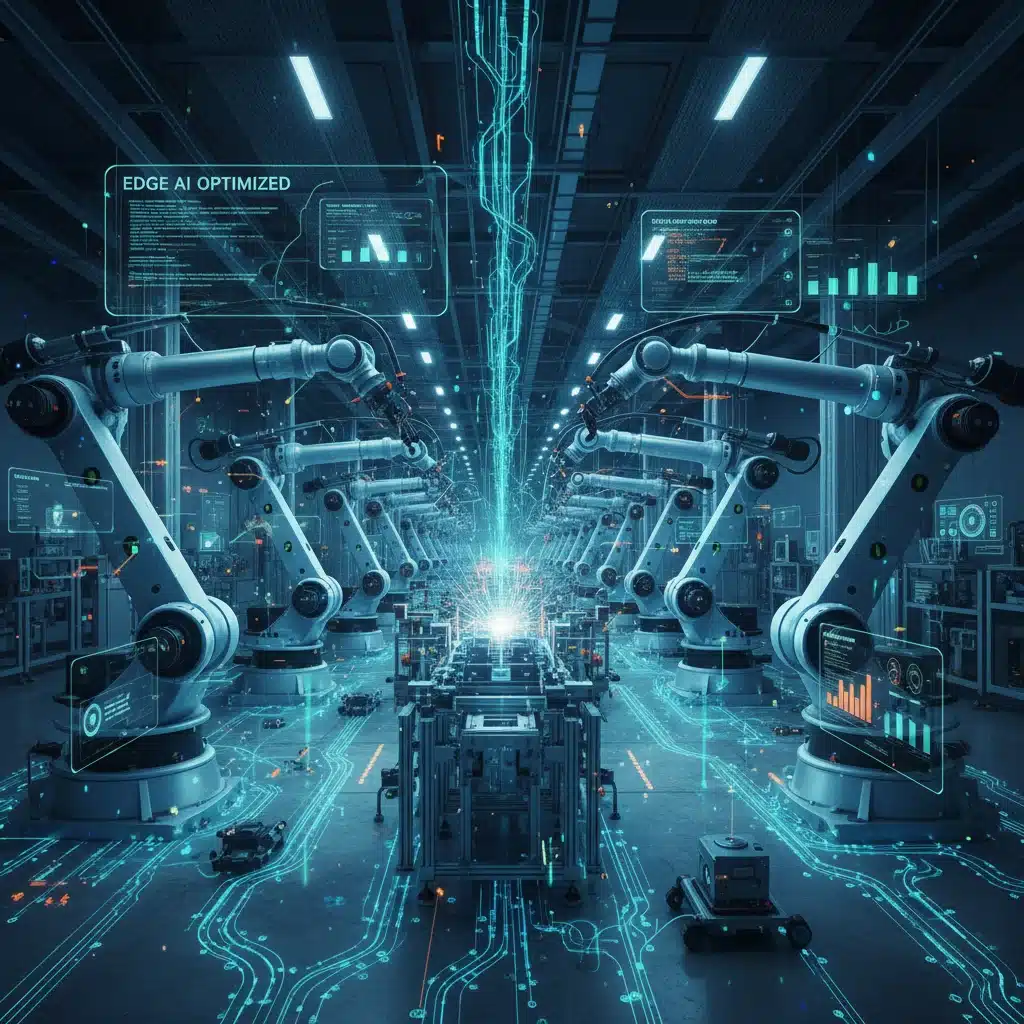
The manufacturing sector is perhaps one of the most natural fits for Edge AI adoption. Factories are teeming with sensors, machines, and production lines generating vast amounts of data. Applying AI at the edge allows for unprecedented levels of automation, predictive maintenance, quality control, and worker safety. The projected 15% growth in Edge AI adoption in manufacturing by early 2026 is a testament to its transformative power in this industry.
Key Applications in Manufacturing:
- Predictive Maintenance: Edge AI analyzes sensor data from machinery in real-time to predict potential failures before they occur. This allows maintenance teams to perform proactive repairs, minimizing downtime, reducing repair costs, and extending the lifespan of equipment. Instead of sending terabytes of vibration, temperature, and acoustic data to the cloud, Edge AI processes this information locally, immediately flagging anomalies.
- Quality Control and Defect Detection: High-resolution cameras combined with Edge AI models can inspect products on the production line for defects with incredible speed and accuracy. This goes beyond traditional machine vision by learning from new defects and adapting, ensuring consistent product quality and reducing waste. For instance, an Edge AI system can identify microscopic flaws in components that human eyes might miss, or detect subtle variations in product assembly.
- Process Optimization: Edge AI can monitor and analyze various parameters across the production line – from temperature and pressure to material flow and energy consumption. By identifying inefficiencies and recommending adjustments in real-time, it optimizes processes for maximum output, reduced energy usage, and improved resource allocation. This leads to more agile and responsive manufacturing operations.
- Worker Safety: Edge AI can monitor work environments for potential hazards, such as unauthorized access to dangerous areas, incorrect use of safety equipment, or detection of fatigue in operators. Real-time alerts can prevent accidents and ensure compliance with safety protocols. For example, cameras with Edge AI can detect if a worker enters a restricted zone without proper PPE and trigger an immediate warning.
- Autonomous Robotics and AGVs: Edge AI is crucial for enabling autonomous mobile robots (AMRs) and automated guided vehicles (AGVs) to navigate complex factory environments, avoid obstacles, and perform tasks without constant human intervention or cloud connectivity. Their ability to process sensor data locally ensures immediate reaction times, crucial for dynamic industrial settings.
Benefits for Manufacturing:
The advantages of Edge AI adoption in manufacturing are multi-faceted. Companies are experiencing significant improvements in operational efficiency, leading to substantial cost savings. Enhanced quality control results in fewer product recalls and stronger brand reputation. Furthermore, the proactive nature of Edge AI in maintenance and safety contributes to a more resilient and secure operational environment. The ability to make rapid, data-driven decisions on the factory floor is a game-changer, transforming traditional manufacturing into smart, adaptive, and highly competitive operations.
However, challenges remain, including the initial investment in edge hardware, the need for specialized AI talent, and integrating Edge AI solutions with existing legacy systems. Despite these hurdles, the clear return on investment and competitive advantages are propelling manufacturing towards widespread Edge AI adoption.
Healthcare: Revolutionizing Patient Care and Operational Efficiency
The healthcare sector is another prime candidate for transformational Edge AI adoption. With an explosion of medical data from IoT devices, wearables, and imaging equipment, the need for immediate, secure, and localized processing is paramount. The projected 15% growth by early 2026 underscores the immense potential of Edge AI in improving patient outcomes, streamlining operations, and enhancing data privacy.
Key Applications in Healthcare:
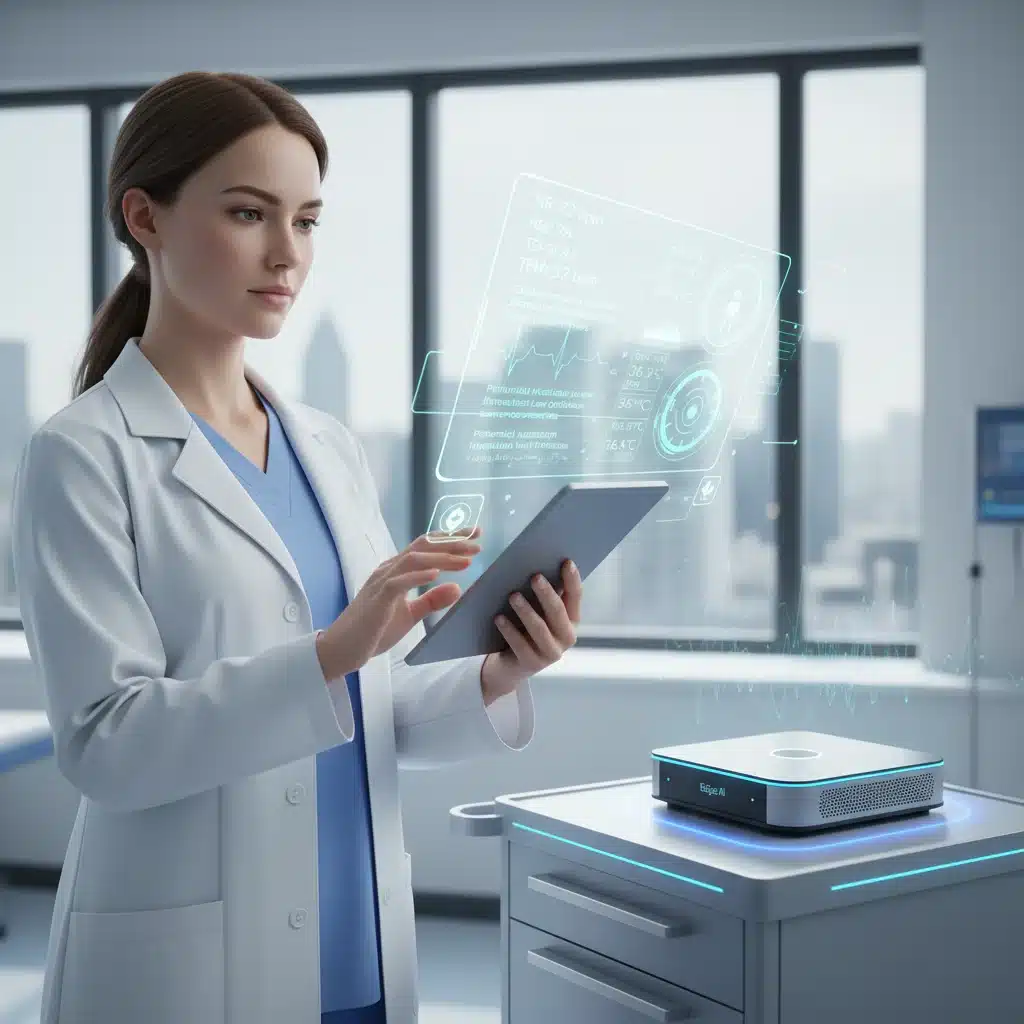
- Real-time Patient Monitoring: Wearable sensors and smart medical devices equipped with Edge AI can continuously monitor vital signs, glucose levels, heart activity, and other critical parameters. Edge AI processes this data locally, immediately alerting healthcare professionals or patients to anomalies that might indicate a deteriorating condition, enabling timely intervention. This is particularly valuable for remote patient monitoring and elderly care.
- Assisted Diagnostics and Imaging Analysis: Edge AI can be deployed on medical imaging equipment (e.g., X-ray, MRI, CT scanners) to perform preliminary analysis of scans directly at the point of capture. This can highlight suspicious areas for radiologists, assisting in faster and more accurate diagnoses of conditions like tumors or fractures. By reducing the load on central servers and providing immediate insights, it accelerates the diagnostic workflow.
- Smart Hospitals and Clinics: Edge AI can power smart hospital infrastructure, optimizing resource allocation, managing patient flow, and enhancing security. For example, AI-enabled cameras can monitor waiting areas for unusual activity or track equipment location, while environmental sensors can optimize energy usage in different hospital zones.
- Drug Discovery and Development (Localized Data Processing): While complex drug discovery often relies on cloud supercomputing, Edge AI can play a role in localized data preprocessing from lab instruments or in managing smaller, distributed clinical trials where data privacy is paramount. It ensures that sensitive patient data remains within the local network while still allowing for preliminary analysis.
- Robotic-Assisted Surgery and Procedures: Edge AI can enhance the precision and autonomy of surgical robots. By processing real-time sensor data from the surgical field, Edge AI can provide surgeons with augmented reality overlays, guide instruments with greater accuracy, and even perform certain repetitive tasks, reducing surgeon fatigue and improving procedural outcomes.
Benefits for Healthcare:
The benefits of Edge AI adoption in healthcare are transformative. It leads to faster and more accurate diagnoses, enabling earlier treatment and potentially saving lives. Real-time monitoring enhances patient safety and provides a more personalized care experience. Furthermore, by keeping sensitive patient data local, Edge AI significantly strengthens data privacy and compliance, a critical concern in healthcare. Operational efficiencies reduce costs and free up medical staff to focus on direct patient care.
However, the healthcare sector faces unique challenges, including stringent regulatory requirements, the need for robust data security, and the integration of new technologies with complex legacy systems. Ethical considerations surrounding AI in diagnostics and treatment also require careful navigation. Despite these complexities, the push for improved patient outcomes and operational excellence is driving widespread Edge AI adoption in healthcare.
Retail: Personalizing Experiences and Optimizing Operations with Edge AI
The retail industry is fiercely competitive, constantly seeking innovative ways to attract and retain customers, optimize operations, and enhance the shopping experience. Edge AI adoption offers a powerful toolkit for achieving these goals, driving personalized interactions, efficient inventory management, and improved security. The projected 15% growth in Edge AI adoption by early 2026 highlights its increasing importance in shaping the future of retail.
Key Applications in Retail:
- Personalized Customer Experiences: Edge AI-powered cameras and sensors in stores can analyze customer behavior, foot traffic patterns, and interactions with products in real-time. This data can then be used to deliver personalized recommendations on in-store digital signage, mobile apps, or directly to sales associates, enhancing engagement and driving sales. For instance, if a customer pauses at a sportswear display, the system might suggest complementary items or promotions.
- Inventory Management and Loss Prevention: Edge AI can monitor shelf stock levels, identify misplaced items, and track product movement, providing real-time insights for efficient restocking and reducing out-of-stock situations. For loss prevention, AI-powered cameras can detect suspicious activities like shoplifting or unauthorized access, alerting staff immediately and reducing shrinkage.
- Smart Checkout Systems: Edge AI is central to the development of frictionless checkout experiences, similar to Amazon Go stores. Cameras and sensors track items picked up by customers, automatically adding them to a virtual cart. This eliminates the need for traditional scanning, speeds up transactions, and reduces labor costs.
- Optimized Store Layout and Merchandising: By analyzing customer flow and interaction data at the edge, retailers can gain insights into which layouts are most effective, where to place high-margin products, and how to optimize display effectiveness. This data-driven approach leads to more appealing and profitable store environments.
- Predictive Demand Forecasting (Localized): While global demand forecasting often uses cloud AI, Edge AI can refine these predictions for individual stores or specific product categories based on localized real-time data, such as local events, weather patterns, or current inventory levels. This leads to more accurate stocking and reduced waste.
Benefits for Retail:
The benefits of Edge AI adoption in retail are substantial. Retailers can offer highly personalized customer experiences, leading to increased customer satisfaction and loyalty. Operational efficiencies in inventory management and checkout processes translate directly into cost savings and improved profitability. Enhanced security measures significantly reduce losses due to theft. Ultimately, Edge AI empowers retailers to create more dynamic, responsive, and profitable physical store environments that can compete effectively with online giants.
Challenges in retail include the need for robust infrastructure, ensuring customer privacy while leveraging behavioral data, and the integration of Edge AI solutions across diverse store formats. However, the competitive pressures and the desire to innovate the in-store experience are strong motivators for continued Edge AI adoption.
The Driving Forces Behind Accelerated Edge AI Adoption
Several underlying factors are contributing to the projected 15% growth in Edge AI adoption across these industries and beyond:
- Proliferation of IoT Devices: The sheer volume of data generated by billions of connected devices makes cloud-only processing impractical and expensive. Edge AI provides a scalable solution for managing this data deluge.
- Advancements in Edge Hardware: The development of powerful, energy-efficient AI-specific chips (e.g., NPUs, GPUs) designed for edge devices is making localized AI processing more feasible and affordable. These chips can run complex AI models with minimal power consumption.
- Improved AI Models and Frameworks: AI models are becoming more optimized and can run efficiently on resource-constrained edge devices. Frameworks like TensorFlow Lite and OpenVINO facilitate the deployment of AI at the edge.
- 5G Connectivity: The rollout of 5G networks provides the necessary high-bandwidth, low-latency connectivity to support the aggregation of edge data and the orchestration of distributed AI systems.
- Data Privacy and Security Concerns: With increasing regulations and public awareness, keeping sensitive data closer to its source is a significant driver for Edge AI, especially in sectors like healthcare and finance.
- Demand for Real-time Insights: Industries are increasingly demanding instantaneous insights and actions, which only Edge AI can reliably deliver for critical applications.

Challenges and Considerations for Successful Edge AI Adoption
While the benefits are clear, organizations embarking on Edge AI adoption must navigate several challenges:
- Initial Investment: Deploying edge hardware and integrating new software can require significant upfront capital expenditure.
- Complexity of Deployment and Management: Managing a distributed network of edge devices and AI models can be more complex than managing centralized cloud systems. This requires robust orchestration and monitoring tools.
- Talent Gap: There is a growing demand for data scientists, AI engineers, and IT professionals with expertise in Edge AI development and deployment.
- Data Governance and Security at the Edge: While Edge AI enhances privacy by keeping data local, ensuring the security of individual edge devices from physical tampering or cyberattacks is crucial. Robust data governance policies are essential for distributed data.
- Integration with Existing Infrastructure: Seamlessly integrating Edge AI solutions with legacy systems and existing IT infrastructure can be a significant hurdle.
- Model Updates and Maintenance: Ensuring that AI models on edge devices are regularly updated, retrained, and maintained for optimal performance requires effective lifecycle management strategies.
Addressing these challenges proactively is key to realizing the full potential of Edge AI adoption. Companies need strategic planning, investment in skilled personnel, and a focus on scalable and secure architectures.
The Future Outlook for Edge AI Adoption
The projected 15% growth in Edge AI adoption across manufacturing, healthcare, and retail by early 2026 is merely the beginning. As the technology matures, hardware becomes more powerful and affordable, and development tools become more accessible, we can expect even broader adoption across virtually every industry.
Future trends will likely include:
- Hybrid AI Architectures: A blend of edge and cloud AI, where edge devices perform immediate processing and filtering, while the cloud handles more complex analysis, model training, and long-term data storage.
- Federated Learning at the Edge: AI models trained collaboratively across multiple edge devices without centralizing raw data, further enhancing privacy and efficiency.
- AI-as-a-Service (AIaaS) for the Edge: More vendors offering pre-trained Edge AI models and managed services, simplifying deployment for businesses.
- Increased Focus on Explainable AI (XAI) at the Edge: Ensuring that AI decisions made at the edge can be understood and trusted, especially in critical applications like healthcare.
The shift towards localized intelligence is not just a technological upgrade; it’s a fundamental rethinking of how AI can deliver value. By bringing computational power and intelligence closer to the source of data, organizations can unlock unprecedented levels of efficiency, innovation, and responsiveness.
Conclusion
Edge AI adoption is no longer a niche concept; it is a mainstream imperative for businesses aiming to thrive in the digital economy. The manufacturing, healthcare, and retail sectors are demonstrating clear leadership in this transition, leveraging Edge AI to address critical challenges and unlock new opportunities. The projected 15% growth by early 2026 is a strong indicator of the technology’s maturity and its undeniable impact.
As industries continue to generate exponential amounts of data and demand real-time insights, Edge AI will become an increasingly vital component of their digital transformation strategies. Organizations that embrace Edge AI adoption will be better positioned to innovate, optimize operations, enhance customer experiences, and maintain a competitive edge in an ever-evolving global market. The future is intelligent, and that intelligence is increasingly moving to the edge.