Social Impact Bonds 2026: Driving Measurable Community Returns

In an era demanding innovative solutions for persistent social challenges, Social Impact Bonds (SIBs) have emerged as a powerful and increasingly sophisticated mechanism. As we look towards 2026, the landscape of social finance is being reshaped by these performance-based contracts, which are not just philanthropic gestures but strategic investments designed to generate tangible, measurable returns for communities. The journey of SIBs has been one of continuous evolution, moving from experimental models to robust frameworks that attract significant capital and deliver verifiable social improvements. This exploration delves into how Social Impact Bonds are poised to make an even greater impact in 2026, focusing on their financial viability, their capacity to drive systemic change, and the critical role they play in fostering sustainable community development.
The concept of Social Impact Bonds, while relatively new in the grand scheme of finance, has rapidly gained traction due to its unique approach: linking financial returns for investors to the achievement of predefined social outcomes. This innovative structure aligns the incentives of governments, service providers, and investors, creating a powerful ecosystem focused on efficiency and effectiveness. In 2026, the maturity of SIB models, coupled with advancements in data analytics and impact measurement, is allowing for even more precise targeting of interventions and a clearer demonstration of value. This article will unpack the intricacies of these instruments, highlight successful case studies, discuss the challenges and opportunities ahead, and ultimately underscore why Social Impact Bonds are not just a fleeting trend but a fundamental shift in how we address complex societal issues.
The Evolution of Social Impact Bonds: A 2026 Perspective
Since their inception, Social Impact Bonds have undergone considerable refinement. Initially met with a mix of skepticism and enthusiasm, early SIBs laid the groundwork for a more sophisticated generation of performance-based contracts. By 2026, the market for Social Impact Bonds is characterized by greater standardization, enhanced transparency, and a deeper understanding of the specific conditions under which these instruments thrive. The early years focused heavily on demonstrating proof of concept, often targeting areas like reducing reoffending rates or improving educational outcomes for at-risk youth. While these remain crucial areas, the scope of SIBs has broadened considerably.
Today, Social Impact Bonds are being applied to a wider array of social challenges, including chronic homelessness, early childhood development, public health interventions, and environmental conservation. This expansion is driven by a growing recognition among governments and philanthropic organizations that traditional funding models often fall short in addressing complex, multi-faceted problems. The ‘pay-for-success’ model inherent in SIBs incentivizes innovation and efficiency, as funding is disbursed only when agreed-upon outcomes are achieved. This shifts the risk from the public sector to private investors, who are motivated by both financial return and the desire to contribute to positive social change.
Furthermore, the technological advancements by 2026 have significantly streamlined the implementation and evaluation of Social Impact Bonds. Big data analytics, artificial intelligence, and sophisticated impact measurement tools allow for real-time monitoring of program effectiveness, ensuring that interventions are agile and responsive to evolving needs. This data-driven approach not only strengthens the accountability of SIBs but also provides valuable insights that can inform future policy decisions and optimize resource allocation. The integration of these technologies is a key factor in the sustained growth and increasing efficacy of Social Impact Bonds.
One of the most significant evolutions in Social Impact Bonds by 2026 is the increasing involvement of institutional investors. What was once primarily the domain of philanthropic foundations and high-net-worth individuals is now attracting pension funds, insurance companies, and other large financial entities. This shift signals a growing confidence in the financial viability and long-term potential of SIBs as a legitimate asset class within the broader impact investing landscape. The ability to demonstrate a clear return on investment, coupled with positive social impact, makes SIBs an attractive proposition for investors seeking to diversify their portfolios while adhering to environmental, social, and governance (ESG) principles.
The regulatory environment surrounding Social Impact Bonds has also matured. Governments worldwide are developing clearer guidelines and legal frameworks to facilitate the widespread adoption of SIBs, reducing transaction costs and providing greater certainty for all parties involved. This institutional support is crucial for scaling up successful SIB models and embedding them within mainstream public service delivery. The robust ecosystem of intermediaries, evaluators, and legal experts specializing in SIBs has also expanded, providing essential support for the design, execution, and monitoring of these complex financial instruments. This collective progress has firmly established Social Impact Bonds as a cornerstone of modern social finance in 2026.
How Social Impact Bonds Generate Measurable Returns
The core philosophy behind Social Impact Bonds revolves around paying for results, not just services. This fundamental principle is what drives their capacity to generate measurable returns, both social and financial. The process typically begins with a government entity identifying a specific social problem that it wishes to address, along with clear, quantifiable outcome metrics. For instance, reducing the number of children entering foster care, increasing employment rates for ex-offenders, or improving health outcomes for individuals with chronic conditions. These metrics are critical because they form the basis upon which success is measured and payments are triggered.
Once the problem and outcomes are defined, private investors provide upfront capital to service providers (often non-profit organizations or social enterprises) to deliver innovative programs designed to achieve those outcomes. This upfront capital allows service providers to scale their efforts, experiment with new approaches, and focus on delivering high-quality, effective interventions. Unlike traditional grants, where funding is often tied to activities rather than results, SIBs empower service providers with the flexibility to adapt their strategies as needed, as long as they are moving towards the agreed-upon targets. This autonomy fosters innovation and encourages a focus on what truly works.
An independent evaluator then rigorously measures the performance of the program against the agreed-upon outcome metrics. If the program achieves or exceeds its targets, the government (or another outcome funder) repays the investors their initial capital, often with a financial return. This return is directly proportional to the level of social impact achieved. For the government, the financial benefit comes from avoiding future costs associated with the social problem. For example, preventing homelessness can save costs related to emergency services, healthcare, and social support programs. This cost savings is what essentially funds the repayment to investors, creating a virtuous cycle.
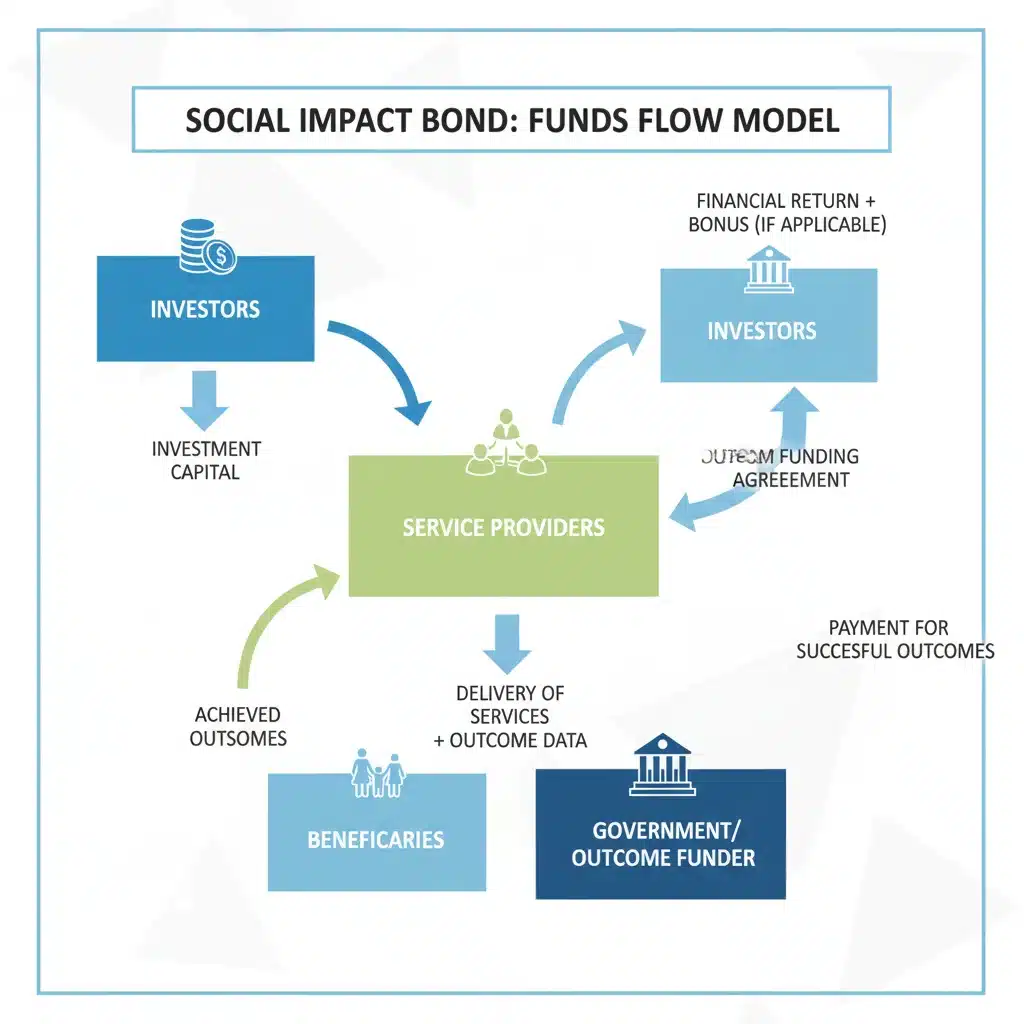
The measurability aspect is paramount in Social Impact Bonds. By 2026, the tools and methodologies for impact measurement have become highly sophisticated. This includes utilizing robust data collection systems, conducting randomized controlled trials (RCTs) where appropriate, and employing advanced statistical analysis to isolate the impact of the intervention. Transparency in reporting these outcomes is also a key feature, building trust among all stakeholders and allowing for public scrutiny of the results. This rigorous approach to measurement ensures that the funds invested are genuinely leading to positive change and that taxpayers’ money is being spent effectively.
Moreover, the structure of Social Impact Bonds incentivizes all parties to focus on long-term sustainability and systemic change. Service providers are motivated to develop programs that not only achieve immediate outcomes but also build capacity within communities and address the root causes of social problems. Investors, knowing their returns depend on sustained success, are also keen to support interventions that have a lasting impact. This contrasts with short-term funding cycles that can often lead to fragmented services and a lack of continuity. In 2026, the emphasis is increasingly on SIBs that contribute to broader policy goals and create resilient communities.
Key Sectors Benefiting from Social Impact Bonds in 2026
By 2026, the application of Social Impact Bonds has diversified significantly, impacting a wide range of sectors. While early SIBs often focused on criminal justice and employment, the success in these areas has paved the way for expansion into more complex and challenging domains. This expansion is a testament to the adaptability and effectiveness of the pay-for-success model. Let’s explore some of the key sectors where Social Impact Bonds are making a substantial difference.
Health and Wellness
In the health sector, Social Impact Bonds are being used to tackle chronic diseases, mental health issues, and substance abuse. For example, SIBs might fund programs aimed at reducing hospital readmission rates for specific conditions by providing intensive post-discharge support. They can also support interventions focused on preventative care, such as diabetes management programs or initiatives to improve prenatal health outcomes. The measurable returns here include reduced healthcare costs, improved quality of life for individuals, and a healthier overall population. The long-term savings for healthcare systems make these SIBs particularly attractive to government funders seeking to optimize public health spending.
Education and Youth Development
Education remains a fertile ground for Social Impact Bonds. In 2026, SIBs are funding programs designed to improve early childhood education, reduce school dropout rates, and enhance academic achievement for disadvantaged students. They also support vocational training programs that equip young people with the skills needed for the future workforce. The outcomes measured typically include improvements in literacy and numeracy, increased graduation rates, and successful transitions into higher education or employment. These SIBs address fundamental inequalities and invest in the human capital of future generations, yielding significant societal and economic benefits over time.
Homelessness and Housing
Addressing homelessness is another critical area where Social Impact Bonds are proving effective. SIBs fund ‘Housing First’ initiatives, which prioritize providing stable housing to individuals experiencing homelessness, along with comprehensive support services such as mental health counseling, substance abuse treatment, and job placement assistance. The measurable outcomes include reductions in homelessness duration, decreased reliance on emergency services, and decreased reliance on emergency services, and improved health and well-being for beneficiaries. The economic returns stem from reduced costs associated with emergency room visits, incarceration, and other public services often utilized by individuals experiencing homelessness.
Environmental Conservation
A growing frontier for Social Impact Bonds in 2026 is environmental conservation. SIBs are being developed to fund projects that restore ecosystems, improve water quality, promote sustainable agriculture, and mitigate climate change impacts. For example, a SIB might fund a program to reforest degraded land, with outcomes measured by increased biodiversity, carbon sequestration rates, and improved soil health. While financial returns in this sector can be more complex to quantify directly in monetary terms, they often involve avoided costs (e.g., flood damage prevention) or the creation of new economic opportunities (e.g., eco-tourism). The emphasis here is on long-term ecological and community resilience.
Criminal Justice Reform
Building on early successes, Social Impact Bonds continue to play a vital role in criminal justice reform. These SIBs fund programs aimed at reducing reoffending rates, supporting rehabilitation efforts, and providing alternatives to incarceration. Outcomes measured include reduced recidivism, increased employment post-release, and improved community safety. The financial returns for governments come from reduced prison operating costs and fewer victims of crime. The focus is on breaking cycles of incarceration and enabling individuals to successfully reintegrate into society, demonstrating the transformative potential of Social Impact Bonds in fostering safer and more just communities.
Challenges and Opportunities for Social Impact Bonds in 2026
Despite their growing prominence and demonstrable successes, Social Impact Bonds are not without their challenges. However, for each challenge, there are corresponding opportunities for growth and innovation that will define their trajectory in 2026 and beyond.
Challenges:
- Complexity and Transaction Costs: Designing and implementing SIBs can be complex, involving multiple stakeholders, legal agreements, and rigorous evaluation frameworks. This complexity can lead to high upfront transaction costs, particularly for smaller projects or organizations.
- Data Availability and Measurement: While impact measurement has advanced, robust data collection and attribution remain challenging, especially for long-term or systemic outcomes. Ensuring the integrity and independence of evaluators is also crucial.
- Scaling Up: Many successful SIBs are relatively small in scale. Replicating and scaling these models across different geographies and for larger populations requires significant coordination, political will, and access to substantial capital.
- Investor Appetite and Risk: While institutional investors are increasingly interested, SIBs still represent a niche investment. Attracting a broader range of investors requires further education, standardization, and a clearer understanding of the risk-return profile.
- Political Will and Bureaucracy: Governments must be willing to embrace innovative financing models and overcome bureaucratic hurdles. Shifting from traditional input-based funding to outcome-based funding requires significant institutional change and commitment.
Opportunities:
- Standardization and Best Practices: As more SIBs are implemented, best practices are emerging. By 2026, greater standardization of contracts, evaluation methodologies, and legal frameworks can significantly reduce complexity and transaction costs, making SIBs more accessible.
- Technological Advancements: The continued evolution of data analytics, AI, and blockchain technology offers immense opportunities for more efficient data collection, real-time impact monitoring, and enhanced transparency in SIBs.
- Blended Finance Models: Combining SIBs with other forms of finance, such as philanthropic grants or traditional government funding, can de-risk projects for investors and unlock capital for more challenging social issues. This blended approach is gaining traction.
- Expansion into New Geographies and Sectors: The success of SIBs in developed nations is inspiring their adoption in emerging economies and new sectors, such as climate resilience and sustainable development, offering vast opportunities for impact.
- Increased Focus on Prevention: The ‘pay-for-success’ model inherently incentivizes preventative interventions, which are often more cost-effective and create greater long-term social value than reactive services. SIBs can drive a systemic shift towards prevention in public policy.
The trajectory of Social Impact Bonds in 2026 is one of cautious optimism. While challenges persist, the growing body of evidence, technological advancements, and increasing stakeholder engagement point towards a future where SIBs are an even more integral part of the global effort to address complex social and environmental issues. The ability of Social Impact Bonds to align financial incentives with measurable social good positions them as a powerful tool for sustainable development.

Successful Case Studies: Social Impact Bonds in Action (2026 Insights)
Examining real-world examples provides the clearest illustration of the power and potential of Social Impact Bonds. While specific SIBs launched in 2026 are still in their early stages of outcome measurement, we can draw insights from mature SIBs whose structures and lessons learned continue to inform current practices. These case studies highlight the diverse applications and measurable returns achieved through this innovative financing mechanism.
The Peterborough SIB (UK): Pioneering Recidivism Reduction
One of the earliest and most well-known Social Impact Bonds, the Peterborough SIB, launched in 2010 in the UK, aimed to reduce reoffending rates among short-sentenced prisoners. Investors provided upfront capital for a program delivered by the charity One Service, focusing on support both in prison and after release. The measurable outcome was a reduction in reoffending rates compared to a control group. The SIB successfully reduced reconviction rates by 9% and 11% for two cohorts, leading to full repayment to investors with a return. This pioneering project demonstrated the viability of the SIB model and its capacity to tackle complex social issues, inspiring numerous subsequent SIBs globally.
Utah’s Preschool SIB (USA): Early Childhood Education Success
In the United States, Utah’s High-Quality Preschool Program SIB, launched in 2013, targeted at-risk children to improve school readiness and reduce the need for special education services. Investors funded preschool programs, and the state repaid investors based on the reduction in special education placements. The program achieved significant positive results, with a substantial number of children avoiding special education, leading to financial savings for the state and improved educational trajectories for the children. This SIB showcased the potential of performance-based funding in early childhood intervention, a sector with long-term societal benefits.
The New York City Workforce Development SIB: Employment for Ex-Offenders
Another impactful US example is the New York City SIB focused on reducing recidivism and increasing employment among young men released from Rikers Island. This SIB, launched in 2012, funded services provided by the Center for Employment Opportunities (CEO). The measurable outcomes included reductions in re-incarceration rates and increases in employment. While the SIB faced challenges in achieving all its targets, it provided invaluable lessons on program design, outcome measurement, and the complexities of working with highly vulnerable populations. It underscored the importance of adaptive management and robust evaluation in the SIB model, even when targets are not fully met, the learning generated is still invaluable for future interventions.
Australia’s ‘The Benevolent Society’ SIB: Keeping Families Together
Australia has also been a significant player in the SIB market. ‘The Benevolent Society’ SIB in New South Wales aimed to prevent children from entering out-of-home care by providing intensive support to vulnerable families. Investors funded early intervention programs, and the government made outcome payments based on the reduction in children entering care. This SIB demonstrated strong positive outcomes, keeping more families together and children safely at home, leading to financial savings for the government and significant social benefits for families. It highlighted the application of SIBs in a preventative context, addressing issues before they escalate.
Lessons for 2026 from these Pioneers:
- Clear Outcome Definition: Successful SIBs have precise, measurable, and attributable outcomes.
- Strong Service Providers: The effectiveness of the intervention hinges on the quality and capacity of the service delivery organizations.
- Robust Evaluation: Independent and rigorous evaluation is non-negotiable for demonstrating impact and triggering payments.
- Government Commitment: A committed government partner willing to embrace outcome-based funding is essential.
- Adaptive Learning: The best SIBs incorporate mechanisms for learning and adapting program design based on ongoing data and feedback.
These historical and ongoing successes provide a strong foundation for the continued growth and refinement of Social Impact Bonds in 2026. They demonstrate that with careful design, strong partnerships, and a commitment to measurable outcomes, SIBs can effectively mobilize private capital to address some of society’s most pressing challenges, delivering both financial and profound social returns.
The Future of Impact Investing and Social Impact Bonds in 2026
As we navigate further into 2026, the trajectory of impact investing, and specifically Social Impact Bonds, points towards a future characterized by greater integration, innovation, and mainstream adoption. The lessons learned from over a decade of SIB implementation are shaping a more sophisticated and effective approach to social finance.
Integration into Mainstream Finance
One of the most significant trends for Social Impact Bonds in 2026 is their increasing integration into mainstream financial markets. What was once considered an alternative investment is steadily becoming a recognized component of diversified portfolios, particularly for institutional investors seeking to align their capital with ESG objectives. This integration is facilitated by the development of more standardized financial instruments, clearer risk assessment frameworks, and a growing track record of successful SIBs delivering both social and financial returns. The emergence of dedicated impact investment funds and platforms further accelerates this trend, making SIBs more accessible to a broader investor base.
Leveraging Technology for Enhanced Impact
Technology will continue to be a game-changer for Social Impact Bonds. Beyond advanced data analytics and AI for outcome measurement, blockchain technology holds promise for increasing transparency and efficiency in SIB contracts and payment mechanisms. Smart contracts could automate outcome payments, reducing administrative overhead and increasing trust among stakeholders. Furthermore, digital platforms can facilitate the aggregation of smaller investments, enabling crowdfunding models for SIBs and democratizing access to impact investing opportunities. These technological advancements will make SIBs more agile, cost-effective, and scalable.
Focus on Systems Change and Preventative Interventions
In 2026, there is a growing emphasis on designing Social Impact Bonds that target systemic issues rather than just individual symptoms. This means SIBs are increasingly being structured to fund preventative interventions that address the root causes of social problems, leading to more sustainable and impactful change. For example, instead of solely funding programs for individuals experiencing chronic homelessness, SIBs might also support initiatives that improve housing affordability, provide early intervention for at-risk families, or address mental health issues proactively. This upstream approach promises greater long-term cost savings and profound societal benefits.
Global Expansion and Diverse Applications
The reach of Social Impact Bonds is expanding globally, with new SIBs being developed in emerging markets across Asia, Africa, and Latin America. These regions often face unique social challenges that can benefit significantly from the outcome-oriented approach of SIBs. Furthermore, the application of SIBs is diversifying into novel sectors, including climate resilience, biodiversity conservation, and humanitarian aid. The flexibility of the SIB model allows it to be adapted to a wide array of contexts, making it a versatile tool for addressing global development challenges. The cross-pollination of ideas and best practices across different regions will accelerate innovation in the SIB space.
Strengthening the Ecosystem
The ecosystem supporting Social Impact Bonds will continue to mature in 2026. This includes a growing pool of specialized intermediaries, legal experts, evaluators, and advisory firms that can guide governments, service providers, and investors through the complexities of SIB development and implementation. Capacity building for non-profit organizations and government agencies in outcome-based commissioning will also be crucial. A robust and interconnected ecosystem is vital for ensuring the quality, integrity, and sustained growth of the SIB market.
In conclusion, Social Impact Bonds in 2026 are not just a niche financial instrument; they are a sophisticated and evolving mechanism at the forefront of impact investing. By aligning financial incentives with measurable social outcomes, SIBs offer a powerful model for addressing complex societal challenges, driving efficiency in public spending, and mobilizing private capital for the public good. Their continued growth and refinement promise a future where investment not only yields financial returns but also generates profound and lasting positive change for communities worldwide.