Renewable Energy Storage Solutions 2026: A Comprehensive Comparison
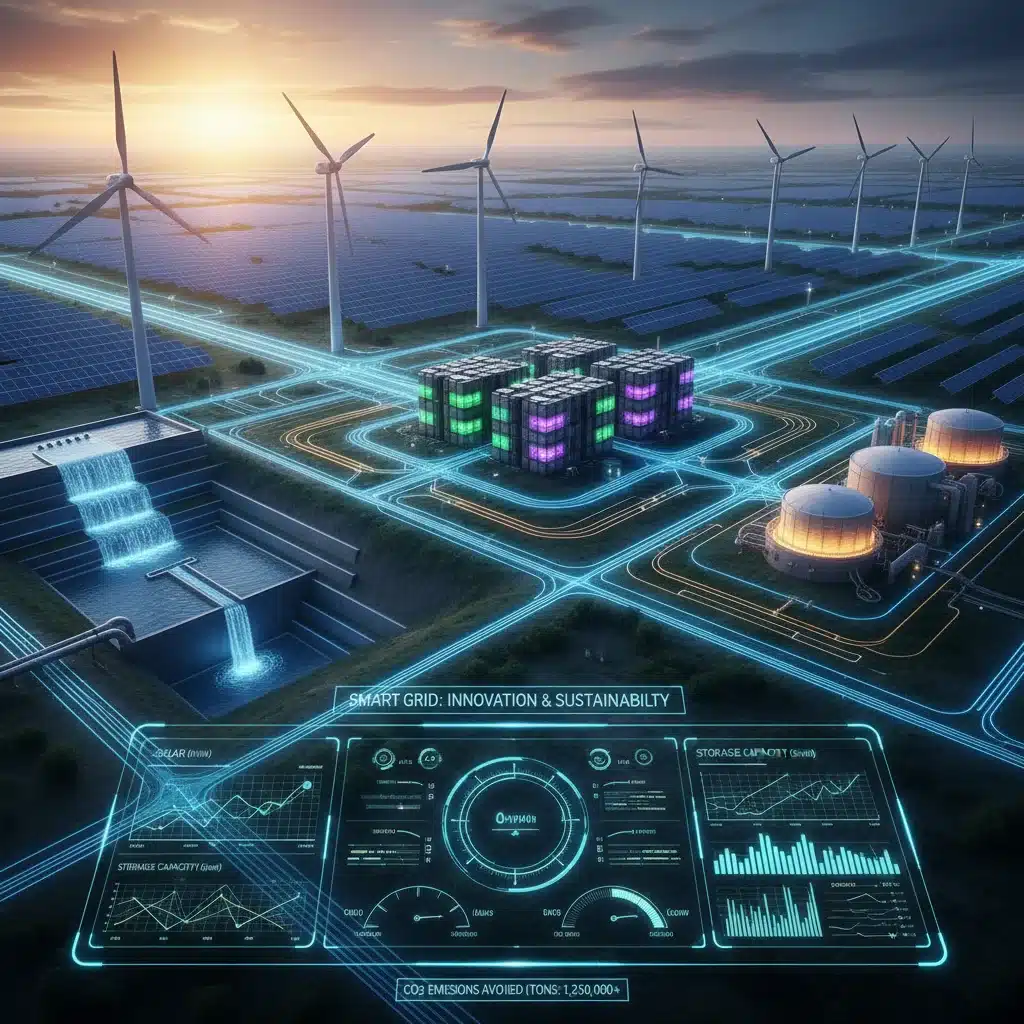
The global shift towards a sustainable energy future is accelerating, driven by growing environmental concerns, volatile fossil fuel prices, and advancements in clean energy technologies. At the heart of this transformation lies the critical challenge of energy storage. While renewable sources like solar and wind power offer immense potential, their intermittent nature necessitates robust and efficient storage solutions to ensure grid stability and reliable power supply. As we look towards 2026 and beyond, the landscape of Renewable Energy Storage is evolving rapidly, with several key technologies vying for dominance.
This article delves into a comprehensive comparison of four leading Renewable Energy Storage technologies that are projected to play pivotal roles in the coming years: battery storage, pumped hydro storage, compressed air energy storage (CAES), and thermal energy storage. We will explore their operational principles, advantages, disadvantages, and their potential impact on the future of energy grids. Understanding these technologies is crucial for policymakers, investors, and consumers alike as we navigate the complexities of decarbonizing our energy systems.
The Imperative of Renewable Energy Storage
The inherent variability of most renewable energy sources presents a significant hurdle to their widespread adoption. Solar power is only available when the sun shines, and wind power depends on wind conditions. Without effective storage, this variability can lead to supply-demand imbalances, grid instability, and the curtailment of valuable renewable energy generation. Renewable Energy Storage acts as a crucial buffer, capturing surplus energy during periods of high generation and releasing it when demand exceeds immediate supply or when renewable output is low. This not only enhances grid reliability but also maximizes the utilization of renewable assets, accelerating the transition away from fossil fuels.
The demand for advanced Renewable Energy Storage solutions is skyrocketing. Projections indicate massive investments in this sector over the next decade, with technologies becoming more efficient, cost-effective, and environmentally friendly. The race is on to develop and deploy solutions that can provide the necessary flexibility, capacity, and longevity to support a fully decarbonized grid. Let’s explore the contenders.
1. Battery Energy Storage Systems (BESS)
Battery Energy Storage Systems (BESS) have emerged as one of the most prominent and rapidly developing Renewable Energy Storage technologies. While various battery chemistries exist, lithium-ion batteries currently dominate the market due to their high energy density, efficiency, and declining costs. These systems are highly scalable, ranging from small residential units to utility-scale installations capable of storing hundreds of megawatt-hours (MWh).
Operational Principles and Advantages
Lithium-ion batteries store electrical energy through electrochemical reactions. During charging, lithium ions move from the cathode to the anode; during discharge, they move back, releasing electrons to generate current. The primary advantages of BESS include:
- High Efficiency: Lithium-ion batteries boast round-trip efficiencies typically ranging from 85% to 95%.
- Fast Response Time: They can respond to grid signals almost instantaneously, making them ideal for frequency regulation and voltage support.
- Modularity and Scalability: Battery modules can be easily combined to meet various capacity requirements, from residential to grid-scale.
- Small Footprint: Compared to other large-scale storage options, BESS generally requires less land area.
- Versatility: They can provide a wide range of grid services, including peak shaving, load shifting, and backup power.
Disadvantages and Future Outlook for Battery Storage
Despite their numerous benefits, BESS also face challenges:
- Cost: While declining, the capital cost of large-scale battery systems can still be substantial.
- Cycle Life and Degradation: Batteries have a finite number of charge/discharge cycles before their capacity degrades, impacting their lifespan.
- Raw Material Supply and Environmental Concerns: The extraction of materials like lithium, cobalt, and nickel raises environmental and ethical concerns. Recycling infrastructure is still developing.
- Thermal Management and Safety: Lithium-ion batteries require sophisticated thermal management systems to prevent overheating and potential fire hazards.
Looking to 2026, advancements in battery chemistry (e.g., solid-state batteries, sodium-ion batteries), manufacturing processes, and recycling technologies are expected to address many of these drawbacks. The cost of BESS is projected to continue its downward trend, making them even more competitive. Their role in supporting intermittent renewables and providing essential grid services will undoubtedly expand, cementing their position as a cornerstone of Renewable Energy Storage.
2. Pumped Hydro Energy Storage (PHES)
Pumped Hydro Energy Storage (PHES) is the most mature and widely deployed large-scale Renewable Energy Storage technology globally, accounting for over 95% of the world’s existing energy storage capacity. It leverages gravitational potential energy to store and release electricity.
Operational Principles and Advantages
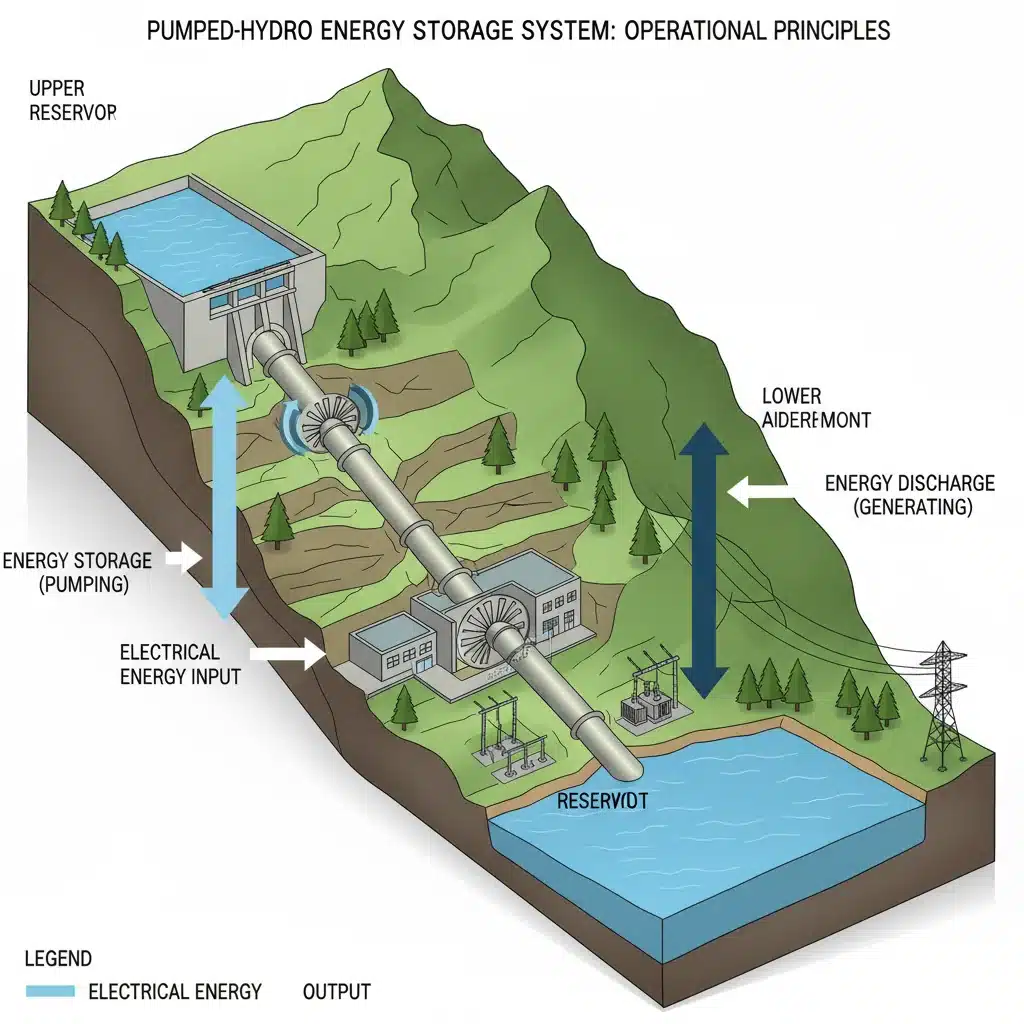
PHES systems consist of two water reservoirs at different elevations. During periods of low electricity demand and/or high renewable generation, excess electricity is used to pump water from the lower reservoir to the upper reservoir, storing energy. When electricity is needed, water is released from the upper reservoir, flowing downhill through turbines to generate power, much like a conventional hydroelectric plant. Key advantages include:
- Large Capacity and Long Duration: PHES can store vast amounts of energy for extended periods (hours to days), making it ideal for grid-scale seasonal or daily balancing.
- High Efficiency: Round-trip efficiencies typically range from 70% to 85%.
- Proven Technology: Decades of operational experience ensure reliability and predictability.
- Long Lifespan: PHES plants have operational lifespans of 50 to 100 years.
- Grid Stability Services: Similar to batteries, PHES can provide ancillary services like frequency regulation and voltage support.
Disadvantages and Future Outlook for Pumped Hydro
Despite its proven track record, PHES faces significant hurdles:
- Geographical Constraints: Requires specific topography with suitable elevation differences and water availability, limiting potential sites.
- High Capital Costs: Construction of new PHES plants is extremely capital-intensive and time-consuming.
- Environmental Impact: Reservoir construction can lead to habitat disruption, changes in local hydrology, and displacement of communities.
- Long Development Time: Permitting and construction can take a decade or more.
By 2026, new PHES projects will likely focus on optimizing existing facilities and exploring ‘closed-loop’ systems that minimize environmental impact. While the number of new large-scale projects might be limited due to site availability and environmental concerns, PHES will continue to be a cornerstone of long-duration Renewable Energy Storage in regions where it’s feasible, providing essential stability to grids integrating high levels of renewables.
3. Compressed Air Energy Storage (CAES)
Compressed Air Energy Storage (CAES) is another technology with the potential for large-scale, long-duration energy storage. It stores energy by compressing air and then releasing it to drive a turbine to generate electricity.
Operational Principles and Advantages
CAES systems typically involve three main stages: compression, storage, and expansion. During periods of excess electricity (e.g., from wind farms at night), electrical energy powers a compressor to force air into a large underground cavern (like salt caverns, depleted natural gas fields, or aquifers) at high pressure. When electricity is needed, the compressed air is released, heated (often with natural gas in diabatic systems, or through heat recovery in adiabatic systems), and expanded through a turbine to generate power. Advantages include:
- Large Capacity and Long Duration: CAES can store vast amounts of energy for extended periods, similar to PHES.
- Geographic Flexibility: While requiring specific geological formations, these are generally more widespread than suitable PHES sites.
- Long Lifespan: CAES plants can operate for decades.
- Scalability: Systems can be designed for various capacities.
Disadvantages and Future Outlook for CAES
CAES systems face several challenges:
- Efficiency: Traditional diabatic CAES systems use natural gas for reheating, which reduces overall efficiency and generates emissions. Adiabatic CAES (A-CAES), which stores and reuses the heat of compression, is more efficient but complex and less commercially mature.
- Geological Requirements: Finding suitable geological formations for large-scale air storage is crucial and can be a limiting factor.
- Capital Costs: High upfront investment, particularly for underground cavern construction.
- Slower Response Time: Compared to batteries, CAES systems have a slower response time to grid fluctuations.
By 2026, we expect to see continued development in A-CAES technologies, aiming to improve efficiency and eliminate the need for fossil fuels. Research into alternative storage vessels, such as engineered caverns or high-pressure tanks, could also broaden its geographical applicability. While not as widespread as batteries or pumped hydro, CAES holds significant promise for providing multi-day Renewable Energy Storage, especially in regions with suitable geology and a high penetration of intermittent renewables.
4. Thermal Energy Storage (TES)
Thermal Energy Storage (TES) involves heating or cooling a storage medium and then using that stored thermal energy for various applications, including electricity generation or direct heating/cooling. While often associated with concentrated solar power (CSP) plants, TES is gaining traction for broader Renewable Energy Storage applications.
Operational Principles and Advantages
TES systems can store energy in various forms:
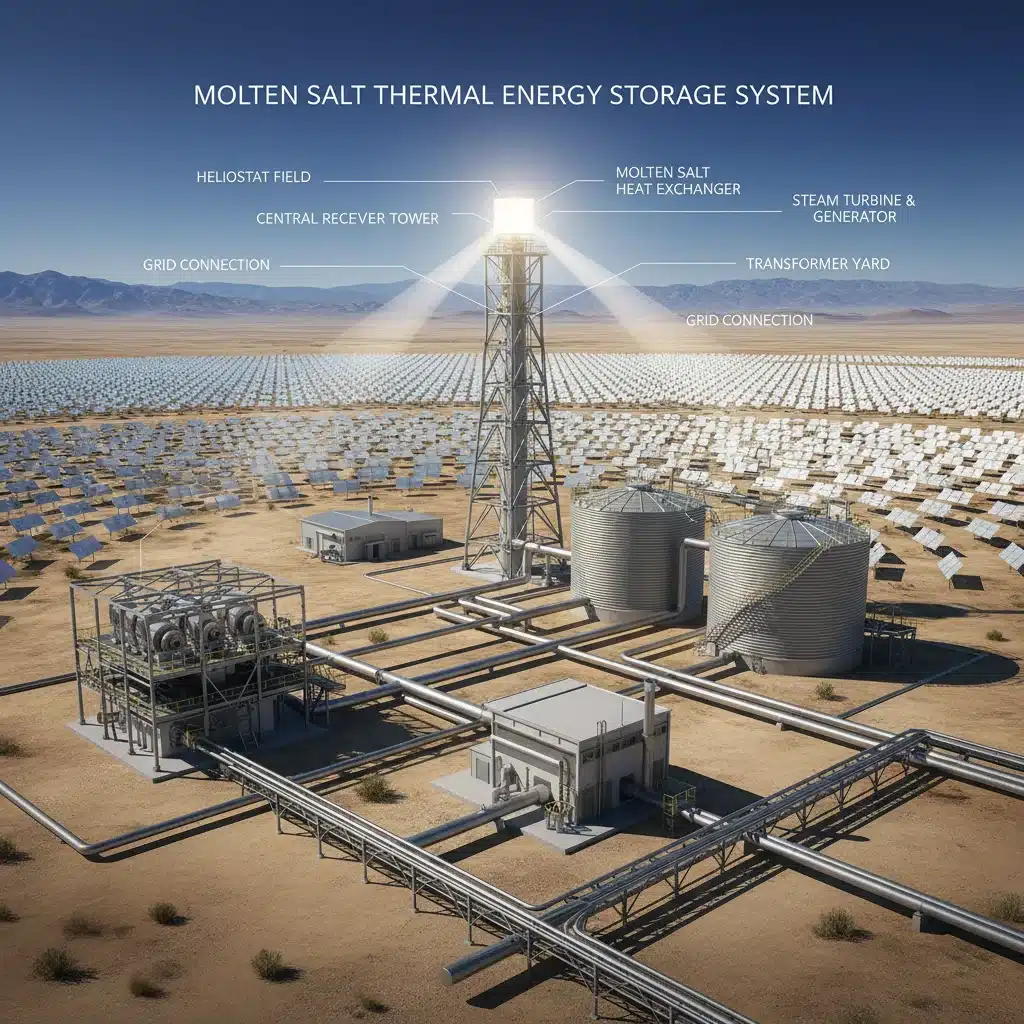
- Sensible Heat Storage: Materials like water, molten salts, or rocks are heated, and the heat is stored as a change in temperature. Molten salt is particularly effective for high-temperature applications in CSP.
- Latent Heat Storage: Phase Change Materials (PCMs) absorb or release large amounts of heat during a phase transition (e.g., melting or freezing) at a constant temperature.
- Thermochemical Storage: Involves reversible chemical reactions that absorb or release heat. This offers very high energy densities but is less mature.
Advantages of TES include:
- Long-Duration Storage: Molten salt systems in CSP plants can store energy for 6-15 hours, allowing power generation after sunset.
- Cost-Effectiveness: Storage media like molten salt, sand, or rocks can be relatively inexpensive.
- High Energy Density (for some types): Especially for thermochemical storage.
- Integration with Industrial Processes: Stored heat can be used directly for industrial processes, enhancing overall energy efficiency.
Disadvantages and Future Outlook for TES
Challenges for TES include:
- Conversion Efficiency Losses: If thermal energy is converted back to electricity, there are inherent thermodynamic losses.
- Space Requirements: Large storage tanks or beds can require significant land area.
- System Complexity: Especially for high-temperature systems, managing heat transfer and insulation can be complex.
- Limited Response Time: Generally slower to respond compared to batteries.
By 2026, TES is anticipated to expand beyond its traditional role in CSP. Innovations in PCMs, thermochemical storage, and the integration of TES with various industrial heat demands and district heating/cooling networks will drive its growth. It will be a key player in providing dispatchable renewable electricity and managing heat loads, particularly in regions with high solar irradiation. The development of advanced materials and more compact systems will enhance its viability as a versatile Renewable Energy Storage solution.
Comparative Analysis and Future Trends for Renewable Energy Storage in 2026
When comparing these four leading Renewable Energy Storage technologies, it’s clear that each has a distinct role to play in the future energy landscape. No single technology is a silver bullet; rather, a diverse portfolio of storage solutions will be necessary to meet the varied demands of a decarbonized grid.
- Short-Duration (minutes to hours): Batteries excel here, providing rapid response for frequency regulation, voltage support, and peak shaving. Their modularity makes them suitable for a wide range of applications.
- Medium-Duration (hours to a day): Batteries, especially advanced chemistries, and some TES systems can cover this range.
- Long-Duration (days to weeks/seasonal): PHES and CAES are currently the most viable options for very large-scale, long-duration storage, offering the capacity to balance seasonal variations in renewable output. Advanced TES and emerging technologies like hydrogen storage are also promising for this segment.
The trend towards 2026 will see continued cost reductions for batteries, making them even more pervasive. PHES will remain crucial where viable, and CAES will gain traction in suitable geological areas as adiabatic technologies mature. TES will expand its applications, especially in industrial heat and combined heat and power systems. Furthermore, hybrid storage systems, combining the strengths of different technologies (e.g., batteries for fast response and PHES for bulk storage), are expected to become more common, offering optimized performance and cost-effectiveness.
Key Factors Driving Innovation in Renewable Energy Storage
Several overarching factors will shape the evolution of Renewable Energy Storage technologies by 2026:
- Policy Support and Incentives: Government policies, subsidies, and regulatory frameworks that value flexibility and grid services will be critical in accelerating deployment.
- Cost Reduction: Continued R&D and economies of scale will drive down the capital and operational costs of all storage technologies.
- Technological Advancements: Breakthroughs in materials science, electrochemical engineering, and system integration will lead to more efficient, durable, and safer storage solutions.
- Grid Modernization: The development of smart grids, advanced metering infrastructure, and sophisticated energy management systems will enable better integration and optimization of diverse storage assets.
- Environmental and Sustainability Concerns: Increasing focus on the lifecycle impact of storage technologies, including raw material sourcing, manufacturing emissions, and end-of-life recycling, will influence technology choices and drive sustainable practices.
Conclusion: A Diverse and Dynamic Future for Renewable Energy Storage
The journey towards a fully renewable energy grid is complex, but the rapid advancements in Renewable Energy Storage technologies provide immense optimism. By 2026, we anticipate a more diversified and robust storage landscape, where battery, pumped hydro, compressed air, and thermal storage solutions each contribute uniquely to grid stability and energy reliability. The synergy between these technologies, coupled with ongoing innovation and supportive policies, will unlock the full potential of renewable energy, paving the way for a cleaner, more sustainable, and resilient global energy system. The future of energy is not just renewable; it is also intelligently stored, ensuring power is available whenever and wherever it is needed.
The continued investment in research and development, alongside strategic deployment, will be crucial in overcoming remaining challenges and fully realizing the promise of these transformative technologies. As the world pushes for deeper decarbonization, the role of effective Renewable Energy Storage will only become more pronounced, defining the success of our global energy transition.