Beyond Donations: 2026 Strategies for Philanthropic Investments with Long-Term Social Returns

The landscape of giving is undergoing a profound transformation. As we look towards 2026 and beyond, the traditional model of philanthropy, primarily characterized by one-off donations, is increasingly being augmented, and in some cases, replaced, by more strategic, investment-oriented approaches. The focus is shifting from simply addressing immediate needs to fostering long-term, sustainable social returns. This evolution is giving rise to a new paradigm: Philanthropic Impact Investing.
Philanthropic Impact Investing is not just a buzzword; it represents a fundamental rethinking of how capital can be deployed to generate both financial and measurable social or environmental benefits. It’s about leveraging the power of investment to solve some of the world’s most pressing challenges, moving beyond the transactional nature of grants to a more transformative, systemic approach. This article will delve into the critical strategies defining this new era of giving, exploring how philanthropists, foundations, and social investors are aligning their capital with their values to create lasting change.
The Evolution of Philanthropy: From Charity to Strategic Investment
For centuries, philanthropy has been synonymous with charity – the act of giving money or goods to those in need. While undeniably vital, this model often provides temporary relief without addressing the root causes of societal problems. The 21st century, with its complex global challenges, demands a more sophisticated approach. The rise of social entrepreneurship, sustainable development goals (SDGs), and increased awareness of systemic inequalities has propelled philanthropy into a new strategic phase.
This shift is driven by several key factors:
- Desire for Measurable Impact: Donors are increasingly seeking tangible evidence that their contributions are making a real difference. They want to see data, track progress, and understand the long-term effects of their investments.
- Limitations of Traditional Grant-Making: While grants remain a crucial tool, their often short-term nature can limit the ability of recipient organizations to build sustainable models or scale their solutions.
- The Power of Market-Based Solutions: Many social problems can be effectively addressed through innovative business models that generate revenue while also creating social value.
- Alignment of Values and Capital: A growing number of individuals and institutions want their entire portfolio, not just their charitable giving, to reflect their ethical and social values.
These factors have paved the way for Philanthropic Impact Investing, a hybrid approach that blends the best aspects of traditional philanthropy with the rigor and potential for sustainability found in financial markets. It’s about using capital as a catalyst for systemic change, rather than just a stopgap measure.
Defining Philanthropic Impact Investing for 2026
At its core, Philanthropic Impact Investing involves making investments with the explicit intention to generate positive, measurable social and environmental impact alongside a financial return. Unlike traditional philanthropy where the expectation is solely a social return, or traditional investing where the focus is purely financial, impact investing seeks both.
In the context of philanthropy, this can manifest in various forms:
- Program-Related Investments (PRIs): These are investments made by foundations to further their charitable purposes, often offering below-market returns or even capital at risk. They can take the form of loans, equity investments, or guarantees to non-profits or social enterprises.
- Mission-Related Investments (MRIs): These are investments from a foundation’s endowment that seek both a financial return and alignment with the foundation’s mission. They are typically made at market rates.
- Venture Philanthropy: This approach applies venture capital principles to philanthropic giving, providing long-term, engaged support (financial and non-financial) to social enterprises with high growth potential.
- Social Impact Bonds (SIBs) / Pay-for-Success Models: These innovative financing mechanisms tie investor returns to the achievement of specific social outcomes, shifting the risk from the public sector to private investors.
By 2026, we anticipate these categories will become even more sophisticated and integrated, with a greater emphasis on blended finance structures that combine public, private, and philanthropic capital to tackle complex challenges at scale. The goal is always to achieve long-term social returns that are sustainable and replicable.
Key Strategies for 2026: Driving Long-Term Social Returns
1. Embracing a Systems-Thinking Approach
Effective Philanthropic Impact Investing in 2026 will move beyond addressing isolated symptoms to understanding and influencing entire systems. This means identifying the root causes of problems and investing in interventions that can create ripple effects across a whole ecosystem. For example, instead of funding a single school, an investor might support initiatives that strengthen the entire educational infrastructure, including teacher training, curriculum development, and parental engagement programs.
This approach requires:
- Deep Dive Research: Thorough understanding of the social, economic, and political dynamics of an issue.
- Cross-Sector Collaboration: Working with governments, businesses, non-profits, and communities to co-create solutions.
- Long-Term Commitment: Recognizing that systemic change takes time and sustained effort.
2. Prioritizing Impact Measurement and Management (IMM)
The mantra for 2026 will be: if you can’t measure it, you can’t improve it. Robust Impact Measurement and Management (IMM) frameworks are essential for demonstrating the effectiveness of Philanthropic Impact Investing. This goes beyond simply reporting outputs (e.g., number of people served) to focusing on outcomes (e.g., improved health, increased income) and ultimately, long-term impact (e.g., reduced poverty rates, enhanced environmental quality).
Key aspects of IMM include:
- Clear Impact Goals: Defining what success looks like from the outset.
- Relevant Metrics and Indicators: Selecting appropriate data points to track progress.
- Data Collection and Analysis: Implementing rigorous methods to gather, analyze, and interpret data.
- Transparency and Reporting: Communicating impact effectively to stakeholders.
- Adaptive Management: Using data to inform decisions and adjust strategies as needed.
Tools like the Impact Management Project (IMP) and IRIS+ are becoming standard in the sector, providing frameworks for consistent and credible impact reporting. This rigor not only ensures accountability but also helps optimize strategies for greater long-term social returns.
3. Scaling Solutions Through Collaborative Funding Models
Many of the world’s challenges are too large and complex for any single organization or philanthropist to solve alone. 2026 will see an acceleration of collaborative funding models, where multiple philanthropic entities, alongside public and private investors, pool resources to scale proven solutions.
Examples include:
- Pooled Funds: Jointly managed funds that invest in a portfolio of social enterprises or initiatives.
- Co-Funding Agreements: Multiple funders investing in the same project or organization.
- Place-Based Initiatives: Collective investments focused on transforming specific geographic areas.
- Cross-Sector Partnerships: Collaborations between non-profits, corporations, and government agencies.

These models not only bring more capital to bear but also foster shared learning, reduce duplication of efforts, and increase the likelihood of achieving significant long-term social returns. The emphasis is on building ecosystems of support rather than isolated interventions.
4. Leveraging Technology and Data Analytics
Technology is a powerful enabler for Philanthropic Impact Investing. In 2026, advanced data analytics, artificial intelligence (AI), and blockchain will play increasingly vital roles in identifying investment opportunities, monitoring impact, and ensuring transparency.
- AI for Due Diligence: AI can help analyze vast amounts of data to identify promising social enterprises and assess their potential for impact and financial viability.
- Blockchain for Transparency: Distributed ledger technology can provide immutable records of transactions and impact data, enhancing trust and accountability.
- Data Analytics for Portfolio Management: Sophisticated dashboards and analytics tools can help investors track the performance of their impact portfolios, identify trends, and make data-driven decisions.
- Digital Platforms for Sourcing and Matching: Online platforms can connect social entrepreneurs with impact investors, streamlining the investment process.
These technological advancements will make Philanthropic Impact Investing more efficient, effective, and accessible, ultimately leading to greater long-term social returns.
5. Focusing on Blended Finance and Innovative Financial Instruments
Blended finance, the strategic use of development finance for the mobilization of additional finance for sustainable development in developing countries, will be a cornerstone of Philanthropic Impact Investing in 2026. This involves combining different types of capital – philanthropic, public, and private – in structured ways to achieve development outcomes that would not be possible with only one type of capital.
Innovative financial instruments will also gain prominence:
- Impact-Linked Loans: Loans where the interest rate or repayment terms are tied to the achievement of specific social or environmental targets.
- Convertible Notes: Investments that start as loans and can convert into equity if certain milestones are met, offering flexibility for growing social enterprises.
- Guarantees and First-Loss Facilities: Philanthropic capital can be used to absorb the initial risks, thereby attracting more risk-averse commercial investors into impact opportunities.
- Development Impact Bonds (DIBs): Similar to SIBs but applied in international development contexts, linking payments to the achievement of pre-defined development outcomes.
These sophisticated financial tools enable philanthropists to de-risk investments for commercial capital, unlock significant private sector funding, and ultimately amplify their impact, driving substantial long-term social returns.
6. Empowering Local Communities and Indigenous Solutions
A critical strategy for 2026 is the recognition that the most effective solutions often emerge from the communities experiencing the problems firsthand. Philanthropic Impact Investing will increasingly prioritize empowering local leaders, organizations, and indigenous communities, providing them with the resources and autonomy to design and implement solutions tailored to their specific contexts.
This involves:
- Participatory Grant-Making and Investment: Involving community members in decision-making processes.
- Capacity Building: Investing in the skills and infrastructure of local organizations.
- Respect for Local Knowledge: Valuing and integrating traditional and indigenous approaches.
- Flexible Capital: Providing funding that can adapt to evolving local needs and opportunities.
By centering communities, Philanthropic Impact Investing can ensure that interventions are culturally appropriate, highly relevant, and more likely to achieve sustainable, long-term social returns.
Challenges and Opportunities in 2026
While the future of Philanthropic Impact Investing is bright, several challenges need to be addressed:
- Standardization of Impact Measurement: While progress has been made, a universally accepted standard for measuring and reporting impact is still evolving.
- Building the Pipeline of Investable Opportunities: Many social enterprises struggle to attract impact capital due to lack of investment readiness or scale.
- Risk Perception: Some traditional philanthropists and investors may still perceive impact investments as inherently riskier or offering lower financial returns.
- Talent Gap: A need for professionals with expertise in both finance and social impact.
However, these challenges also present significant opportunities for growth and innovation:
- Development of New Financial Products: The market for impact investing is ripe for innovative financial instruments that cater to diverse risk-return profiles.
- Growth of Impact Investing Funds: More specialized funds are emerging, providing pathways for both institutional and individual investors.
- Policy Support: Governments are increasingly recognizing the potential of impact investing and developing supportive policies and incentives.
- Education and Awareness: Growing interest from younger generations and increasing media coverage are raising awareness and driving demand for impact-aligned investments.
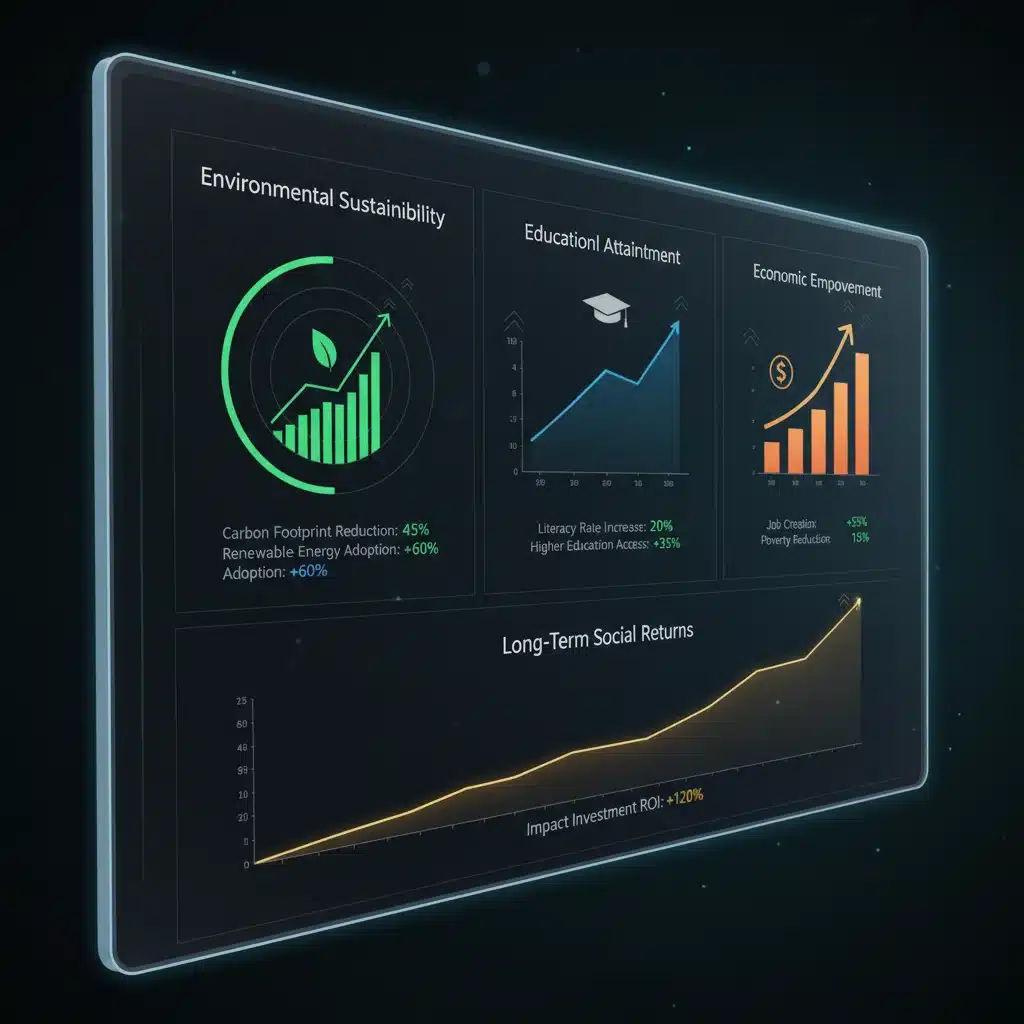
By proactively addressing these challenges and capitalizing on opportunities, the sector can solidify Philanthropic Impact Investing as a dominant force for good.
The Future is Impact-Driven
As we navigate the complexities of the 21st century, the need for innovative, effective solutions to global challenges has never been more pressing. Philanthropic Impact Investing offers a powerful pathway to achieve these solutions, transforming how we think about and deploy capital for social good. By moving beyond traditional donations and embracing strategic, long-term, and measurable investment approaches, philanthropists can unlock unprecedented potential for positive change.
The year 2026 will mark a pivotal moment where these strategies become mainstream, driving not only financial returns but, more importantly, profound and lasting long-term social returns. The future of giving is not just about generosity; it’s about intelligent, impactful investment in a better world for all.
Foundations, high-net-worth individuals, and even everyday investors are increasingly recognizing that their capital can be a powerful engine for both prosperity and purpose. The integration of environmental, social, and governance (ESG) criteria into mainstream investing further blurs the lines between traditional finance and impact, making it easier for a wider range of actors to engage in this transformative space. The momentum is undeniable, and the strategies outlined above will be crucial for anyone looking to make a meaningful difference in the years to come through Philanthropic Impact Investing.
Understanding and implementing these strategies will be key for any organization or individual aiming to maximize their philanthropic efforts. The shift from a purely charitable mindset to one that embraces strategic investment is not merely a trend; it is the future of impactful giving, promising a world where capital serves humanity’s highest aspirations.