Smart Cities 2.0: 3 Technologies Reshaping Urban Living in the U.S. by 2026
Smart Cities 2.0: 3 Technologies Reshaping Urban Living in the U.S. by 2026
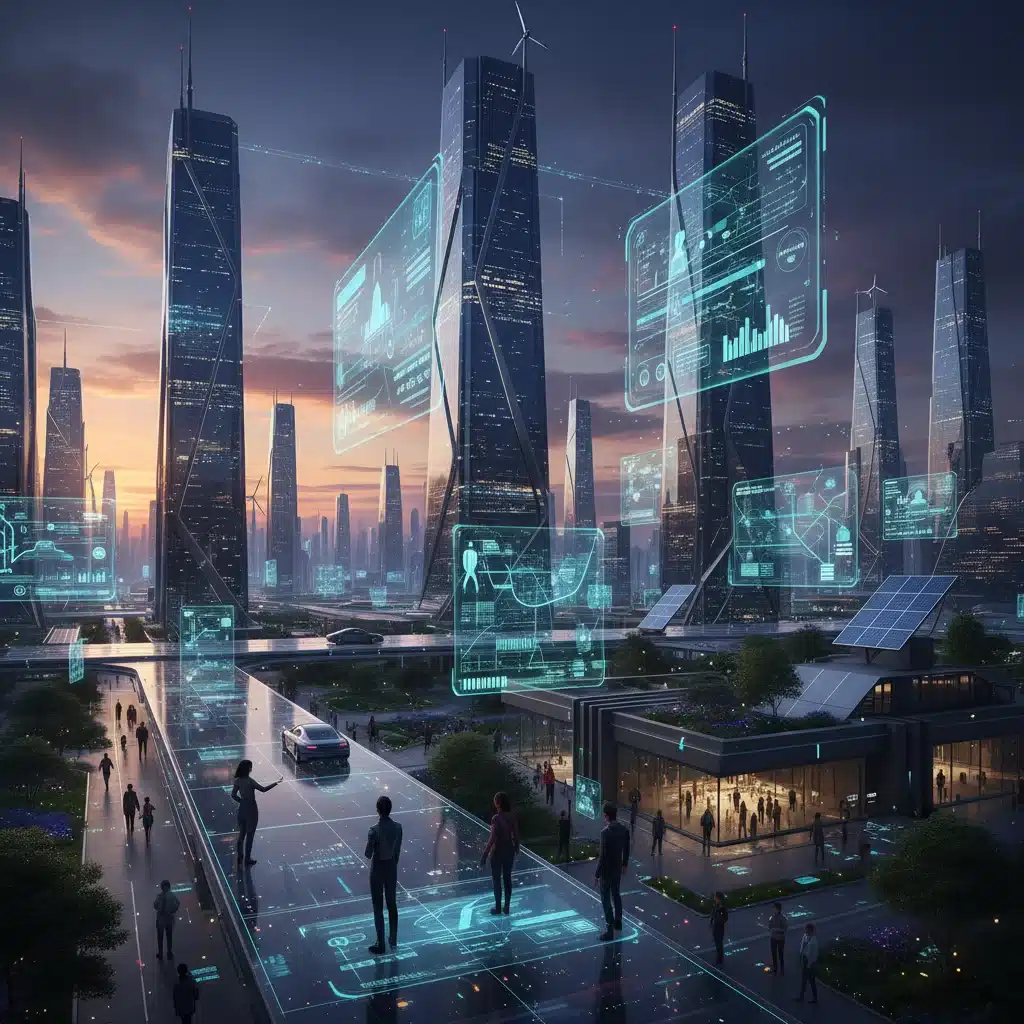
The urban landscape of the United States is on the cusp of a profound transformation, evolving into what many are calling Smart Cities 2.0. This isn’t merely an upgrade; it’s a fundamental reimagining of how cities function, interact with their inhabitants, and manage resources. By 2026, three pivotal technologies – Artificial Intelligence (AI), the Internet of Things (IoT), and 5G connectivity – are set to be the primary architects of this revolution, driving unprecedented levels of efficiency, sustainability, and quality of life. This article delves into the intricate ways these technologies are converging to create a new paradigm for urban living, offering a comprehensive comparison, analysis, and recent updates on their deployment across the U.S.
The concept of a ‘smart city’ is not new. For decades, urban planners and technologists have envisioned cities that are more responsive, resilient, and livable. However, the first wave of smart city initiatives often felt fragmented, characterized by siloed projects and limited integration. Smart Cities 2.0, powered by the synergistic interplay of AI, IoT, and 5G, promises a truly integrated and intelligent urban ecosystem. This next generation of urban development moves beyond mere data collection to sophisticated data analysis, predictive modeling, and autonomous decision-making, all delivered at lightning speed.
The urgency for this transformation is driven by several factors: rapid urbanization, the escalating demands on infrastructure, the imperative for environmental sustainability, and the desire to enhance citizen services. U.S. cities, facing these complex challenges, are increasingly turning to advanced technological solutions to build more resilient and equitable communities. Understanding the individual contributions and collective power of AI, IoT, and 5G is crucial to grasping the future trajectory of urban life.
The Foundation: Internet of Things (IoT) in Smart Cities 2.0
At the heart of any Smart City 2.0 lies the Internet of Things (IoT). IoT refers to the vast network of physical objects embedded with sensors, software, and other technologies for the purpose of connecting and exchanging data with other devices and systems over the internet. In an urban context, this translates into millions, if not billions, of interconnected devices collecting real-time data from every corner of the city.
Ubiquitous Sensing and Data Collection
By 2026, IoT devices will be virtually ubiquitous in U.S. cities. Consider smart streetlights that not only illuminate but also monitor air quality, pedestrian traffic, and even detect gunshots. Waste bins equipped with sensors can signal when they are full, optimizing collection routes and reducing fuel consumption. Water pipes embedded with leak detection sensors can prevent costly and environmentally damaging water losses. Parking spaces can communicate their availability, drastically reducing congestion caused by drivers searching for spots. Public transportation vehicles can provide real-time location and occupancy data, allowing for dynamic scheduling and improved passenger experiences.
The sheer volume of data generated by these IoT devices is staggering. This data encompasses everything from environmental conditions, traffic patterns, energy consumption, public safety incidents, and infrastructure health. The true value of IoT, however, isn’t just in collecting this data, but in making it actionable. This is where AI steps in.
Applications and Benefits of IoT
- Smart Infrastructure Management: IoT sensors can monitor the structural integrity of bridges, roads, and buildings, providing early warnings of potential failures and enabling proactive maintenance. This extends the lifespan of critical infrastructure and enhances public safety.
- Environmental Monitoring: Real-time data on air and water quality, noise pollution, and waste levels allows cities to implement targeted interventions and develop more effective environmental policies. This contributes significantly to a city’s sustainability goals.
- Optimized Resource Allocation: From managing energy grids more efficiently to optimizing waste collection and water distribution, IoT provides the granular data needed to reduce waste and improve the allocation of valuable urban resources.
- Enhanced Public Safety: Connected cameras, smart sensors, and even wearable devices for first responders can provide critical information during emergencies, improving response times and coordination.
- Improved Urban Mobility: Real-time traffic data, smart parking systems, and connected public transport networks reduce congestion, decrease travel times, and promote more sustainable modes of transportation.
The progression from basic sensor deployment to a fully integrated IoT ecosystem is a defining characteristic of Smart Cities 2.0. This foundational layer provides the eyes and ears for the intelligent city, feeding information to the analytical brains.
The Brain: Artificial Intelligence (AI) for Urban Intelligence
If IoT provides the data, Artificial Intelligence (AI) provides the intelligence. AI algorithms are designed to process, analyze, and learn from vast datasets, identifying patterns, making predictions, and even automating decisions without human intervention. In Smart Cities 2.0, AI transforms raw IoT data into actionable insights, making urban systems truly smart.
Predictive Analytics and Decision Making
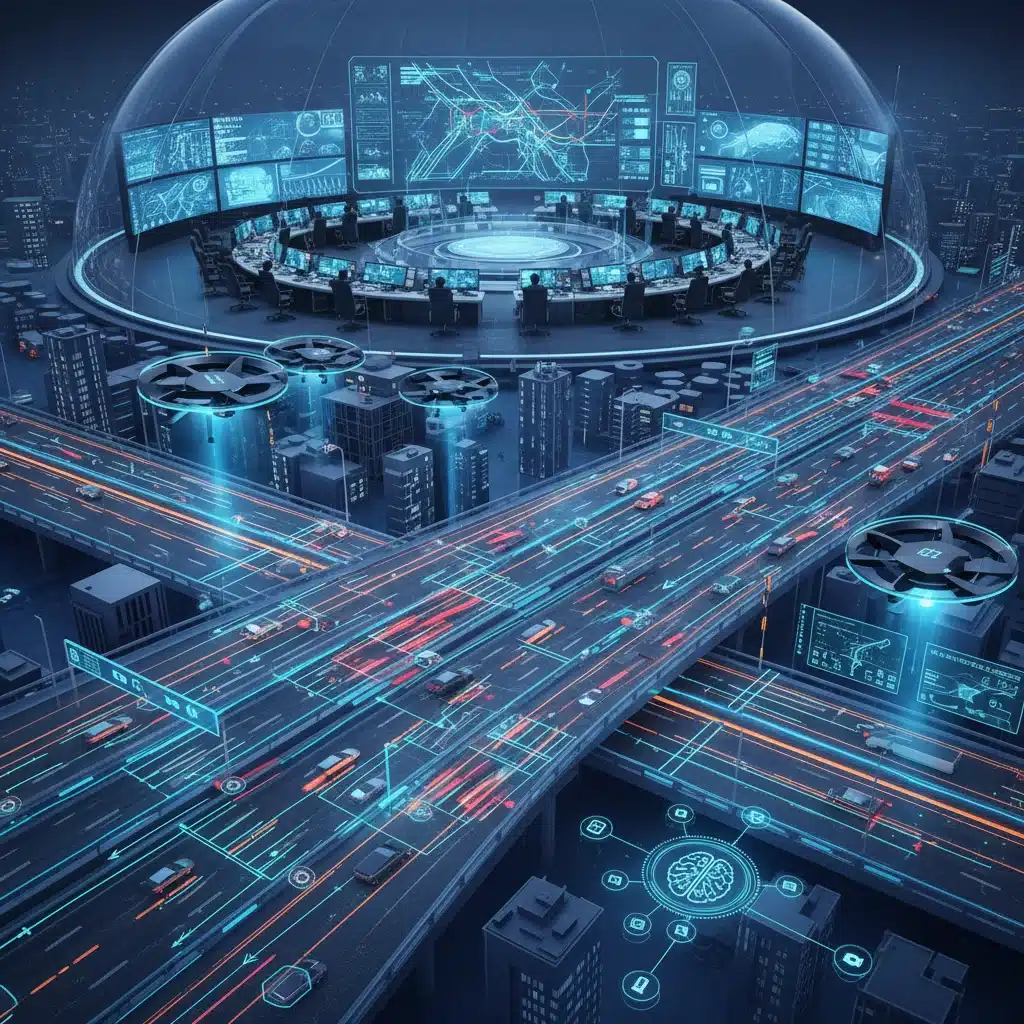
By 2026, AI will be integral to almost every aspect of urban management. Consider traffic management: instead of simply reacting to congestion, AI can analyze historical traffic data, real-time sensor inputs, weather forecasts, and event schedules to predict bottlenecks before they occur. It can then dynamically adjust traffic light timings, suggest alternative routes, or even deploy autonomous public transport to alleviate predicted congestion.
In terms of public safety, AI-powered video analytics can identify suspicious activities or unattended packages in public spaces, alerting authorities instantly. Predictive policing models, while controversial, are being explored to allocate resources more effectively based on crime patterns and social indicators. Energy management benefits from AI by predicting demand fluctuations and optimizing energy distribution, integrating renewable sources seamlessly into the grid and reducing energy waste.
Applications and Benefits of AI
- Intelligent Traffic Management: AI optimizes traffic flow, reduces congestion, and enhances road safety through predictive modeling and dynamic signal control. This is a crucial element in improving urban mobility.
- Predictive Maintenance: AI analyzes data from IoT sensors on infrastructure, predicting when components are likely to fail. This allows for scheduled maintenance, preventing costly breakdowns and ensuring continuous service.
- Resource Optimization: AI algorithms can optimize water usage by identifying leaks and predicting demand, or streamline waste collection routes based on sensor data, leading to significant cost savings and environmental benefits.
- Enhanced Public Services: AI-powered chatbots and virtual assistants can provide citizens with instant access to information and services, improving governmental efficiency and citizen engagement.
- Urban Planning and Development: AI can simulate the impact of new developments on traffic, energy consumption, and environmental factors, helping urban planners make more informed decisions.
The ability of AI to learn and adapt makes urban systems more resilient and responsive. As more data is collected and processed, AI models become increasingly sophisticated, leading to continuous improvements in urban operations. However, for AI to function effectively and for IoT devices to communicate seamlessly, a robust and high-speed network is indispensable. This brings us to 5G.
The Nervous System: 5G Connectivity for Seamless Integration
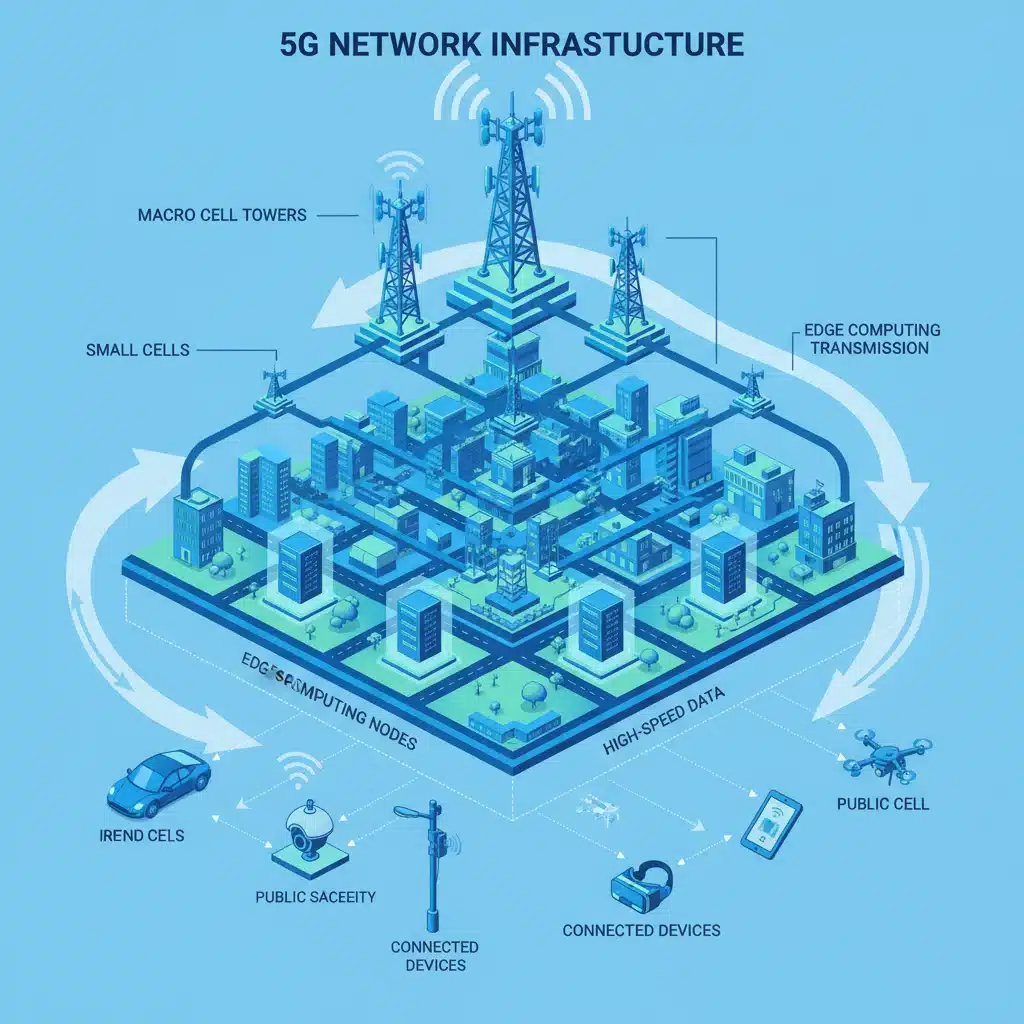
While IoT generates the data and AI processes it, 5G provides the ultra-fast, low-latency, and high-capacity network that enables these technologies to operate at their full potential. Without 5G, the vision of fully integrated Smart Cities 2.0 would remain largely theoretical, hampered by bandwidth limitations and response delays.
Ultra-Reliable Low-Latency Communication (URLLC)
5G is far more than just a faster version of 4G. Its key characteristics – significantly higher bandwidth, extremely low latency (down to 1 millisecond), and massive machine-type communications (mMTC) – are game-changers for urban environments. Low latency is particularly critical for applications requiring real-time responses, such as autonomous vehicles, drone delivery systems, and remote-controlled robotics used in infrastructure maintenance or public safety.
Massive machine-type communications allow billions of IoT devices to connect simultaneously without network congestion. This is essential for a city where every streetlight, sensor, and smart appliance is constantly transmitting data. The increased bandwidth facilitates the transfer of large datasets, such as high-definition video from surveillance cameras or complex environmental monitoring information, crucial for AI processing.
Applications and Benefits of 5G
- Autonomous Vehicles and Smart Transportation: 5G provides the instantaneous communication needed for self-driving cars to react to their environment, communicate with each other, and interact with smart infrastructure, leading to safer and more efficient transport systems.
- Real-time Public Safety: High-definition video feeds from connected cameras can be transmitted instantly to command centers, and augmented reality tools for first responders can be powered by 5G, enhancing situational awareness and response capabilities.
- Enhanced IoT Deployment: 5G’s capacity to handle a massive number of connections makes it possible to deploy IoT sensors on an unprecedented scale across the city, collecting more comprehensive data.
- Edge Computing: 5G facilitates edge computing, where data processing happens closer to the source (e.g., at a cell tower or a local data center) rather than in a distant cloud. This further reduces latency and improves the efficiency of AI applications.
- Immersive Urban Experiences: From AR/VR-enhanced tourism to remote healthcare services and smart education platforms, 5G enables new forms of citizen engagement and service delivery.
The rollout of 5G infrastructure, while still progressing, is rapidly expanding across major U.S. cities. By 2026, it is expected to provide the robust, high-performance network backbone that will truly unlock the full potential of Smart City Tech 2026.
Synergy: How AI, IoT, and 5G Create Smart Cities 2.0
The true power of Smart Cities 2.0 emerges not from these technologies in isolation, but from their seamless integration. IoT provides the sensory input, 5G delivers this input rapidly and reliably, and AI processes it to generate intelligence and automate actions. This creates a continuous feedback loop that makes cities truly adaptive and intelligent.
A Holistic Urban Ecosystem
Imagine a scenario: IoT sensors detect a sudden increase in air pollution in a specific district. This data is instantly transmitted via 5G to an AI system. The AI analyzes this data in conjunction with traffic patterns, weather conditions, and industrial activity. It might then predict a severe smog event and automatically trigger traffic light adjustments to divert vehicles, send alerts to citizens about air quality, and even temporarily reduce energy consumption from municipal buildings in the affected area. This entire process, from detection to response, can happen in minutes, thanks to the combined power of Smart City Tech 2026.
Another example could be in disaster preparedness. IoT sensors monitor environmental conditions, AI models predict potential floods or wildfires based on historical data and current conditions, and 5G enables rapid communication for emergency services, autonomous drones for damage assessment, and real-time information dissemination to affected populations. The city becomes a living, breathing entity capable of self-diagnosis and self-correction.
Comparison and Analysis: Current State vs. 2026 Vision
Currently, many U.S. cities have implemented elements of smart technology, but often in a piecemeal fashion. Smart parking apps exist, but they might not integrate with public transport data. Smart streetlights are deployed, but their data might not be fully utilized by traffic management systems. The infrastructure for 5G is still being built out, and AI applications are often in pilot phases for specific use cases.
By 2026, the vision is one of deep integration and widespread adoption. The siloed systems of today will give way to interconnected platforms. Data will flow freely and securely across departments, enabling a holistic view of urban operations. Edge computing will become more prevalent, bringing AI processing closer to the data source, further reducing latency and enhancing responsiveness. Autonomous systems, from vehicles to waste management robots, will become a more common sight. The focus will shift from individual smart devices to a cohesive, intelligent urban operating system.
Challenges and Considerations
While the benefits are immense, the road to Smart Cities 2.0 is not without its challenges. These include:
- Data Privacy and Security: The collection of vast amounts of personal and urban data raises significant privacy concerns. Robust cybersecurity measures and clear regulatory frameworks are essential to protect this data from misuse and cyber-attacks.
- Digital Divide: Ensuring equitable access to these technologies and their benefits across all socioeconomic groups within a city is crucial to prevent exacerbating existing inequalities.
- Infrastructure Costs: The considerable investment required to deploy and maintain advanced IoT, 5G, and AI infrastructure is a major hurdle for many municipalities. Public-private partnerships will be vital.
- Interoperability: Ensuring that diverse technologies from different vendors can communicate and work together seamlessly is a complex technical challenge. Open standards and platforms are key.
- Governance and Ethics: Establishing clear governance models for AI decision-making and addressing ethical implications, such as algorithmic bias, are critical for public trust and accountability.
Addressing these challenges proactively will be paramount to the successful and equitable development of Smart City Tech 2026.
Recent Updates and Case Studies in the U.S.
Several U.S. cities are already leading the charge in adopting Smart City Tech 2026:
- Columbus, Ohio: As the winner of the U.S. DOT Smart City Challenge, Columbus is implementing a range of solutions, including connected vehicles, smart traffic signals, and an integrated data platform to improve mobility and reduce traffic fatalities. Their initiatives heavily leverage IoT for data collection and AI for predictive analytics.
- San Diego, California: San Diego has deployed thousands of smart streetlights equipped with sensors to collect environmental and traffic data. This IoT network feeds into an AI platform to optimize energy consumption, identify parking availability, and enhance public safety. The city is also a testbed for 5G applications.
- New York City, New York: NYC is exploring AI for predictive maintenance in its subway system, using IoT sensors to monitor train components and tracks. The city’s LinkNYC kiosks provide free public Wi-Fi and host sensors for environmental monitoring, showcasing early integration of 5G-ready infrastructure.
- Phoenix, Arizona: Phoenix is focusing on smart water management, using IoT sensors to detect leaks and monitor water quality in real-time, supported by AI for demand forecasting and efficient distribution. The city is also investing in 5G infrastructure to support its growing autonomous vehicle testing.
These examples illustrate the diverse applications and the growing momentum behind Smart City Tech 2026 across the U.S. The lessons learned from these early adopters will inform strategies for other cities embarking on their own smart transformations.
The Future of Urban Living: Beyond 2026
Looking beyond 2026, the integration of AI, IoT, and 5G will continue to deepen, leading to even more sophisticated urban environments. We can anticipate:
- Hyper-Personalized Urban Services: Cities will offer services tailored to individual citizen needs, from personalized public transport routes to real-time health advisories based on local environmental conditions.
- Autonomous Urban Management: A greater degree of urban infrastructure will be managed autonomously, with AI systems making real-time decisions on everything from utility distribution to emergency response coordination, under human oversight.
- Digital Twins of Cities: Comprehensive digital replicas of entire cities will be created, allowing for real-time simulation and predictive modeling of urban changes, infrastructure projects, and disaster scenarios.
- Sustainable and Resilient Cities: The continuous optimization provided by Smart City Tech 2026 will lead to significantly lower carbon footprints, enhanced circular economies, and greater resilience to climate change and other shocks.
- Citizen Participation through Technology: New platforms will emerge, leveraging these technologies to foster greater citizen engagement in urban planning and decision-making, making cities more democratic and responsive to their inhabitants’ desires.
The evolution of Smart Cities 2.0 is not just about technology; it’s about creating more livable, equitable, and sustainable urban environments for everyone. The convergence of AI, IoT, and 5G is laying the groundwork for a future where cities are truly intelligent, adaptive, and designed for human flourishing.
Conclusion
The journey towards Smart Cities 2.0 in the U.S. by 2026 is an ambitious yet achievable endeavor, fundamentally reshaped by the powerful synergy of Artificial Intelligence, the Internet of Things, and 5G connectivity. IoT sensors will provide the pervasive data collection, 5G networks will ensure its rapid and reliable transmission, and AI algorithms will transform this raw data into actionable intelligence, enabling predictive analytics and autonomous operations. This triumvirate of technologies is not merely enhancing existing urban systems but is creating a new paradigm for urban living – one characterized by unprecedented efficiency, sustainability, and an improved quality of life for residents.
While challenges related to privacy, equity, cost, and governance remain, the ongoing advancements and successful pilot programs across various U.S. cities demonstrate a clear path forward. By strategically investing in Smart City Tech 2026, fostering public-private collaborations, and prioritizing ethical considerations, urban centers can harness the full potential of these innovations. The future of our cities is intelligent, interconnected, and responsive, promising a vibrant and sustainable urban experience for generations to come. The transformation is not just coming; it is already underway, defining the next chapter of urban evolution in the United States.